


The Rise of Frore: A New Milestone in Deep Tech
In the rapidly evolving landscape of semiconductor innovation, a significant milestone has just been reached. Frore, a deep tech startup focused on advanced chip cooling solutions, has officially crossed the threshold into unicorn status. With a valuation hitting an impressive $1.64 billion, the company stands as a testament to the critical importance of infrastructure improvements in the artificial intelligence era. This achievement wasn’t just a result of luck, but a strategic pivot driven by industry leaders and a focus on solving a persistent hardware bottleneck.
Solving the Heat Problem
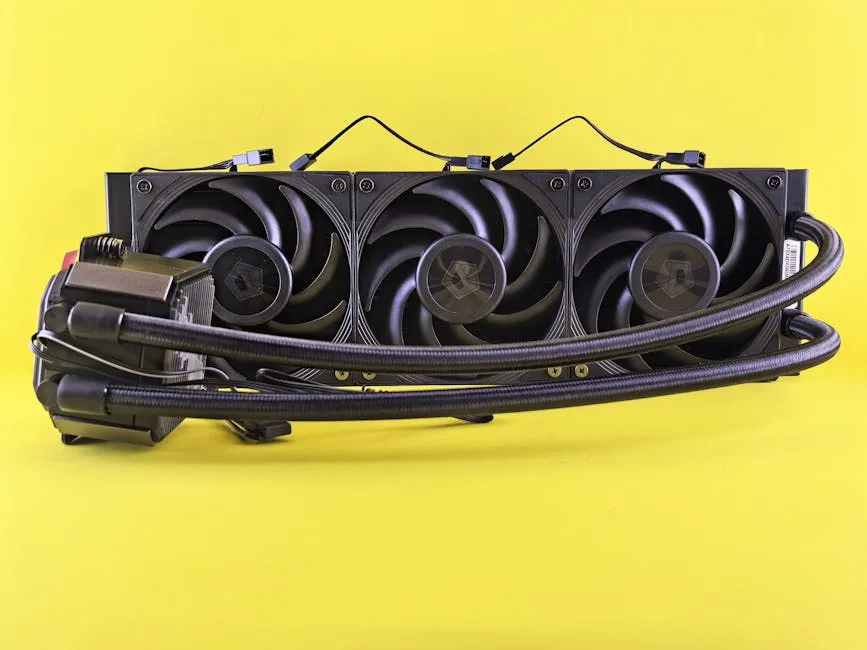
One of the most significant challenges facing modern computing, particularly in the realm of artificial intelligence, is heat management. As chips become more powerful and densely packed, traditional air cooling methods often fail to keep up with the thermal output generated by high-performance processors. In the past, this inefficiency could lead to system throttling or hardware failure. Frore recognized this early on. By shifting their development strategy toward liquid-cooling technology, they addressed a fundamental limitation that had long constrained the potential of next-generation AI hardware.
Liquid cooling allows for a much more efficient transfer of heat away from the processor. This not only extends the lifespan of the hardware but also enables higher clock speeds and sustained performance levels. For data centers running massive AI inference tasks, every degree of temperature reduction can translate into significant operational savings. The technology Frore developed represents a paradigm shift in how we think about managing thermal energy in high-compute environments.
The Influence of Industry Giants
While innovation often comes from within, external validation can be a powerful catalyst for growth. In this case, the involvement of Nvidia CEO Jensen Huang played a pivotal role. Huang has long emphasized the importance of cooling solutions to match the raw computing power his chips are capable of delivering. When he urged Frore to focus on liquid-cooling tech, it provided the company with a clear roadmap and access to the necessary industry connections to validate their approach.
This guidance didn’t just provide advice; it helped Frore secure a massive $143 million funding round. Investors were keen to back a team that was solving a tangible problem with the backing of an industry titan. The collaboration highlighted how the ecosystem around AI hardware is expanding beyond just raw processing power. The entire supply chain, from chip design to thermal management, is becoming increasingly interconnected. Companies that can offer integrated solutions, rather than just isolated components, are finding themselves in a stronger market position.
What This Means for the Future
The success of Frore signals a broader trend in the tech sector. We are seeing a move away from software-only solutions toward deep tech hardware innovations that are essential for scaling AI. As models grow larger and more complex, the demand for efficient, high-power hardware will only increase. Without improvements in cooling, the advancements in model architecture would quickly hit a physical wall.
This development also underscores the growing importance of specialized hardware startups. They are no longer just niche players; they are becoming essential partners to the major tech giants. By securing unicorn status, Frore has not only validated their own business model but has also set a precedent for other startups in the hardware space. It shows that there is room for specialized innovation to thrive alongside the larger platforms.
As the industry continues to push the boundaries of what is possible with AI, the focus on thermal management will likely intensify. Companies that can successfully integrate advanced cooling solutions into their product lines will hold a competitive advantage. The race is no longer just about who can build the fastest chip, but who can build the most efficient and sustainable system overall. Frore’s journey from concept to unicorn status is a compelling narrative of how solving a specific engineering challenge can lead to massive commercial value.
Conclusion
Frore’s valuation milestone is more than just a number; it represents a maturing of the hardware infrastructure layer of the AI economy. With a focus on liquid cooling and strong backing from key industry figures, Frore is well-positioned to lead the next wave of hardware innovation. For entrepreneurs and investors alike, this case study offers valuable insights into the types of deep tech problems that will define the next decade of computing.
