


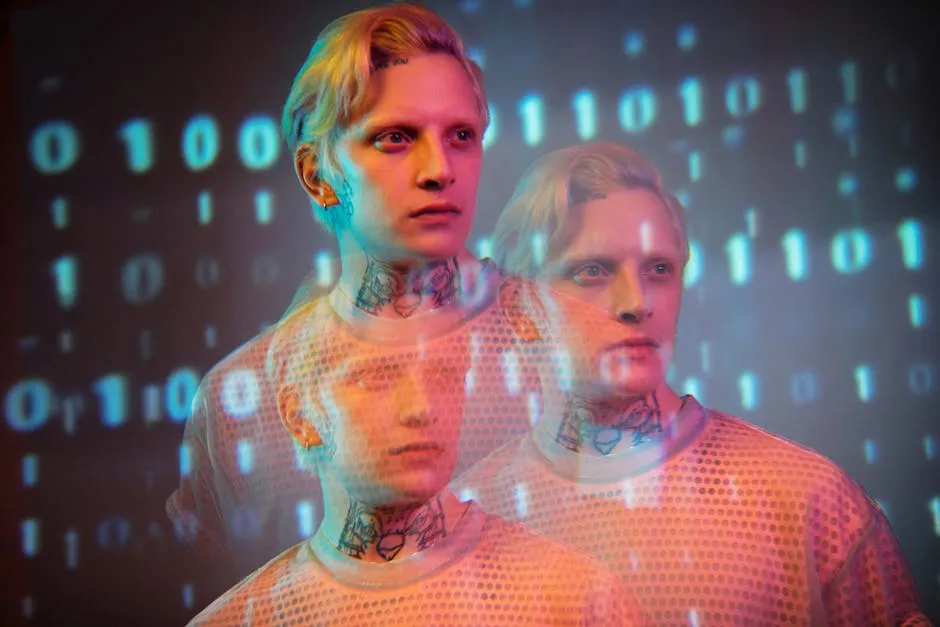
There is a strange moment that happens when you first see your own face move, speak, and gesture in a video you never actually filmed. I recently decided to put Google’s Gemini AI avatar tool to the test, uploading a few personal photos and short video clips to train a digital replica of myself. The goal was simple: see how lifelike the output could be and whether this technology truly lives up to the hype. The result? A digital twin that was so accurate it left me feeling a mix of fascination and genuine unease.
How the Gemini AI Avatar Tool Actually Works
The process is remarkably streamlined, which is both its greatest strength and its most concerning feature. To generate an AI avatar, you start by feeding the system a dataset of your own media. This typically includes high-resolution photos from different angles and short video clips that capture natural facial expressions and speech patterns. Once uploaded, Gemini’s underlying models analyze your features, mapping out everything from eye movement and lip synchronization to subtle shifts in head posture.
After the training phase, which happens almost instantly, you can prompt the system to generate new videos. You type in a script or upload an audio file, and the AI renders a video where your digital clone delivers the lines. The interface is intuitive, requiring no coding knowledge or advanced video editing skills. It’s designed to democratize content creation, but that accessibility comes with a heavy dose of realism that can quickly cross into uncomfortable territory.
Stepping Into the Uncanny Valley
When the first generated video played back, I had to pause and watch it twice. The facial expressions tracked almost perfectly with the audio. When the avatar smiled, the crow’s feet appeared. When it tilted its head mid-sentence, the movement felt organic, not robotic. This is where the technology truly shines, but it’s also where the psychological discomfort sets in.
We’ve all heard of the uncanny valley, that dip in emotional response when something looks nearly human but falls just short. Gemini’s avatar tool seems to be bridging that gap at a rapid pace. The realism was unnerving precisely because it didn’t feel like a cartoon or a stylized animation. It felt like me, performing actions I never actually did. There’s a profound psychological weight to watching your own likeness operate independently, delivering words you didn’t speak in a space you weren’t physically present. It’s a powerful reminder that AI is no longer just generating text or static images; it’s learning to mimic human presence.
Google’s Vision for the Future of Creation
Google clearly sees AI avatars as a cornerstone of the next generation of digital media. In their view, tools like this remove the friction from content production. Creators, educators, marketers, and small business owners could theoretically produce localized video content, personalized tutorials, or multilingual presentations without needing a studio, a camera crew, or hours of post-production work.
From a purely functional standpoint, the efficiency is undeniable. Imagine a teacher generating a personalized video explanation for every student in their class, or a startup founder pitching to international investors in their native languages without relying on clunky dubbing software. The scalability is what excites tech companies. But as someone who just sat through the experience of watching a digital version of myself talk, I can’t help but feel that the human element of creation is being streamlined right out of the process.
Navigating the Ethical and Practical Realities
With great power comes the need for careful guardrails. The same technology that allows a solo creator to produce polished video content can also be misused. Deepfake concerns, identity theft, and non-consensual media generation are real threats that the industry is still scrambling to address. While platforms like Gemini have implemented verification and consent checks, the underlying models are becoming increasingly difficult to distinguish from reality.
For everyday users, this means approaching AI avatar tools with a healthy dose of skepticism and responsibility. If you’re a creator, it’s worth considering how this technology aligns with your personal brand. Does replacing your physical presence with a digital proxy enhance your message, or does it dilute the authenticity your audience expects? There’s also the practical question of long-term ownership and data privacy. The media you upload to train these models is processed by complex neural networks, and understanding where that data goes is just as important as evaluating the final output.
Creating a digital clone with Gemini’s AI avatar tool is a fascinating glimpse into where media production is heading. The technology is undeniably impressive, offering a level of realism and convenience that was science fiction just a few years ago. Yet, the experience leaves a lingering question: as AI avatars become more lifelike and easier to generate, how do we preserve the genuine human connection that makes storytelling and communication meaningful? The future of creation is here, but it’s up to us to decide how we want to live inside it.
