


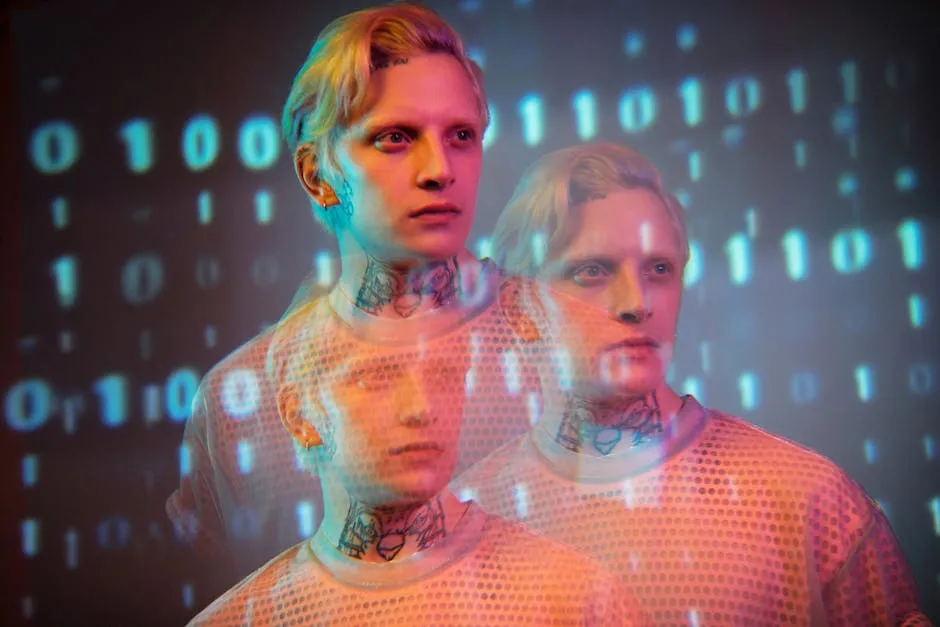
There’s a strange, almost surreal feeling that comes from watching a video of yourself say things you never actually said. It’s not quite a doppelgänger, not quite a deepfake, but something in between—a digital echo that moves, speaks, and gestures just like you. That’s the experience I had recently when I used Google’s Gemini app to create a lifelike AI avatar of myself. And I have to be honest: the result was unnervingly accurate.
Google is positioning this technology as the next frontier in digital creation. The idea is that instead of typing a prompt or recording a video from scratch, you can simply generate a realistic, talking version of yourself to deliver a message, explain a concept, or even just say hello. It’s a fascinating glimpse into a future where our digital identities become as flexible and on-demand as a text message. But as I discovered, the line between convenience and creepiness is razor-thin.
The Setup: Creating a Digital Clone
The process of creating my AI avatar was surprisingly simple. Within the Gemini app, I was guided through a brief setup that required me to record a short video of myself speaking naturally. The app analyzed my facial movements, my voice inflections, and even the subtle ways I tend to tilt my head when I’m thinking. Within minutes, the system had built a model—a digital twin that could be animated to say whatever I typed.
I decided to test it with a simple script. I typed out a few sentences about a recent project I had been working on, hit the generate button, and watched as my digital clone came to life. The lips moved in perfect sync with the words. The eyes blinked at just the right moments. There was even a slight, almost imperceptible pause before certain words, mimicking the natural cadence of human speech. It was me, but it wasn’t. It was a perfect imitation, stripped of any real intention or spontaneity.
The Unnerving Result: Too Close for Comfort
What made the experience so unsettling was not that the avatar was bad, but that it was so good. It captured my mannerisms with a fidelity that felt almost invasive. I could see the familiar way I raise my eyebrows when making a point, the slight smirk I get when I’m being sarcastic. It was like looking into a mirror that remembered everything about me and could replay it on command.
This raises a fundamental question: if a machine can perfectly replicate our external presentation, what does that mean for authenticity? In a world where anyone can create a convincing video of you saying anything, the very concept of “seeing is believing” begins to crumble. The technology is undeniably impressive from a technical standpoint, but the psychological impact is profound. It forces you to confront the idea that your image, your voice, and your personality are no longer uniquely yours. They are data points that can be captured, modeled, and re-animated.
Google’s Vision vs. The Human Reaction
Google sees this as a tool for creation. They envision a future where educators create personalized lessons, where businesses generate personalized customer outreach, and where creators can produce content without ever stepping in front of a camera. The efficiency and scalability are undeniable. Imagine a single actor generating thousands of personalized video messages for fans, or a teacher creating a virtual version of themselves to answer student questions 24/7.
But the human reaction, at least my reaction, was one of deep unease. It’s one thing to use a text-to-speech tool to narrate a blog post. It’s quite another to see a synthetic version of your own face speaking words you never uttered. The technology feels less like a creative assistant and more like a digital puppet, with you as the marionette. The potential for misuse is staggering—from spreading misinformation to creating non-consensual content. While Google has implemented safety measures and guidelines, the very existence of this capability creates a new vector for manipulation.
The Question of Consent and Control
This brings us to the critical issue of consent. When you create an avatar, you are effectively handing over a highly detailed biometric model of yourself to a corporation. What happens to that data? Who has access to it? Can it be used to create avatars of other people without their permission? These are not hypothetical questions. As this technology becomes more accessible, the potential for abuse grows exponentially. The line between a fun, creative tool and a privacy nightmare is dangerously thin.
A Future We Need to Navigate Carefully
Despite my personal discomfort, I can’t deny the power of this technology. It is a remarkable achievement in AI and computer vision. The ability to generate realistic, expressive video from text alone is a significant leap forward. But it is a leap that requires us to have a serious conversation about digital identity, authenticity, and consent. We are moving into a world where our digital clones can be everywhere, saying anything, at any time. The question is not whether this technology will be used, but how we will choose to control it.
For now, I’ll keep my digital clone safely tucked away in the app. It’s a fascinating, unnerving glimpse into the future, but it’s one I’m not quite ready to embrace fully. The technology is here. The conversation about its ethical use is just beginning.
