


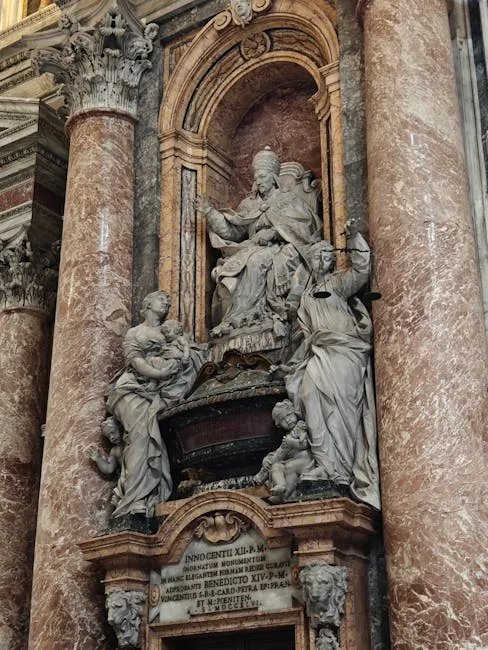
In an era where artificial intelligence is reshaping everything from healthcare to warfare, the notion of the Vatican having a seat at the table might seem like a relic of a bygone age. Yet, in a surprising development, Pope Leo XIV has managed to do what few other global leaders have: secure the attention of the AI industry. According to a recent report, the Vatican has a “man inside” Anthropic, one of the world’s leading AI safety and research companies. While the Pope may not be able to disarm AI, his influence is proving to be a fascinating and potent force in the ongoing debate about the technology’s future.
A New Kind of Papal Influence
The relationship between the Catholic Church and technology has always been complex. From the printing press to the internet, the Church has often been a cautious adopter, wary of both the promise and the peril of new innovations. But with AI, the Vatican is taking a more proactive stance. The appointment of a representative within Anthropic signals a shift from passive observation to active engagement. This isn’t about blessing servers or exorcising rogue algorithms; it’s about having a voice in the development of technology that could fundamentally alter the human experience.
The core of the Vatican’s concern is not technical but philosophical. How do we embed human dignity, compassion, and ethical considerations into systems that are, by their nature, statistical and logical? The Church, with its centuries of experience in moral philosophy and global humanism, offers a perspective that is often missing in the profit-driven, rapid-iteration world of Silicon Valley. Pope Leo XIV seems to understand that to influence AI, you don’t need to build a competing model; you need to shape the conversation among the people who do.
Why Anthropic? A Focus on Safety and Alignment
Anthropic is not just any AI company. Founded by former OpenAI researchers, the company has positioned itself as a leader in “AI safety” and “constitutional AI.” Its core mission is to build reliable, interpretable, and steerable AI systems. This focus on alignment—ensuring AI does what humans want it to do—makes it a natural partner for an institution concerned with ethics and morality.
The Vatican’s choice to embed a representative at Anthropic is strategic. Rather than trying to regulate from the outside, they are opting for a form of internal diplomacy. This “man inside” is not there to convert engineers to Catholicism, but to ensure that the moral and ethical dimensions of AI development are given a proper platform. It is a recognition that the most important decisions about AI’s future are being made in research labs and boardrooms, not in parliaments or synods.
More Than Just a PR Move
Critics might argue that this is simply a public relations exercise for both parties—a way for the Vatican to appear modern and for Anthropic to gain a veneer of moral legitimacy. However, the implications run deeper. The Vatican brings a unique global network and a long-term perspective that is rare in the tech industry. It can speak to communities that are often left out of the AI conversation, including the developing world and those who are skeptical of technology’s relentless march.
Furthermore, the Pope’s involvement forces a conversation about the “common good.” In an industry obsessed with scaling, speed, and market share, the Vatican’s presence is a constant reminder of the human costs and societal risks. It asks the hard questions: Who benefits from this technology? Who is left behind? What happens to human agency when we delegate more and more of our thinking to machines?
The Limits of Papal Power
Let’s be clear: Pope Leo XIV does not have a veto over Anthropic’s research. He cannot stop the release of a new model or dictate the terms of a product launch. The phrase “may not be able to disarm AI” is a realistic admission of the Church’s temporal limits. The Vatican has no army, no trade sanctions, and no regulatory authority over the tech giants.
But power in the 21st century is not just about hard force. It is about narrative, influence, and the ability to set the agenda. The Vatican’s power lies in its moral authority and its ability to convene. By having a representative inside a cutting-edge lab like Anthropic, the Church gains a front-row seat to the future. It can understand the technology intimately, anticipate its dangers, and offer guidance that is grounded in reality rather than fear.
A Blueprint for Engagement
The Vatican’s approach could serve as a blueprint for other institutions—universities, non-profits, religious organizations—that feel powerless in the face of AI. Instead of simply criticizing from the sidelines, they can seek to embed their values within the development process. This is not about censorship or stifling innovation; it is about ensuring that innovation is guided by wisdom.
The presence of a Vatican representative at Anthropic also highlights a growing trend: the professionalization of ethics in tech. Gone are the days when a single “AI ethicist” could be added to a team to check a box. True ethical integration requires ongoing dialogue, deep understanding, and a willingness to be challenged. The Pope’s move suggests that the most effective ethical oversight is collaborative, not adversarial.
Conclusion: The Moral Compass of a Digital Age
Pope Leo XIV may not be able to unplug the servers or halt the training runs, but he has done something arguably more important: he has secured a seat at the table. The Vatican’s man inside Anthropic is a symbol of a new kind of engagement—one that seeks to embed human values into the very code of our future. While the race to build artificial general intelligence continues at a breakneck pace, this quiet, diplomatic move reminds us that the most critical question is not “Can we build it?” but “Should we?” And for that question, the world may need all the moral guidance it can get.
