


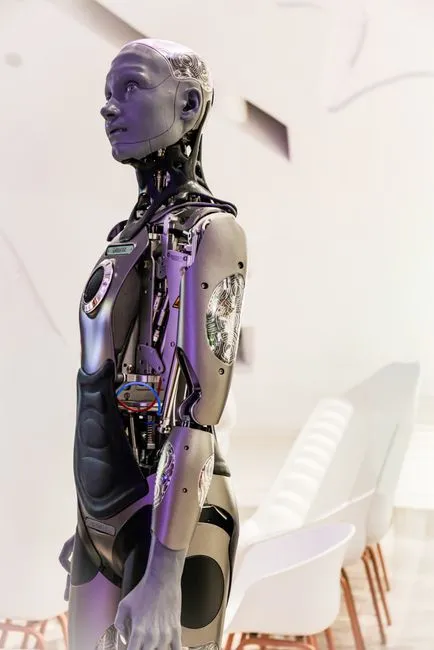
Step into a high-tech lab in Shenzhen, China’s bustling hardware capital, and you might feel like you’ve walked straight into a scene from a science fiction film. But instead of logging into a digital fantasy world, workers here are stepping into a virtual reality rig to do something far more grounded, yet equally revolutionary: they are teaching humanoid robots how to move. At companies like IO-AI Tech, this isn’t just a futuristic experiment or a corporate demo. It has quietly become one of the most in-demand roles in the region, bridging the gap between human intuition and machine precision.
The Ready Player One Reality: How the VR Rig Works
The setup is surprisingly intuitive. Operators strap into a full-body motion capture suit and put on a VR headset. As they walk, bend, lift, and reach, an array of sensors tracks every micro-movement and translates it into digital data. That data is then fed directly into the humanoid robot, which mimics the operator’s actions in real time. It creates a continuous feedback loop between human and machine, where the worker’s physicality becomes the primary training ground for artificial intelligence.
Beneath the surface, the technology relies on advanced computer vision, low-latency wireless transmission, and sophisticated kinematic mapping. But if you strip away the technical terminology, what you are really looking at is a carefully choreographed exchange between biology and engineering. The worker isn’t just pressing buttons; they are physically demonstrating balance, weight distribution, and spatial awareness, while the robot learns to replicate those nuances.
Why Human Motion Is the Missing Link for Humanoid AI
For years, developers have struggled to teach robots how to navigate the messy, unpredictable physical world. Lines of code alone cannot account for the subtle balance shifts required when a robot picks up a heavy box, or the fluid adjustments needed to walk over uneven pavement. That is exactly where human operators become invaluable. By recording thousands of hours of natural human movement, engineers can train machine learning models to recognize patterns, anticipate obstacles, and adapt to entirely new environments.
Think of it as data mining for physical intelligence. Instead of feeding a robot a rigid, step-by-step instruction manual, developers are giving it a vast library of human experience. This allows the AI to generalize, improvise, and eventually operate without constant human oversight. The more diverse the human movements captured, the more versatile the robot becomes in real-world scenarios.
The Rise of Shenzhen as a Robotics Powerhouse
Shenzhen has long been known globally as the world’s factory, but the city is rapidly reinventing itself as a central hub for advanced hardware and AI development. With a dense network of component suppliers, rapid prototyping facilities, and a culture that embraces iterative engineering, the region offers the perfect ecosystem for robotics startups. Companies like IO-AI Tech are capitalizing on this infrastructure by building robots in a living laboratory where engineers, data collectors, and hardware specialists collaborate daily.
This collaborative environment is accelerating development cycles that would otherwise take years in more traditional tech hubs. The proximity to manufacturing supply chains means that when a design flaw is discovered during a VR training session, a prototype can often be modified and tested within days rather than months. This speed is what makes Shenzhen such a critical player in the global race for autonomous robotics.
What This Means for the Future of Work and Manufacturing
The growing demand for human robot operators is a clear signal that artificial intelligence is not simply replacing every human role. Instead, it is creating entirely new categories of work. These employees are essentially becoming AI trainers, physical data architects, and quality assurance specialists for autonomous systems. As humanoid robots move from research labs into warehouses, factories, and eventually consumer homes, the need for humans to guide, refine, and validate their movements will only expand.
We are witnessing a shift from manual labor to supervisory and instructional labor. The robots may eventually handle the heavy lifting and repetitive tasks, but humans will remain essential in teaching them how to do it safely and efficiently. It is a symbiotic relationship that relies on human creativity and adaptability to push machine capabilities forward.
The sight of a worker in Shenzhen stepping into a VR rig to control a metal counterpart is more than a technical demonstration. It is a practical glimpse into a collaborative future where human intuition and artificial intelligence work in tandem. As the hardware becomes more sophisticated and the software more adaptive, these training sessions will undoubtedly evolve, but the core principle will remain unchanged: machines learn best when they have a human to follow. In the ongoing race to build truly autonomous robots, it turns out the most valuable component isn’t silicon or steel. It is us.
