


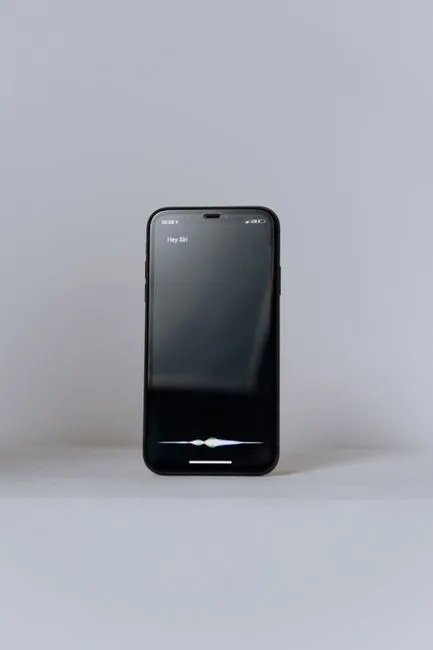
For years, asking Siri for help often felt like a gamble. You might get a simple web search result, a reminder set, or, more often than not, a polite apology that it couldn’t quite understand your request. The promise of a truly intelligent, conversational assistant seemed perpetually out of reach. That is, until now.
After spending hands-on time with the new, AI-powered Siri, the difference is not just noticeable—it is transformative. This isn’t your older sibling’s Siri. This is a version of the assistant that is conversational, omnipresent, and, most importantly, actually helpful. The vision of a digital assistant that feels less like a tool and more like a capable partner is finally becoming a reality.
The End of the “Command-and-Response” Era
The most immediate change you will notice is how you interact with it. The old Siri was a master of one-shot commands. “Set a timer for 10 minutes.” “What’s the weather?” “Call Mom.” It was functional, but robotic. The new Siri AI breaks this mold entirely. It is built for genuine, flowing conversation.
Imagine you are planning a dinner party. Instead of asking three separate questions, you can simply say, “Siri, I’m planning a dinner party for Friday night. What’s a good Italian recipe that doesn’t use nuts, and can you add the ingredients to my shopping list?” Siri will understand the context, process the multi-layered request, and respond with a coherent plan. You can then ask a follow-up like, “Actually, can you find a wine that pairs well with that?” without needing to repeat the context of the meal. It just gets it.
This conversational fluidity is powered by significant advancements in large language models (LLMs) integrated directly into the Apple ecosystem. Siri no longer just parses keywords; it understands intent, nuance, and the flow of a conversation. It can ask clarifying questions, offer suggestions you hadn’t considered, and even admit when it doesn’t know something, offering to search the web for a more complete answer.
Omnipresent and Contextually Aware
One of the most frustrating aspects of old digital assistants was their limited context. They lived in a bubble. The new Siri AI breaks down these walls. It is not just an app you open; it is an intelligence layer that permeates your entire device experience.
This “omnipresence” means Siri is now deeply integrated with your apps and your on-screen activity. For example, if a friend texts you an address, you can simply say, “Siri, add this to my calendar for tomorrow at 3 PM,” and it knows exactly what “this” refers to. If you are looking at a photo of a landmark, you can ask, “Siri, when was this built?” and it will analyze the image and provide information without you needing to leave the Photos app.
This contextual awareness extends to your personal data, handled with Apple’s characteristic focus on privacy. Siri can now pull information from your messages, emails, calendar, and files to answer complex questions like, “What time was my flight last week when I went to Chicago, and what was the name of the restaurant I went to for dinner that night?” It synthesizes data from multiple sources to give you a single, coherent answer. It feels less like talking to a search engine and more like talking to a personal assistant who knows your life.
Actually Helpful: Beyond the Gimmick
The ultimate test of any AI assistant is whether it makes your life easier. The new Siri AI passes this test with flying colors. The “actually helpful” factor comes from its ability to perform complex, multi-step tasks reliably.
Consider these real-world scenarios where the new Siri shines:
- Proactive Suggestions: Siri now learns your routines. If you always order coffee on your way to work, it might proactively surface a shortcut to your favorite coffee shop and your usual order before you even ask.
- Summarization: Overwhelmed by a long email thread or a group chat? Just say, “Siri, summarize this,” and it will instantly provide a concise, bullet-point summary of the key information.
- On-Device Intelligence: Many of these new features run entirely on the device, meaning requests are processed instantly without sending your data to the cloud. This makes Siri faster and more reliable for common tasks like setting timers, sending messages, or controlling smart home devices.
- App Intents: Siri can now perform specific actions within third-party apps. You can say, “Siri, book a ride to the airport with my preferred service,” or “Siri, create a new project in my task manager called ‘Home Renovation’.” It bridges the gap between the assistant and the apps you use every day.
A More Natural and Less Frustrating Experience
Perhaps the most underrated improvement is the reduction in friction. The old Siri often created a moment of awkward silence while it processed your request, followed by a response that might or might not be what you wanted. The new Siri is faster, more accurate, and much better at handling errors.
If it misunderstands you, it can ask a clarifying question. If it cannot complete a task, it will explain why and offer an alternative. This creates a much more forgiving and human-like interaction. You no longer have to speak in a specific, robotic cadence. You can speak naturally, stumble over your words, or change your mind mid-sentence, and Siri will keep up.
This shift in user experience is monumental. It lowers the barrier to using voice commands for complex tasks. Instead of being a last resort for when your hands are full, Siri becomes a primary interface for getting things done, from managing your day to controlling your smart home to simply satisfying your curiosity.
The Verdict: A New Standard for Digital Assistants
My hands-on time with the new Siri AI leaves me genuinely impressed. It is not just an incremental update; it is a fundamental reimagining of what a voice assistant can and should be. By focusing on conversational flow, deep contextual awareness, and genuine helpfulness, Apple has created an assistant that finally lives up to the promise of the technology.
While it is not perfect—it can occasionally struggle with highly complex or ambiguous requests—the improvement is staggering. The new Siri AI feels like a leap forward, setting a new standard for the industry. For anyone embedded in the Apple ecosystem, this update is a game-changer. It transforms Siri from a frustrating afterthought into an indispensable, intelligent companion that is always ready to help. The future of the digital assistant is here, and it is conversational, omnipresent, and actually helpful.
