


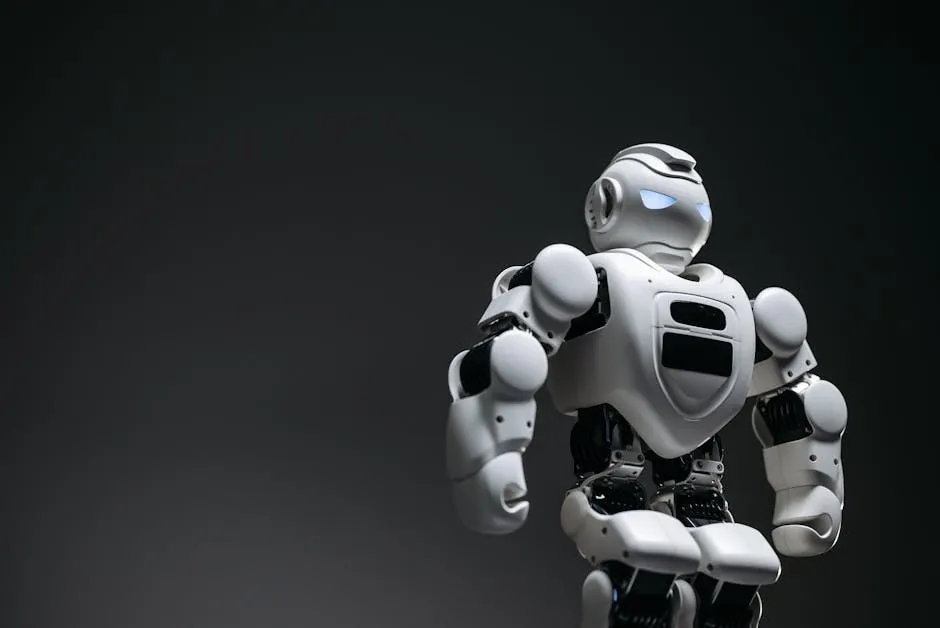
The Shift from Smartphones to Robots
At the recent CES 2026 event, the technology landscape took a significant turn that went beyond the usual smartphone and wearable announcements. Qualcomm made headlines by announcing a strategic partnership with Neura Robotics, marking a pivotal moment for edge computing in automation. This collaboration centers on Qualcomm’s newly released IQ10 processors, designed specifically to power the next generation of intelligent machines.
For years, high-performance mobile computing was defined by what could be done inside a phone or tablet. However, the industry is now witnessing a massive migration of that processing power into robotics. The partnership signals that we are moving past the early days of experimental prototypes and entering an era where robust AI hardware is available for mass deployment.
Why the IQ10 Processor Matters
The core of this announcement lies in the capabilities of the IQ10 processor. Unlike previous chips designed primarily for consumer electronics, these processors prioritize the latency, power efficiency, and thermal management required for autonomous tasks. In the context of robotics, every millisecond counts. An autonomous robot navigating a warehouse or assisting in a home environment cannot afford to wait for cloud calculations. The IQ10 brings advanced AI inference capabilities directly on-device.
- On-Device Processing: This allows robots to make split-second decisions without relying on a constant internet connection, ensuring reliability even in poor network conditions.
- Battery Efficiency: By optimizing power consumption for AI tasks, these chips enable longer operational times for battery-powered robots, addressing one of the biggest hurdles in widespread adoption.
- Thermal Management: Robotics hardware often operates under physical stress. The IQ10 is engineered to handle high loads without overheating, which is critical for safety and performance.
Neura Robotics: Building the Future Workforce
Neura Robotics has chosen to build their new robot models on top of this architecture. This decision isn’t just about raw speed; it’s about compatibility with modern AI frameworks. By leveraging Qualcomm’s ecosystem, Neura can integrate more sophisticated vision systems and natural language processing directly into the hardware layer.
This moves robotics into a similar space to what smartphones experienced in the early 2010s. Just as we saw the explosion of apps when mobile processors became powerful enough, we are now seeing an explosion of robot capabilities when AI chips become efficient enough. For Neura, this means they can focus on designing the chassis and actuators while relying on proven performance from Qualcomm for the “brain.”
The Broader Implications for Industry
This partnership is described as just the beginning, and that understatement is likely accurate. If a major semiconductor leader like Qualcomm is willing to dedicate resources to robotics hardware at this level, it implies a broader industry shift. We are likely seeing other manufacturers follow suit.
Consider the impact on logistics and healthcare sectors. Warehouses already utilize robots for inventory management; these new processors could add AI reasoning that allows them to handle complex tasks like sorting fragile medical supplies or navigating uneven terrain in hospitals without human intervention.
In consumer settings, this technology paves the way for more capable domestic assistants. Imagine a robot vacuum that understands your schedule and rearranges furniture based on usage patterns, rather than just cleaning floors. That leap requires the kind of local intelligence provided by the IQ10 platform.
A New Era of Automation
The convergence of advanced semiconductors and specialized robotics will redefine how we interact with our environment. The partnership between Qualcomm and Neura Robotics highlights that the future of computing is no longer confined to our pockets; it is moving into our homes, factories, and cities.
As we look toward 2026 and beyond, the focus remains on making this technology accessible and safe. With the foundation laid by these new processors, the robotics industry is poised for a growth period that mirrors the smartphone revolution of the past decade. The hardware is ready; now it is up to developers and manufacturers to build the applications that make this power useful for everyone.
