


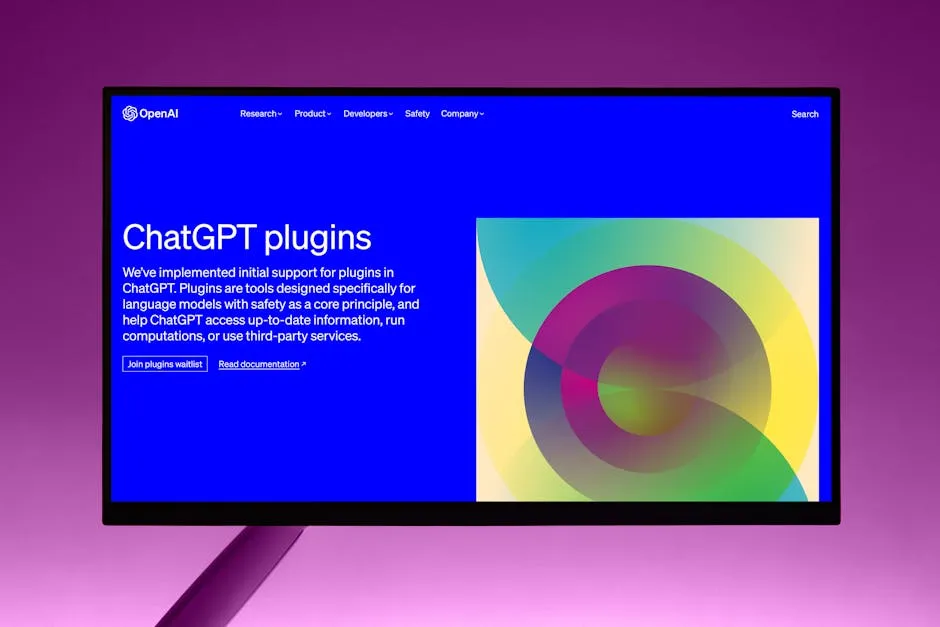
In the rapidly evolving landscape of artificial intelligence, recent news has sent ripples through the technology sector. It has been announced that OpenAI, a leader in the frontier lab space, has acquired Promptfoo. This strategic move is more than just a corporate expansion; it signals a critical pivot towards ensuring that AI agents can be deployed safely and reliably within complex business operations.
Understanding the Acquisition
To understand why this deal matters, we first need to look at what Promptfoo actually does. For developers working with large language models (LLMs), building a system is only half the battle. The other half involves rigorous testing. Promptfoo is a tool designed to test and evaluate prompts. It helps engineers ensure that their AI systems respond correctly, safely, and consistently under various inputs.
By acquiring this infrastructure, OpenAI is effectively internalizing a layer of quality control. As organizations move from simple chatbots to autonomous agents—software that can browse the web, execute code, or handle complex workflows—the margin for error shrinks significantly. A hallucination in a standard chat interface might be frustrating, but a hallucination in an autonomous agent handling financial transactions could be catastrophic.
The Race for Safety and Reliability
This acquisition underscores a broader reality facing the industry today: frontier labs are scrambling to prove their technology can withstand critical scrutiny. We are seeing a shift from “can we build this?” to “can we trust this?” The source material notes that frontier labs are under pressure to demonstrate safety in essential operations.
In previous years, speed-to-market was the primary driver for AI development. However, as models become more agentic—meaning they act independently rather than just generating text—the focus is shifting toward alignment and safety. OpenAI buying Promptfoo suggests that they are taking a proactive stance against potential risks like prompt injection attacks or unintended behaviors that could emerge in production environments.
Implications for Developers and Businesses
For the development community, this integration means new standards for testing AI behavior. Previously, developers might have had to use third-party tools to validate their model outputs. Now, these capabilities are becoming native or tightly coupled with major platforms.
Besides safety, there is an efficiency component. Validating prompts and agent behaviors requires significant compute resources. By owning the testing framework alongside the models, companies can streamline their development pipelines. This reduces the overhead of external dependencies and allows for faster iteration cycles without compromising on security protocols.
The Future of Agentic AI
As we look toward the future of agentic AI, tools like Promptfoo will likely play a central role in the governance of these systems. The concept of “critical business operations” mentioned in recent reports implies that banks, healthcare providers, and enterprises are hesitant to adopt AI without ironclad guarantees.
This acquisition is a signal to the market that reliability is becoming the new currency for AI adoption. Companies can no longer simply deploy models; they must prove their robustness against adversarial examples and edge cases. This deals highlights the industry’s transition from experimentation to production-level trust.
Conclusion
The OpenAI acquisition of Promptfoo is a defining moment for the AI safety sector. It marks a recognition that as our AI systems become more
