


Autonomous transportation is moving beyond science fiction and into everyday reality. From self-driving cars on city streets to autonomous buses exploring public transit routes, artificial intelligence is quietly changing how people and goods move from one place to another. The shift is not just about removing the driver. It is about building smarter, safer, and more efficient transportation systems that can make complex decisions in real time.
What AI Means for Autonomous Transportation
At its core, autonomous transportation depends on AI to perceive the environment, interpret what is happening, and make decisions. A self-driving vehicle must constantly process data from cameras, lidar, radar, and sensors. It needs to detect pedestrians, recognize traffic signs, predict the behavior of other drivers, and respond to unexpected situations. This is not a simple task. Roads are unpredictable, weather changes, and human behavior is rarely perfect.
AI helps transportation systems handle that complexity. Machine learning models can be trained on massive amounts of driving data, allowing vehicles to improve their decision-making over time. Computer vision allows them to “see” the world around them. Natural language processing can support voice interfaces, while predictive analytics can help optimize routes and reduce delays.
Driverless Cars: A New Era of Mobility
Driverless cars are perhaps the most visible example of AI in transportation. The idea is straightforward: a vehicle that can drive itself should reduce the need for human attention behind the wheel. In theory, this could lower the risk of accidents caused by distraction, fatigue, or impaired driving. It could also make transportation more accessible to people who are unable to drive.
The Challenges Are Still Significant
Even with advanced AI, driverless cars face major challenges. One of the biggest is handling edge cases: rare or unusual situations that do not appear often in training data. A child chasing a ball into the street, a damaged traffic sign, or a sudden road closure can require split-second judgment. AI must not only detect these events but also respond in a way that feels safe and predictable to other road users.
Another challenge is public trust. For autonomous cars to become widely adopted, people need to believe that the technology is reliable. That means transparency, rigorous testing, and clear communication about how the system works and what it can and cannot do.
Autonomous Buses and Public Transit
While driverless cars have received a lot of attention, autonomous buses are also making important progress. Public transit systems are looking at AI-powered buses as a way to improve service, reduce costs, and expand routes. In some areas, shuttle-style autonomous buses are being tested to connect neighborhoods, transit hubs, or campus areas.
For public transportation, AI can also help with scheduling and routing. By analyzing ride patterns, demand, and traffic conditions, transit agencies can make services more responsive. Instead of running buses on fixed schedules that may not match actual demand, AI can support more flexible and efficient operations.
Smart Delivery Robots and Last-Mile Logistics
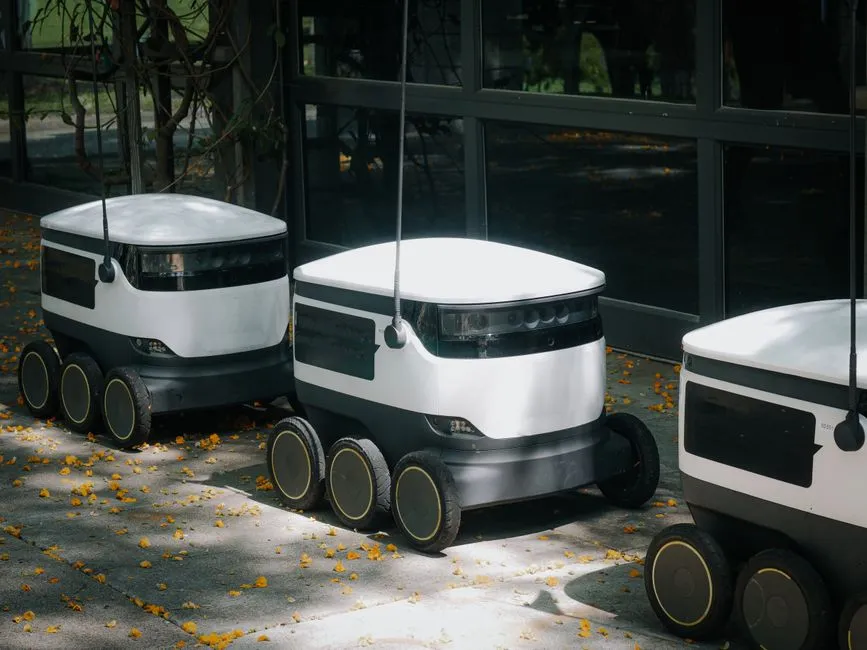
Autonomous transportation is not limited to moving people. One of the fastest-growing areas is last-mile delivery. Smart delivery robots are being used to carry packages, food, and small goods across sidewalks, campuses, and controlled urban environments. These robots use AI to navigate around obstacles, avoid pedestrians, and follow safe paths to their destinations.
For businesses, this can be a practical solution. Last-mile delivery is often one of the most expensive parts of the logistics chain. Autonomous delivery robots can reduce labor costs, improve delivery speed, and expand service options. For consumers, they offer the convenience of receiving items without waiting at home or traveling to a pickup point.
Why Delivery Robots Are Easier Than Driverless Cars
In many ways, delivery robots are a more contained use case than full autonomous vehicles. They usually operate at lower speeds, in more predictable environments, and with narrower tasks. They do not need to navigate complex highways or make split-second decisions in high-speed traffic. That makes them a promising early application for AI in transportation.
AI in Infrastructure and Traffic Management
Autonomous transportation does not only happen inside vehicles. AI is also changing the infrastructure around them. Smart traffic systems can analyze real-time data from cameras, sensors, and connected vehicles to manage traffic flow more effectively. This can reduce congestion, lower emissions, and improve safety.
In the future, vehicles may communicate with traffic signals, road sensors, and other cars. This kind of connectivity could allow traffic systems to adapt dynamically, prioritizing emergency vehicles, adjusting signal timing, or coordinating autonomous fleets to move more smoothly through urban areas.
Safety, Ethics, and Regulation
As AI becomes more central to transportation, questions of safety and accountability become essential. If an autonomous vehicle is involved in an accident, who is responsible? The manufacturer? The software developer? The operator? These questions do not have simple answers.
Regulators, engineers, and industry leaders are working to establish standards for testing, data use, and accountability. AI safety is not just about preventing crashes. It is also about ensuring that systems behave fairly, protect privacy, and do not make biased decisions. For example, a delivery robot should not favor certain routes or customers in a way that creates inequity, and a self-driving car should not make decisions that put one group of road users at greater risk than another.
The Bigger Picture: Smarter, More Connected Mobility
The long-term vision of AI in transportation is not simply a fleet of independent machines. It is a smarter mobility ecosystem where vehicles, infrastructure, and services work together. Imagine a city where autonomous shuttles connect with public transit, delivery robots handle small packages, and traffic systems adjust in real time to reduce congestion. In that kind of environment, transportation becomes more fluid, efficient, and accessible.
AI will also play a role in sustainability. By optimizing routes, reducing idle time, and improving vehicle efficiency, autonomous systems can help lower fuel consumption and emissions. If paired with electric vehicles, the impact could be even greater.
What Comes Next
The future of transportation is not about choosing between human drivers and machines. It is about creating systems where technology supports human needs while reducing inefficiency and risk. AI will continue to improve through better sensors, more realistic training data, and stronger safety frameworks. Over time, autonomous transportation solutions will likely become more common, more reliable, and more integrated into daily life.
Whether it is a driverless car quietly navigating a highway, an autonomous bus serving a city district, or a delivery robot dropping off a parcel at a doorstep, the direction is clear. AI is not just changing how vehicles operate. It is reshaping the entire transportation experience, making it smarter, safer, and more connected than ever before.
Related read: AI Wonderland Weekly: Why AI Safety Became the Defining Conversation This Week
