


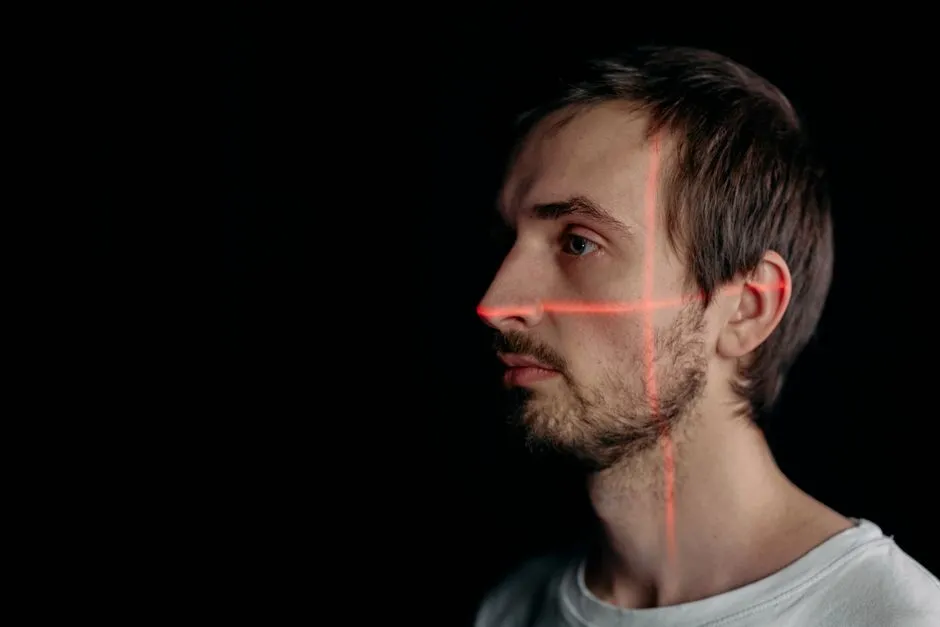
For decades, forensic anthropologists have played a quiet but vital role in helping families find answers. When a person goes missing and only fragments of remains are recovered, the work of identifying them can feel like solving a puzzle with most of the pieces missing. Bones may be incomplete, weathered, or scattered across time and place. Records may be outdated or inconsistent. The process is meticulous, but it is also slow.
In recent years, a new set of tools has entered this field: artificial intelligence. AI is not replacing the judgment of forensic experts, but it is helping them work faster, connect patterns more clearly, and make more informed decisions when identifying unidentified remains. The result could be a meaningful shift in how missing persons cases are investigated, and how long families wait for closure.
Why Identifying Unidentified Remains Is So Difficult
Forensic anthropology is the study of skeletal remains in a legal context. Practitioners examine bones to estimate characteristics such as age, sex, ancestry, height, and sometimes trauma or cause of death. When a complete skeleton is available, the task is challenging but more manageable. The difficulty multiplies when remains are partial, fragmented, or degraded.
There are several reasons this work is so complex:
- Incomplete remains: Investigators may recover only a few bones, making it hard to establish a reliable profile.
- Environmental damage: Exposure to soil, water, heat, or scavenging can alter bone structure over time.
- Population diversity: Skeletal traits vary widely across ethnic and geographic groups, which can make broad estimates less precise.
- Large case backlogs: Many jurisdictions have long lists of unidentified remains, and resources are often limited.
- Fragmentation: A single person’s remains may be scattered, while multiple individuals may be intermingled at one site.
Because of these obstacles, identification often depends on a combination of methods, including DNA analysis, dental records, personal effects, witness statements, and comparison with missing persons databases. But even with all of those tools, many cases remain unsolved for years.
Where AI Fits Into the Process
AI is useful in forensic anthropology because it can process large amounts of complex data quickly and detect patterns that may be difficult for humans to notice at a glance. In this context, AI does not simply “guess” who a person is. Instead, it supports decision-making by analyzing measurements, images, genetic markers, and case history in ways that can narrow down possibilities.
1. Matching Fragments More Efficiently
One of the most promising uses of AI is in matching skeletal fragments. If a set of remains includes multiple individuals or incomplete bones, investigators need to determine which fragments belong together. This is where machine learning and computer vision can help.
Algorithms can analyze bone shape, size, curvature, and surface features to suggest which fragments are likely to belong to the same individual. This can reduce the time spent on manual sorting and help researchers focus on the most probable combinations. In mass disaster recovery, battlefield analysis, or archaeological contexts, that kind of speed can be especially valuable.
2. Improving Skeletal Profile Estimation
Traditional methods for estimating age, sex, and ancestry rely on established anthropological references. AI can augment those methods by learning from large datasets of skeletal measurements. Over time, models can identify subtle patterns that improve the accuracy of estimates, especially when remains are incomplete.
This does not mean AI provides a single definitive answer. Instead, it helps forensic anthropologists generate probabilistic profiles. For example, a model may suggest that a set of remains is most likely to belong to an adult female in a certain age range, with a lower probability of other possibilities. Those probabilities can then be compared against missing persons records.
3. Supporting Facial and Dental Reconstruction
Facial reconstruction has long been used in forensic investigations, but it is traditionally a highly specialized and time-consuming process. AI tools are beginning to assist by generating possible facial approximations from skeletal data. While these reconstructions are not exact portraits, they can help investigators identify potential matches or generate leads.
Dental analysis is another area where AI may help. Dental records are one of the most reliable methods of identification when available, but matching records to fragmented remains can be difficult. AI can assist by comparing digital dental records, x-rays, and 3D scans to skeletal evidence, potentially making the matching process more efficient.
How This Helps Families and Investigators
The most important benefit of AI-augmented forensic anthropology is not just technological progress. It is the possibility of faster identification, which means more families can receive answers sooner.
For many families, the wait is not only emotional but also practical. An unidentified person cannot be formally laid to rest, and unresolved cases can remain open in legal and administrative systems for years. AI can help reduce that delay by improving the speed and consistency of analysis, especially in cases involving partial remains.
It can also help prioritize investigations. When resources are limited, investigators need to know which leads are most promising. AI can help rank potential matches, flag inconsistencies, or highlight missing information that should be investigated further.
The Limits and Ethical Considerations
Despite the promise, AI in forensic anthropology is not a standalone solution. It is best understood as a supporting tool, not a replacement for professional judgment. Several important limitations remain:
- Data quality matters: AI models perform best when trained on accurate, diverse, and well-documented datasets.
- Bias is a concern: If training data underrepresents certain populations, the results may be less reliable for those groups.
- Interpretation is still human: Forensic experts must evaluate AI outputs in context, including legal standards and case-specific evidence.
- Privacy and consent are critical: Genetic and biometric data used in identification must be handled with strict ethical safeguards.
Because forensic identification can have profound legal and emotional consequences, any AI system used in this field must be transparent, testable, and subject to expert review. The goal is not to automate identification, but to make the process more informed and efficient.
A New Chapter in Solving Old Cases
The combination of forensic anthropology and artificial intelligence is still developing, but its potential is clear. By helping researchers match fragments, refine skeletal profiles, compare records, and prioritize leads, AI can make an important difference in cases that have remained unsolved for years.
For missing persons investigations, the stakes are deeply personal. Every identified individual represents a family, a community, and an open chapter finally being closed. AI may not solve every mystery, but it is becoming a powerful ally in the search for answers, offering hope in one of the most challenging areas of forensic science.
Related read: AI Safety Takes Center Stage in the July 31, 2026 AI Wonderland Weekly
