


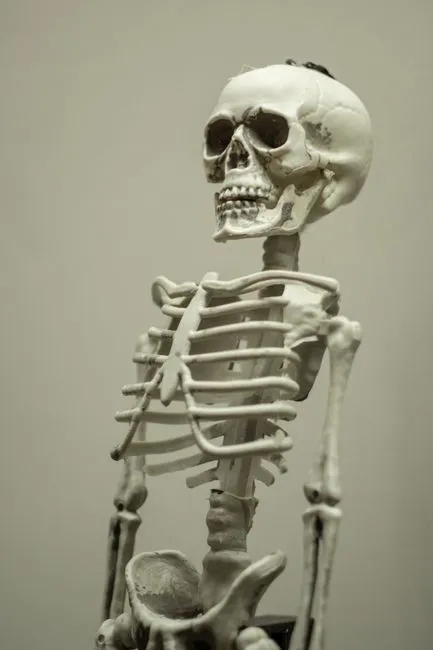
When a set of remains is recovered and cannot be immediately identified, investigators face one of the most difficult tasks in forensic science. The process of matching fragments or incomplete skeletons to missing persons is slow, complex, and often dependent on a narrow set of available evidence. For years, forensic anthropologists have relied on careful measurement, physical examination, and comparison with existing records to help identify individuals. But over the last few years, artificial intelligence has started to change this process, offering new ways to analyze skeletal remains, interpret incomplete data, and connect unidentified cases with missing-person records more efficiently.
Why Reconstructing Unidentified Remains Is Still Difficult
Identifying unknown remains is rarely a straightforward process. In many cases, the remains are incomplete. Bones may be fragmented, degraded by time, damaged by environmental conditions, or recovered long after death. Even when a skeleton is relatively intact, the task becomes complicated when the person was never formally documented, when records are inconsistent, or when the remains belong to someone with limited public visibility.
Forensic anthropologists work with what is available. They examine bone structure, estimate age, sex, and ancestry, and look for unique features that may help narrow down identity. They also compare findings with dental records, DNA samples, and missing-person reports. However, this work can take months or even years, especially when the remains are partial or when the number of possible matches is large.
The challenge is not only scientific but also practical. Investigators may be working across different agencies, jurisdictions, and databases. Information may be scattered, inconsistent, or difficult to compare. In cold cases, the lack of a clear starting point can make progress even slower.
The Traditional Role of Forensic Anthropology
Forensic anthropology has long played a central role in identifying unknown individuals. Anthropologists are trained to read the body’s physical evidence. They can estimate age from bone development and wear, determine sex from pelvic and cranial features, and make informed assessments about ancestry based on skeletal proportions. They also examine trauma, pathological conditions, and other markers that may support identification.
These methods are valuable, but they are limited by the quality and completeness of the remains. When bones are missing or badly damaged, the estimates become less certain. Even experienced professionals can face ambiguity, especially when working with partial skeletons or remains that do not preserve well.
This is where technology has started to make a meaningful difference. AI does not replace the forensic anthropologist. Instead, it acts as an augmentation tool, helping researchers process more data, detect patterns faster, and improve the reliability of certain assessments.
How AI Is Changing the Process
Artificial intelligence can help in several important ways. One of the most significant is pattern recognition. Machine learning models can be trained on large datasets of skeletal measurements, imaging data, and case records to identify patterns that may be difficult or time-consuming for humans to detect manually.
For example, AI systems can assist in estimating age, sex, and ancestry by analyzing skeletal features with high precision. They can also help determine whether bone fragments belong to the same individual by comparing shape, density, and structural characteristics. In cases where remains are incomplete, these tools can support more informed decisions by highlighting the most likely matches and reducing the number of candidates that need to be reviewed further.
Computer vision is another powerful application. AI models can analyze photographs, radiographs, and 3D scans of remains to extract detailed features. This can help researchers compare fragments more accurately and identify subtle anatomical markers that might otherwise be overlooked. In some cases, AI can also assist in reconstructing facial or osteological features, giving investigators a clearer visual profile to compare with missing-person records.
Matching Remains to Missing Persons
One of the most important goals in forensic anthropology is connecting unidentified remains to missing-person cases. This is where AI can make a real operational difference. Investigators often have to compare skeletal profiles with large numbers of missing-person reports, each containing varying levels of detail. Some reports may include height, age, sex, ancestry, medical history, or dental information. Others may be incomplete or poorly documented.
AI can help by structuring and analyzing this information more efficiently. Natural language processing can be used to extract relevant details from case files, reports, and public records. Machine learning models can then compare those details with the anthropological profile generated from the remains. Instead of relying solely on manual review, investigators can receive ranked lists of potential matches, allowing them to focus their efforts on the most promising leads.
This does not mean the final identification is made by a machine. Human review remains essential. AI can support the process, but it cannot replace professional judgment, legal standards, or the need for confirmation through DNA, dental records, or other definitive evidence.
What an AI-Augmented Workflow Might Look Like
In practice, an AI-augmented forensic anthropology workflow could begin with the intake and documentation of remains. Researchers would scan or photograph the bones and input the available case information into a digital system. AI tools would then analyze the skeletal data, generate an anthropological profile, and compare it against missing-person records.
From there, the system could identify likely candidates, flag inconsistencies, and suggest additional tests or comparisons. A forensic anthropologist would review the results, assess confidence levels, and decide on next steps. If the case moves forward, more definitive methods such as DNA analysis or dental comparison would be used to confirm identity.
This kind of workflow can improve speed and consistency. It can also help reduce errors that may occur when working across large datasets or when information is fragmented. For cold cases, AI may reopen possibilities by revealing connections that were previously missed.
Important Limitations and Ethical Considerations
While AI offers promising benefits, it is not a perfect solution. The accuracy of any model depends heavily on the quality of the training data. If the data used to train the system is biased, incomplete, or not representative of the populations involved, the results may be less reliable. This is a serious concern in forensic science, where decisions can affect families, legal proceedings, and public trust.
There are also privacy and ethical issues to consider. Using AI to analyze sensitive human remains and personal records requires strong safeguards. Data must be protected, access must be controlled, and the technology must be used in a transparent and accountable way. Explainability is also important. Investigators need to understand how a model reached a certain conclusion, especially when those conclusions influence real-world decisions.
For these reasons, AI should be viewed as a support tool, not a replacement for forensic expertise. The strongest results come when technology and human judgment work together.
The Future of AI in Forensic Identification
The use of AI in forensic anthropology is still evolving, but its potential is clear. As models improve, researchers may see more advanced applications, including better integration of DNA data, dental records, imaging, and case files. Future systems may also become more explainable, making it easier for investigators to assess confidence levels and document their reasoning.
There is also the possibility of greater collaboration between institutions. Shared, anonymized datasets and cross-agency platforms could help improve matching accuracy for missing persons across regions. In time, AI-augmented forensic anthropology may become a standard part of how unidentified remains are analyzed and resolved.
In the end, the goal remains the same: to bring answers to families, close unresolved cases, and ensure that unidentified individuals are properly recognized. AI does not change that goal, but it is changing how we can reach it. By combining traditional forensic expertise with modern machine learning, investigators now have a more powerful tool for solving one of the hardest problems in forensic science.
Related read: How AI Is Transforming Supply Chain Optimization for Smarter, Resilient Operations
