


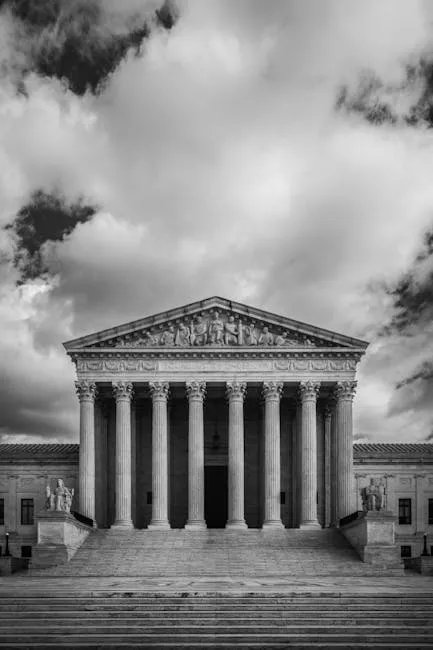
A Major Legal Victory for the AI Sector
In a significant development for the artificial intelligence industry, a federal judge has ruled in favor of Anthropic, ordering the Trump administration to rescind recent restrictions placed on the company. This decision marks a pivotal moment in the ongoing saga involving the Defense Department and the regulation of advanced AI technologies. For tech enthusiasts, developers, and business leaders, this ruling signals a shift in how government oversight may interact with private sector innovation.
The Background of the Restriction
To understand the weight of this legal victory, one must look at the context surrounding the Defense Department’s involvement. Over the past few months, the administration implemented measures that limited the operations of Anthropic. These measures were ostensibly tied to national security concerns, suggesting that the company’s models or data usage posed potential risks to government interests. Such actions are not uncommon in the current geopolitical climate, where technology companies often find themselves at the intersection of commercial ambition and state security protocols.
However, the nature of these restrictions quickly became a point of contention. Anthropic, a leader in the development of large language models like Claude, argued that these limitations were overly broad and lacked the necessary legal justification. The company contended that the restrictions hindered their ability to operate effectively without compromising security, creating a scenario where innovation was being stifled by administrative overreach.
The Judge’s Decision and Its Reasoning
The federal judge, faced with arguments from both sides, issued an injunction that required the administration to lift these specific restrictions. While the court documents may not have been exhaustive in every detail, the outcome was clear: the government’s attempt to impose these specific limitations was deemed unlawful or procedurally incorrect. This ruling suggests that the courts are willing to step in to protect private companies from what is perceived as excessive or unjustified government intervention.
This is particularly notable given the high-profile nature of the Trump administration’s approach to technology policy. The decision reinforces the principle that national security claims must be supported by concrete evidence and legal frameworks, rather than broad administrative mandates that can be lifted through litigation.
Implications for the Industry and Future AI Policy
The implications of this win extend far beyond Anthropic itself. For other AI companies operating in the United States, this serves as a significant encouragement. If the courts are willing to challenge the administrative actions taken by the Defense Department or other executive branches, it opens the door for similar legal challenges in the future. This could lead to a more transparent regulatory environment where companies are not afraid to push the boundaries of what is possible.
Furthermore, this case highlights the importance of robust legal representation and the necessity for clear communication between the government and the private sector. It also underscores the tension between national security and the preservation of technological freedom. As AI continues to evolve, the balance between these two forces will be a critical factor in shaping the industry’s trajectory.
For investors and stakeholders, this news is generally viewed as positive. It reduces uncertainty and suggests that the legal landscape for AI development is becoming more stable. Companies can now focus on building robust security protocols internally rather than living under the threat of broad, potentially arbitrary restrictions.
Conclusion: A Step Toward Balanced Innovation
Ultimately, this ruling is a reminder that the American legal system remains a check on executive power, even when it comes to high-stakes technology issues. Anthropic’s victory is not just a win for one company, but a validation of the principle that innovation should not be unduly burdened by unfounded government mandates. As the industry continues to grow, we can expect to see more clarity emerge regarding the boundaries of government intervention. For now, this injunction stands as a beacon of hope for developers and entrepreneurs who strive to build the future while navigating a complex regulatory environment.
