


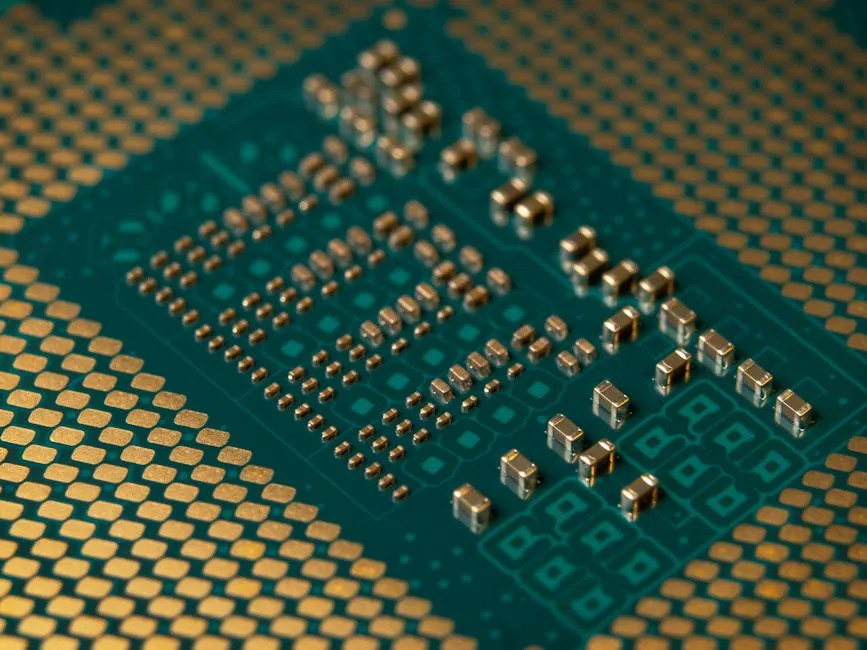
The semiconductor industry has long operated on a predictable rhythm. For decades, Moore’s Law served as the industry’s north star, dictating that transistor counts on microchips would roughly double every two years. But that rhythm has broken. As physical limits and soaring manufacturing costs make traditional scaling increasingly impractical, the global chip race is entering uncharted territory. At the forefront of this shift is Huawei, whose leadership in semiconductor strategy—often dubbed the “Chip Queen” for its aggressive, forward-looking approach—is fundamentally rewriting the rules of the game. This isn’t just a corporate pivot; it’s a geopolitical and technological realignment that could reshape the balance of power in the tech world.
The End of an Era: Why Moore’s Law Is Fading
Moore’s Law was never a law of physics. It was an economic and engineering benchmark that guided investment, research, and product roadmaps. But as we push transistors into the single-digit nanometer range, we’ve hit a wall. Quantum tunneling, heat dissipation, and astronomical fabrication costs have made the old playbook obsolete. The industry is now acknowledging that simply shrinking transistors won’t cut it. Instead, innovation is shifting toward architectural efficiency, specialized hardware, and smarter system integration. This transition creates both a vulnerability and an opportunity. Companies tied to legacy scaling models risk stagnation, while those willing to experiment with new paradigms can leapfrog the competition.
Huawei’s Strategic Pivot: Beyond Traditional Scaling
Huawei has spent years preparing for this exact moment. Facing intense export restrictions and supply chain bottlenecks, the company couldn’t rely on traditional global semiconductor networks. Instead, it doubled down on a multi-pronged strategy that prioritizes resilience and innovation over conventional scaling. The result is a comprehensive overhaul of how chips are designed, packaged, and deployed. Rather than waiting for the rest of the industry to catch up, Huawei is actively building the infrastructure for the next generation of computing.
Advanced Packaging and Chiplet Architecture
One of the most significant moves is Huawei’s heavy investment in advanced packaging and chiplet technology. Rather than trying to cram every function onto a single monolithic die, engineers are breaking complex systems into smaller, specialized tiles. These chiplets are then interconnected using high-bandwidth, low-latency packaging techniques. This approach not only sidesteps some of the physical limitations of extreme ultraviolet (EUV) lithography but also improves yield rates and reduces manufacturing costs. It’s a pragmatic solution that turns a constraint into a competitive advantage. By focusing on how components talk to each other rather than just how small they are, Huawei is unlocking performance gains that traditional scaling simply can’t match.
Building a Resilient Domestic Supply Chain
Beyond hardware design, Huawei has been quietly fortifying China’s domestic semiconductor ecosystem. From materials science and photolithography alternatives to testing and validation infrastructure, the company is pushing for vertical integration. This isn’t just about self-sufficiency; it’s about creating a parallel innovation track that operates independently of Western supply chains. By fostering collaboration between research institutes, state-backed foundries, and private developers, Huawei is helping to accelerate a localized tech ecosystem that can iterate rapidly and adapt to global shifts. The goal is clear: build a supply chain that can withstand geopolitical friction while maintaining cutting-edge performance.
The Geopolitical Chessboard: Challenging US Dominance
For years, the United States has maintained a formidable lead in semiconductor technology. Through a combination of cutting-edge design tools, intellectual property dominance, and strategic partnerships with manufacturing giants, the US has effectively set the pace for global innovation. Huawei’s aggressive push into alternative chip architectures and domestic supply chain development directly challenges that model. If successful, it could force a recalibration of global tech alliances, reduce reliance on Western-controlled fabrication networks, and create a more multipolar semiconductor landscape. The implications extend far beyond one company. Entire industries—from artificial intelligence to automotive and defense—depend on the chips that power them. A shift in who controls that pipeline changes the rules for everyone.
What This Means for the Future of Tech
The decline of Moore’s Law isn’t a dead end; it’s a catalyst. The companies and nations that thrive in this new era will be those that prioritize efficiency, modularity, and strategic independence. Huawei’s approach demonstrates that innovation doesn’t always require following the established path. Sometimes, it means building a new one entirely. As the global semiconductor landscape continues to evolve, the race is no longer just about who can shrink transistors the fastest. It’s about who can architect the most intelligent, adaptable, and resilient systems. The gauntlet has been thrown. The rest of the industry is now scrambling to pick it up
