


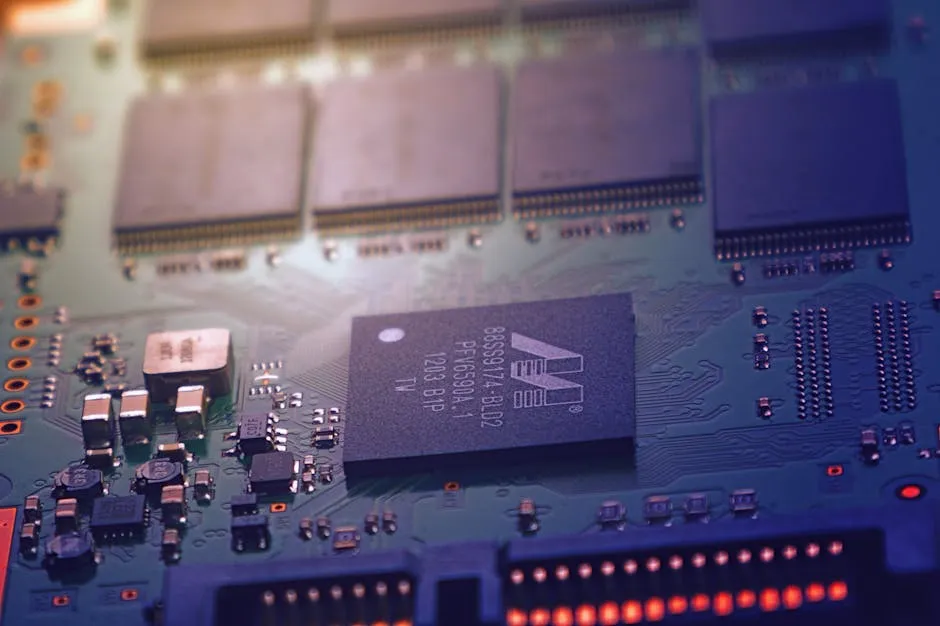
The End of an Era in Silicon
For decades, the semiconductor industry has operated under a single, unwavering principle: Moore’s Law. Named after Gordon Moore, the co-founder of Intel, this observation predicted that the number of transistors on a microchip would roughly double every two years. It became the roadmap for technological progress, driving everything from faster smartphones to more capable artificial intelligence systems. But as we move deeper into the 2020s, that roadmap is hitting a hard stop. Physical limitations, skyrocketing production costs, and diminishing performance gains have forced the entire industry to rethink how chips are designed and manufactured.
Into this shifting landscape steps Huawei, and more specifically, the executive team behind its semiconductor division—often referred to in industry circles as the “Chip Queen.” Rather than waiting for global supply chains to realign or clinging to outdated scaling methods, Huawei is aggressively adapting to a post-Moore’s Law reality. This strategic pivot is not just a corporate adjustment; it is a direct challenge to the longstanding dominance of Western semiconductor manufacturing.
Huawei’s New Playbook for Chip Production
When traditional transistor scaling reaches its limits, innovation has to come from elsewhere. Huawei’s engineering teams have been quietly but systematically overhauling their approach to chip architecture. Instead of chasing smaller and smaller nanometer nodes, the company is leaning heavily into advanced packaging techniques, chiplet design, and system-level optimization.
Prioritizing Efficiency Over Raw Power
The old model rewarded brute force: more transistors meant more speed and more capability. The new model demands intelligence. Huawei is focusing on how individual components communicate with one another, reducing power consumption while maintaining high performance. By breaking complex processors into smaller, specialized chips and packaging them together on a single substrate, engineers can achieve performance gains that rival traditional scaling without pushing against physical boundaries. This approach also allows for greater flexibility in design, making it easier to tailor chips for specific workloads like edge computing, telecommunications, and AI inference.
Building a Resilient Domestic Supply Chain
Perhaps the most significant aspect of Huawei’s strategy is its push toward self-reliance. Years of geopolitical tensions and export restrictions have made it clear that relying on foreign manufacturing hubs carries substantial risk. In response, Huawei has invested heavily in domestic equipment, materials, and fabrication processes. This isn’t just about survival; it’s about control. By developing a more insulated supply chain, the company can iterate faster, reduce dependency on overseas foundries, and maintain momentum even when global trade policies shift.
The Geopolitical Ripple Effect
Huawei’s strategic evolution has immediate implications for the global tech landscape. The United States has long maintained a commanding lead in semiconductor design and advanced manufacturing, supported by massive government incentives like the CHIPS Act and a tightly knit ecosystem of Silicon Valley firms. Huawei’s ability to bypass traditional scaling constraints and develop competitive alternatives at home complicates that narrative.
When a major player demonstrates that high-performance chips can be produced without relying on the conventional roadmap, it forces competitors to reconsider their own strategies. Western manufacturers can no longer assume that physical scaling limits will automatically preserve their market advantage. Instead, they must invest in similar architectural innovations, advanced packaging, and domestic production capabilities to stay ahead. The result is a more competitive, fragmented, and dynamic global semiconductor market.
What This Means for the Future of Tech
The ripple effects of this shift extend far beyond boardrooms and fabrication plants. Consumers, developers, and entire industries will feel the impact as the definition of “next-generation” hardware changes. Devices will likely become more energy-efficient, specialized, and adaptable. AI workloads, which currently demand massive computational resources, may find new life in optimized, modular chip architectures that prioritize efficiency over raw transistor counts.
Moreover, the democratization of advanced chip design could lower barriers to entry for smaller companies and research institutions. When the path forward is no longer a single, expensive highway of nanometer shrinkage, but rather a network of architectural and packaging innovations, more players can compete on a level playing field.
Final Thoughts
The era of blindly following Moore’s Law is over, and that is not a setback—it is an opportunity. Huawei’s strategic pivot toward advanced packaging, architectural efficiency, and domestic manufacturing shows how quickly the industry can adapt when forced to innovate. As the “Chip Queen” and her engineering teams continue to push boundaries, they are not just building better processors; they are rewriting the rules of semiconductor development. For the United States and its allies, this is a clear signal that maintaining technological leadership will require more than just capital. It will demand creativity, agility, and a willingness to embrace a new paradigm where efficiency, resilience, and smart design matter far more than the size of a transistor.
