


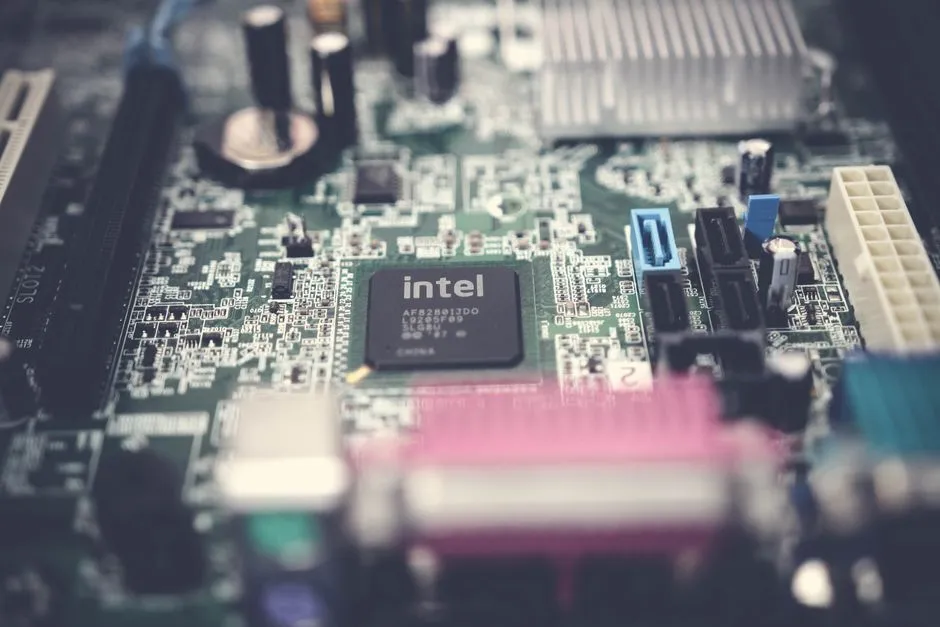
There is a quiet shift happening in the AI world, and it is easy to miss if you are only watching the headlines. The conversation still often centers on chatbots, model benchmarks, and the latest product announcements. Yet beneath that familiar surface, the real competition is moving faster in places that are less visible to the public: chips, data centers, security architecture, and the trust systems that will determine whether AI can scale responsibly.
That is the theme of this week’s AI Wonderland update: the AI race is no longer just about who can build the smartest model. It is increasingly about who can support that model with reliable infrastructure, protect it from abuse, and make it usable in ways that enterprises, developers, and everyday users can actually rely on.
The Model Spotlight Is Still Bright, But the Foundation Is Changing
For the past few years, the most visible part of the AI race has been the model itself. We compared language models the way we once compared phone cameras or laptop batteries. Which one writes better? Which one codes more accurately? Which one feels more natural in conversation?
That question is still important. But in 2026, it is no longer the only question that matters. A model that performs brilliantly in a demo can still fail in the real world if the systems around it are weak. If inference is too expensive, too slow, or too unreliable, the model’s intelligence becomes less useful. If the infrastructure cannot handle sudden demand, the product experience suffers. If security is an afterthought, the model becomes a liability rather than an advantage.
This is why the focus is shifting beneath the surface. The companies that win the next phase of AI will not be the ones that simply release the next impressive benchmark. They will be the ones that can deliver intelligence at scale, with the performance, cost control, and safety guardrails needed for real deployment.
Chips and Infrastructure Are Becoming the New Battleground
Why compute is the new moat
AI models are expensive to train, and they are also expensive to run. Every user request, every background agent, every enterprise workflow consumes compute. That makes hardware and infrastructure one of the most strategic parts of the AI stack.
For a long time, the conversation around AI chips was dominated by a single question: who has the best accelerator? Now the question is more complex. It is about total system design. It is about memory bandwidth, interconnects, energy efficiency, cooling, data center layout, networking, and the ability to keep large model workloads running smoothly under pressure.
This matters because AI is not just a software category anymore. It is becoming a utility. And utilities require physical infrastructure. The same way cloud computing made data centers a central part of modern business, AI is making specialized compute a central part of modern technology strategy.
Scale changes everything
At a small scale, a model can be impressive. At production scale, it becomes an engineering challenge. The difference is enormous.
- Latency matters. A response that takes a second too long can change the user experience from helpful to annoying.
- Cost matters. If inference is too expensive, businesses cannot adopt the product at scale.
- Availability matters. AI systems need to be reliable, especially when they are embedded in critical workflows.
- Energy efficiency matters. As model use grows, power and cooling become major operational concerns.
This is why infrastructure is now one of the most important fronts in the AI race. The best model in the world is only as strong as the systems that can serve it.
Security and Trust Are No Longer Optional
As AI systems become more capable and more connected to real-world tools, security becomes a much bigger issue. A chatbot that only generates text is different from an AI system that can access files, send messages, run code, manage databases, or take actions on behalf of a user. The more an AI system can do, the more risk it introduces.
That is why trust is becoming a core requirement, not a marketing buzzword. Organizations need to know that sensitive data is protected. They need to understand what the system can access. They need guardrails that prevent misuse. They need audit trails, access controls, and clear policies for when the system should stop, ask, or escalate to a human.
AI security is broader than model security
Many people think of AI security as a problem specific to the model itself. In practice, it is much wider. It includes:
- Protecting prompts and sensitive user data
- Preventing prompt injection and abuse
- Securing the APIs and tools connected to the model
- Controlling what autonomous agents can do
- Monitoring model behavior in production
- Building governance into the product from the start
This is where the industry is maturing. Security is no longer something added after launch. It is becoming part of the architecture, the development process, and the product design itself.
Trust Will Be a Major Competitive Advantage
In the early days of AI, differentiation often came from raw capability. Now, capability is becoming more widespread. What will set systems apart is reliability, accountability, and user confidence.
For consumers, trust means the system behaves consistently, respects privacy, and does not make reckless claims. For enterprises, trust means governance, compliance, and predictability. For developers, trust means stable tools, clear documentation, and transparent limitations.
That is why the next wave of AI products will likely compete not just on intelligence, but on how responsibly and reliably that intelligence can be deployed. The companies that treat trust as a core engineering discipline will have a significant advantage over those that treat it as a compliance checkbox.
What This Means for the Next Phase of AI
The AI world may still feel exciting in the same way it did a few years ago, but the center of gravity is moving. The most important progress is no longer only happening in model training. It is happening in the surrounding ecosystem: the chips that power inference, the data centers that keep it running, the security systems that protect it, and the trust frameworks that make it usable at scale.
If you want to understand where AI is heading, it helps to look beyond the chatbot. Watch the infrastructure. Watch the security investments. Watch how companies are designing systems for autonomy, accountability, and long-term deployment. That is where the real race is taking place.
In short, the spotlight may still be on the model, but the future of AI is being decided underneath it. And that is where the most important battles of 2026 are being fought.
Related read: AI Wonderland Weekly 24 July 2026: Why the Next AI Battle Is About Chips, Infrastructure, and Trust
