


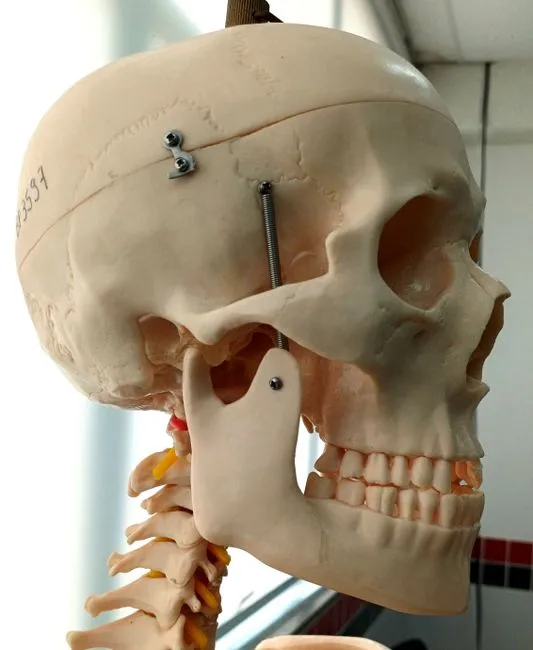
When a set of skeletal remains is recovered from a disaster site, a rural road, or an unmarked burial location, the first question is often the most painful one: Who was this person? For decades, answering that question has fallen largely on forensic anthropologists. They examine bones, estimate biological characteristics, compare dental records, and work alongside law enforcement, medical examiners, and families of missing persons to build a case for identification.
But the work is slow, painstaking, and often complicated by incomplete evidence. A skeleton may be fragmented, partially decomposed, or mixed with other remains. A missing person’s records may be sparse, outdated, or never entered into a national database in the first place. In those situations, even the most experienced forensic anthropologist can face a long and uncertain search for an answer.
That is where artificial intelligence is beginning to make a real difference. AI-augmented forensic anthropology is not replacing human experts. Instead, it is giving them new tools to organize data, analyze patterns, and make more efficient comparisons. As a result, the process of reconstructing unidentified human remains is becoming faster, more precise, and more connected to modern digital databases.
Why identifying unidentified remains has always been difficult
Forensic anthropology is a specialized field that sits at the intersection of biology, medicine, law, and archaeology. When remains are discovered, a forensic anthropologist may evaluate bone structure, injury patterns, developmental markers, and other physical evidence to help determine age, sex, ancestry, stature, and possible cause of death.
The challenge is that human remains are rarely complete. In many cases, investigators work with a single skull, a few long bones, or scattered fragments. In mass disaster scenarios, the problem becomes even more complex because multiple individuals may be represented in the same recovery area. Matching fragments to the correct person requires careful comparison and, often, a great deal of time.
Traditional methods rely heavily on visual assessment, measurement, and statistical estimation. These techniques are valuable, but they are limited by the amount of information available. If a missing person has no dental record, no photograph, or no reliable physical description, the search becomes harder. If the remains are damaged, the biological profile may be uncertain. And if a database contains thousands of missing persons, manual review is not always practical.
How AI is beginning to change the process
Artificial intelligence is starting to change this workflow by helping forensic teams process large amounts of data more efficiently. Machine learning models can analyze skeletal images, 3D scans, and measurement data to identify patterns that might be difficult to detect manually. They can also compare biological data against missing-person records, helping investigators narrow down possible matches.
One of the most important uses of AI in this field is pattern recognition. A model trained on skeletal data can learn how different bones vary by age, sex, and population group. It can then estimate characteristics such as approximate age range or biological sex with greater consistency than a purely manual measurement process. This does not mean the machine makes the final decision, but it can help guide the expert’s analysis.
Estimating the biological profile
In forensic anthropology, the biological profile is a foundational part of identification. It typically includes estimates of age, sex, ancestry, and stature. AI tools can assist by analyzing skeletal features and comparing them to large reference datasets. For example, a model may examine the structure of a pelvis or skull and identify statistical patterns associated with certain age groups.
This is especially useful when remains are incomplete. If only a partial skeleton is available, AI can help generate a more informed estimate based on the available evidence. It can also flag inconsistencies that may suggest the remains do not belong to the same individual, which is critical in complex recovery operations.
Matching fragments to missing-person records
Perhaps the most promising application of AI in this field is the ability to match unidentified remains to missing persons more efficiently. Many missing-person databases contain photographs, dental records, medical records, physical descriptions, and other identifying information. In the past, comparing these records with skeletal evidence has often been a time-consuming manual task.
AI can help by structuring and comparing that data at scale. For example, if a missing person has a recorded height range, a known dental anomaly, or a documented injury, an AI system can help flag whether the skeletal evidence aligns with those details. In some cases, computer vision models can also analyze 3D scans of skeletal fragments and compare them to known reference models or prior imaging data.
This does not replace DNA analysis, which remains one of the most definitive methods of identification. But DNA testing can be expensive, slow, or unavailable if reference samples are missing. AI can help prioritize cases, narrow the list of possible matches, and guide investigators toward the most likely candidates for further testing.
What AI can realistically do in forensic anthropology
It is important to be clear about what AI can and cannot do. In this field, the goal is not to let a computer identify a person on its own. The goal is to create a more efficient, data-driven support system for human experts.
AI is especially useful in three areas:
- Speeding up comparisons: Instead of manually reviewing hundreds of missing-person files, investigators can use AI to prioritize the most likely matches.
- Improving consistency: Machine learning models can apply the same analytical framework to each case, reducing variability in measurement-based estimates.
- Handling incomplete data: When only fragments are available, AI can help generate probabilistic estimates that guide further investigation.
However, AI also has limits. Skeletal remains can be affected by trauma, disease, environmental exposure, and recovery conditions. Databases may contain incomplete or inaccurate records. And biological estimates are never absolute. A forensic anthropologist still needs to interpret results, account for context, and make the final professional judgment.
Ethical and practical considerations
Because this work involves human remains, missing-person investigations, and families in pain, the ethical stakes are high. Any AI system used in forensic anthropology must be transparent, carefully validated, and free from bias. If a model is trained on a limited dataset, it may perform poorly for certain populations or age groups. That could lead to inaccurate estimates and, ultimately, misidentification.
There is also the question of privacy. Missing-person databases contain sensitive personal information, and any system that accesses or compares that data must be secure and governed by strong ethical standards. Families deserve to know how their information is being used and how identification decisions are being made.
For that reason, AI should be treated as a decision-support tool, not a black box. The best outcomes will come when forensic experts, data scientists, law enforcement agencies, and family advocates work together to ensure the technology is accurate, explainable, and respectful of the people it is meant to serve.
The future of AI-augmented forensic identification
The future of forensic anthropology is likely to become increasingly digital. As 3D scanning, imaging, and machine learning improve, forensic teams will have more tools to reconstruct biological profiles and compare evidence with missing-person data. In the coming years, we may see more integrated systems that combine skeletal analysis, dental records, genetic data, and photographic identification into a single investigative workflow.
That does not mean the human element disappears. Quite the opposite. The role of the forensic anthropologist may become even more important, because experts will need to interpret complex digital outputs and ensure they are used responsibly. AI can help narrow the search, but it is still people who carry the moral weight of the work: giving a name back to a person, and a measure of closure to a family.
In the end, the promise of AI-augmented forensic anthropology is not just technological. It is deeply human. By making identification faster and more reliable, these tools may help reduce the number of unidentified remains and bring long-overdue answers to families who have been waiting for them.
Related read: AI Wonderland Weekly 24 July 2026: Why the Next AI Battle Is About Chips, Infrastructure, and Trust
