


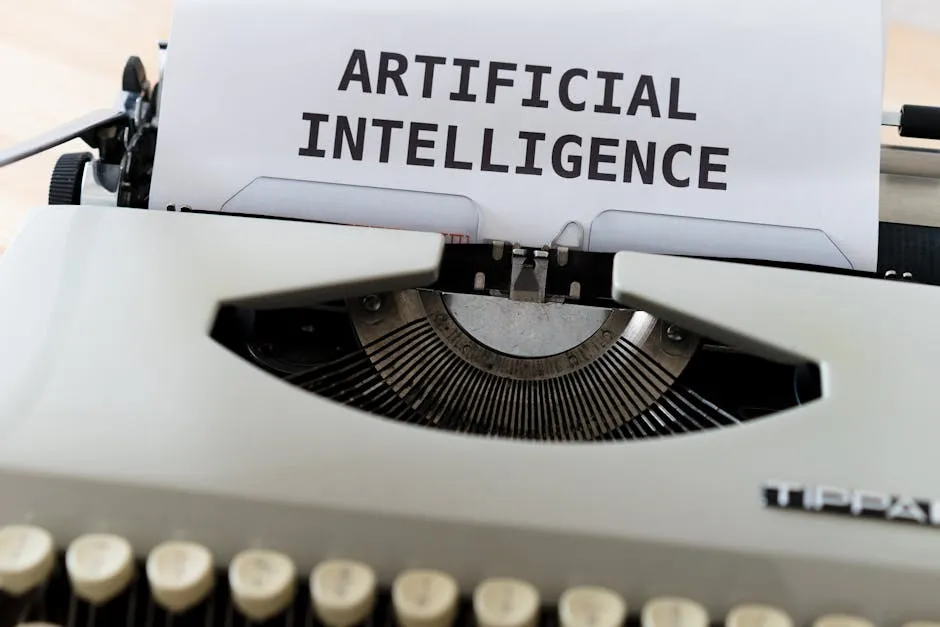
In the rapidly evolving landscape of academic publishing, major shifts are happening that will impact researchers everywhere. One of the most significant preprint servers in the world, ArXiv, has announced a stricter stance on the use of artificial intelligence in manuscript creation. According to recent updates, authors could face a one-year ban if they allow AI models to perform the entire burden of writing their research papers.
The New Policy Explained
ArXiv has long been the go-to destination for scientists to share their findings before they are peer-reviewed and published in traditional journals. However, the rise of large language models (LLMs) has introduced a new layer of complexity regarding authorship and authenticity. The new policy is clear: researchers must maintain significant human oversight throughout the process.
The specific condition for a ban is letting AI “do all the work.” This distinction is crucial. Using AI for editing, proofreading, or finding data is generally acceptable. However, relying on the model to generate the core arguments, methodology, or findings without sufficient human intervention is what triggers the penalty. This rule aims to prevent a scenario where a paper submitted on ArXiv lacks genuine human intellectual contribution.
Why Is ArXiv Making This Move?
The decision comes at a time when the academic community is grappling with the ethics of AI usage. There are several reasons driving this crackdown:
- Academic Integrity: Scientific research relies on original thought and rigorous analysis. If an AI generates the entire paper, the accountability for the findings becomes blurred.
- Fight Against Hallucinations: AI models can confidently state false information as fact. In science, accuracy is paramount. ArXiv wants to ensure that the data presented is verified by a human expert.
- Transparency: The ban encourages researchers to be upfront about their tools. It pushes for a culture where AI is treated as an assistant rather than a co-author or a replacement for the researcher.
The Broader Context of AI Regulation
ArXiv is not alone in this shift. Many universities and publishing houses are beginning to implement similar guidelines. As AI models become more sophisticated, the line between human creativity and machine generation becomes thinner. Institutions are realizing that without clear boundaries, the value of scientific literature could be diluted.
This policy reflects a growing industry-wide concern. If a researcher submits a paper where the AI has done the heavy lifting, it undermines the peer-review process. Reviewers need to know they are evaluating human expertise, not just the output of a predictive text engine.
Practical Advice for Researchers
For scientists, engineers, and academics using preprint servers, this change means a need for greater diligence. The new guidelines suggest that researchers should:
- Review Every Output: Do not copy-paste AI suggestions without reading and validating every sentence.
- Disclose AI Usage: Clearly state in the methodology section where AI tools were used for assistance.
- Focus on Insight: Use AI for formatting or grammar checks, but ensure the core logic and experimental design remain entirely human-driven.
Conclusion
The enforcement of these rules is a critical step toward preserving the integrity of open science. While AI is a powerful tool that can speed up data analysis and literature reviews, it cannot replace the critical thinking required for scientific discovery. By imposing penalties for over-reliance on these tools, ArXiv is sending a strong message to the scientific community. The goal is to ensure that every paper on the platform represents a genuine human contribution to knowledge, not just a statistical prediction.
