


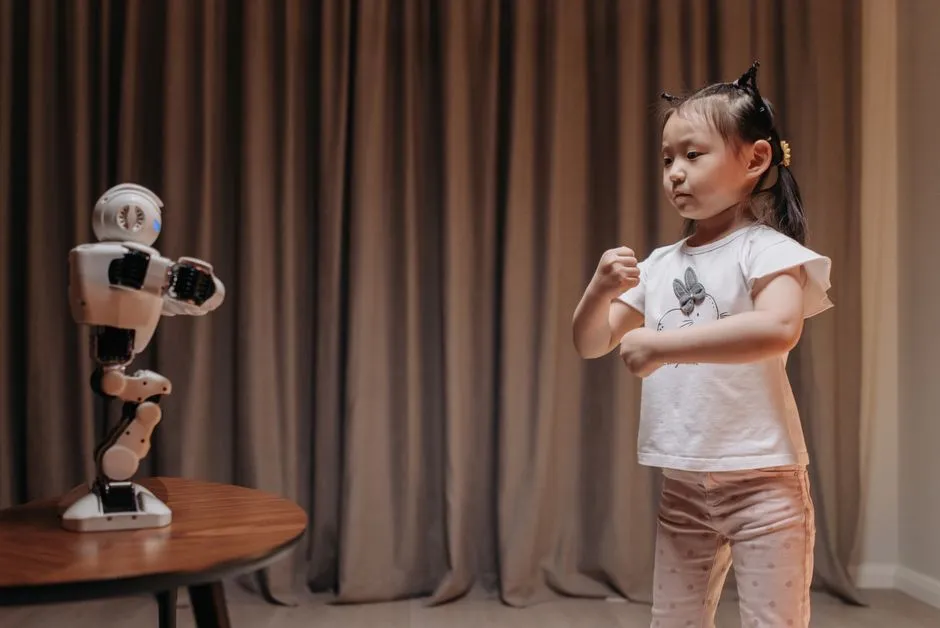
Artificial intelligence is everywhere. It powers our search engines, writes our emails, and even generates art. But not everyone is impressed. In fact, a significant and vocal group of critics is emerging from an unexpected demographic: children. As one 9-year-old recently put it, “I think it should stand for artificial idiot.”
This sentiment, far from being an isolated joke, reflects a growing unease among younger generations. While adults often debate AI’s potential for productivity and innovation, kids are reacting with a raw, unfiltered perspective. They are calling AI “disgusting,” “creepy,” and even “stupid.” Why is a technology that promises to revolutionize the world failing to win over the hearts and minds of its future users?
The “Creepy” Factor: Uncanny Valley and Unnatural Interactions
For many children, the primary issue with AI is a deep-seated sense of unease. This often stems from the “uncanny valley” effect. AI-generated images and voices can look and sound almost human, but that slight imperfection can be profoundly unsettling. A child might find a chatbot that mimics a friend or a voice assistant that sounds a little too cheerful to be more disturbing than helpful. This feeling of interacting with something that is “not quite right” is a powerful repellent. They sense a lack of genuine emotion and authenticity, which makes the interaction feel hollow and manipulative.
Lack of Authentic Connection
Kids are incredibly sensitive to authenticity. They can tell when someone—or something—is being fake. An AI that provides pre-programmed responses or generates art based on a database of millions of other images feels like a cheat. It lacks the spontaneity, the messiness, and the genuine effort that comes from a real human creation. For a child, the joy of drawing a picture or telling a story is in the process, not just the final product. AI bypasses that process, and for many kids, that feels like a fundamental loss.
The “Artificial Idiot” Argument: Perceived Stupidity and Frustration
The 9-year-old’s “artificial idiot” comment is a perfect example of another core complaint: AI is often perceived as stupid. Children, who are still learning about the world, can be brutally honest when a tool doesn’t work as expected. An AI assistant that misunderstands a simple question, a chatbot that gives a nonsensical answer, or a smart speaker that can’t play the right song can be incredibly frustrating. This frustration quickly turns into contempt. They see AI not as a powerful intelligence, but as a flawed, unreliable, and often annoying tool that gets in the way of what they actually want to do.
Misunderstanding and Wrong Answers
Children often ask questions that require nuance, context, or a sense of humor—things that AI still struggles with. When an AI provides a factually incorrect or nonsensical answer to a simple question, it shatters any illusion of intelligence. This is why you hear kids say things like, “It’s so dumb,” or “Why doesn’t it just know that?” Their expectations are high, and the reality of AI’s limitations is a constant source of disappointment.
The “Disgusting” Factor: Ethical and Moral Repulsion
Perhaps the most powerful and concerning reaction is the feeling of disgust. This isn’t just about bad user experience; it’s a moral and ethical judgment. Children are increasingly aware of the world around them, and they are picking up on the darker sides of AI. They hear about deepfakes, data privacy concerns, and the potential for AI to take away jobs. The idea of a machine creating art that looks like a famous painter or writing a song that sounds like their favorite artist can feel like a violation of something sacred.
Fear of the Unknown and Loss of Control
At its core, this “disgust” is often a fear of the unknown. AI represents a powerful force that they don’t fully understand and can’t control. They see adults worried about it, and they sense a threat to things they value, like human creativity and personal connection. This fear can manifest as a strong aversion, leading them to reject AI outright. They don’t just dislike it; they find it fundamentally wrong.
A Sign of a Healthy Skepticism?
While these negative reactions might seem like a problem for the tech industry, they could actually be a sign of a healthy skepticism. Children are not yet conditioned to accept technology as inherently good. They judge it on its merits: is it helpful? Is it fun? Is it fair? When the answer is no, they say so. This unfiltered criticism is a valuable reality check for a world that is often too eager to embrace the latest AI hype.
For parents and educators, this is a crucial moment. Instead of dismissing these complaints, we should listen to them. They are a powerful reminder that technology should serve human needs, not the other way around. The challenge for AI developers is not just to make their products more powerful, but to make them more trustworthy, more understandable, and ultimately, more human. Until then, we can expect many more kids to have a very clear, very honest opinion about AI.
Conclusion: The Future of AI and Its Youngest Critics
The fact that children are calling AI “creepy” and “disgusting” is not just a funny anecdote. It is a critical piece of feedback for the entire tech industry. These young critics are the future users, employees, and leaders who will shape the role of AI in society. If they find it fundamentally off-putting, the industry has a serious problem. The path forward is not to force AI on them, but to build it with their values in mind: authenticity, reliability, and a deep respect for human creativity and connection. Only then might we hear a child say, “You know what? That’s actually pretty cool.”
