


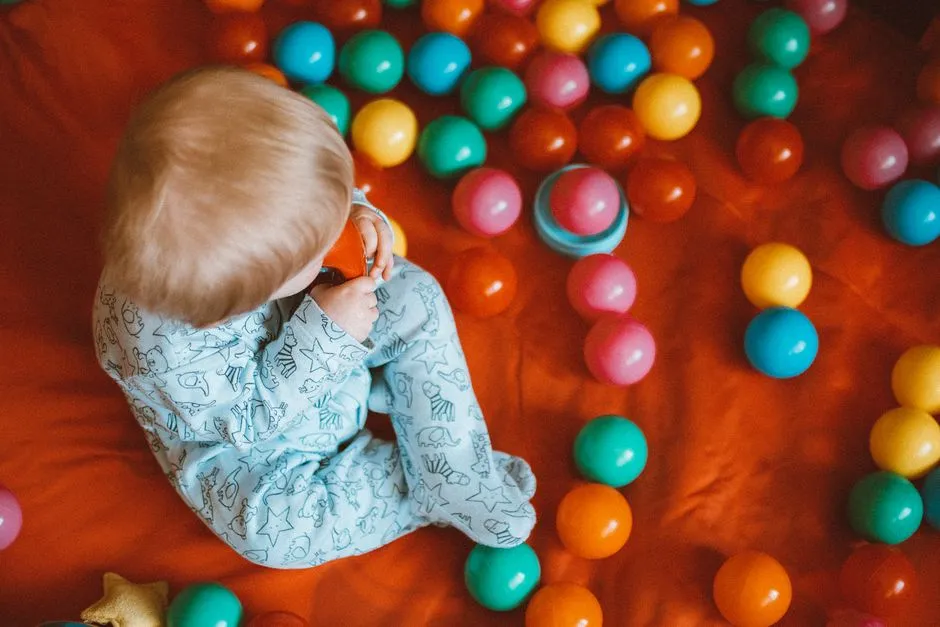
For all the dizzying speed of progress in artificial intelligence, there remains one humbling benchmark that no machine has yet conquered: the learning capacity of a human baby. We tend to think of infants as helpless, blank slates waiting to be filled. But in reality, a baby is one of the most sophisticated learning machines on the planet. And according to a growing number of researchers, the key to unlocking the next generation of AI might be hiding inside those tiny, developing brains.
The Astonishing Efficiency of a Baby’s Brain
Consider what a baby accomplishes in its first year of life. Without any formal instruction, without a data center full of labeled images, and without consuming megawatts of electricity, an infant learns to recognize faces, understand the emotional tone of a voice, grasp the basics of cause and effect, and begin to master a complex language. They do this with a brain that, while remarkable, uses only a fraction of the energy of a modern AI model.
This is the central paradox that fascinates computer scientists and neuroscientists alike. Our most advanced AI systems, like large language models, require billions of data points and immense computational power to learn tasks that a toddler picks up almost effortlessly. The baby’s brain is a masterclass in efficiency, generalization, and learning from limited, noisy data.
What Makes Baby Brains So Special?
The secret isn’t just raw processing power. It’s the architecture. A baby’s brain is not a blank slate; it is pre-wired with powerful inductive biases. These are built-in assumptions about how the world works that guide learning from the very first moments. For instance, babies are born with a preference for looking at faces and an expectation that objects are solid, persistent, and obey the laws of physics. They are also incredible hypothesis-testers. Watch a baby drop a spoon from a high chair for the tenth time. They aren’t being annoying; they are conducting a rigorous experiment on gravity, object permanence, and your reaction time.
This is fundamentally different from how most AI learns. A typical AI model is trained on a static dataset, and its learning is often a process of pattern matching on a massive scale. It doesn’t have a built-in model of the physical world or the ability to form and test causal hypotheses in real-time. It learns correlation, not causation.
Bridging the Gap: The Architecture of the Future
The source article suggests that key advances for AI may soon be found in the architecture of a baby’s little brain. This isn’t just a philosophical point; it’s a practical research direction. Scientists are now exploring how to build AI systems that incorporate some of these biological principles.
- World Models: One of the most promising areas is the development of “world models.” These are AI systems that, like a baby, learn an internal model of how the world works. They can simulate the consequences of actions and make predictions, enabling more flexible and robust behavior.
- Causal Learning: Moving beyond correlation to causation is a holy grail for AI. Researchers are trying to build systems that can understand cause and effect, just as a baby learns that shaking a rattle makes a sound. This would allow for more intuitive reasoning and planning.
- Efficient Learning Algorithms: The baby brain is a master of few-shot learning. It can learn a new concept from a single example. AI researchers are exploring algorithms that mimic this ability, such as meta-learning (learning how to learn) and using structured prior knowledge.
This shift in thinking represents a move away from the brute-force approach of “more data, bigger models” and towards a more elegant, biologically-inspired form of intelligence. The goal is not just to make AI smarter, but to make it smarter in the right way—more adaptable, more efficient, and more capable of understanding the nuanced, physical world that we humans navigate so easily.
The Practical Implications
If we can crack this code, the implications are enormous. We could build AI that doesn’t need to be trained on the entire internet to be useful. We could create robots that can navigate a cluttered home as easily as a toddler, or AI assistants that truly understand the context of a conversation because they can model your intentions and beliefs. This is the kind of profound leap that could redefine our relationship with technology, moving from tools that we command to true partners that can learn and adapt alongside us.
For now, the gap remains vast. But by looking back at the humble beginnings of human intelligence, we may just find the roadmap for the future of artificial intelligence. The most powerful learning machine in the known universe is still the one inside your own head—or, more precisely, inside the head of the baby in the next room.
The journey to truly intelligent AI is not just about building faster chips or writing better code. It is about understanding ourselves. As we continue to explore the architecture of the mind, we are not only advancing technology but also gaining a deeper appreciation for the miracle of human learning. The baby, it turns out, has been the ultimate AI benchmark all along.
