


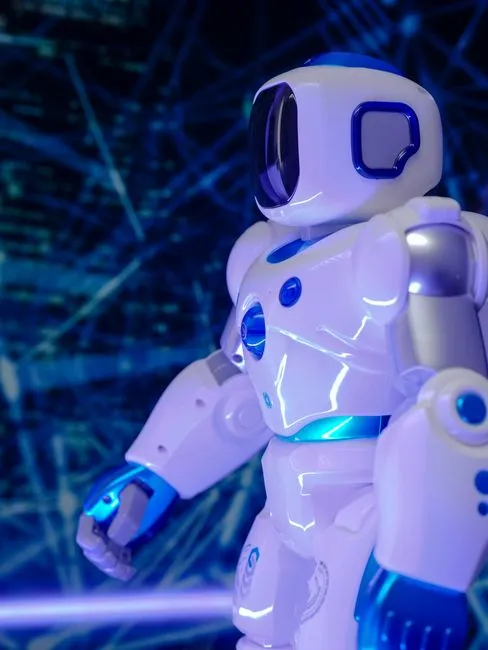
For the past decade, most of us have met artificial intelligence through a screen. It arrived as text boxes, voice assistants, recommendation feeds, and chatbots that could answer questions but could not really do much in the physical world. That kind of AI was powerful, but it was also limited by its environment: it could process information, generate language, and make predictions, yet it could not pick up a cup, open a door, sort a package, or work safely beside a human being.
Now, something interesting is happening. AI is starting to become embodied. That means intelligence is no longer just sitting inside a data center or a smartphone. It is moving into machines with bodies, sensors, motors, and the ability to interact with the real world. In other words, robots are becoming the next major home for advanced AI.
Why Embodied AI Changes Everything
The word “embodied” matters here. A chatbot may understand that you asked for help, but it cannot physically help you move a heavy object. A robot, on the other hand, can perceive its surroundings, make a plan, and then act. That shift changes the nature of the intelligence itself.
When AI has a body, it has to deal with things that purely digital systems do not care about. It has to understand weight, friction, balance, timing, and the unpredictable behavior of the physical world. A robot cannot simply “generate” a movement. It must execute it. A robot arm cannot just imagine placing a glass on a shelf; it has to calculate force, trajectory, and risk in real time.
This is why embodied AI is both more difficult and more exciting. It forces machines to learn not only from language and data, but from physical experience. In many ways, this is a closer model to how biological intelligence developed. Animals learn by moving, touching, failing, adjusting, and repeating. Embodied robots are beginning to follow a similar path, even if at a much slower and more engineered pace.
From Understanding Words to Understanding the World
Modern AI has already become remarkably good at language. Large language models can summarize documents, write code, answer questions, and even hold conversations. But language is only one part of intelligence. A truly useful machine needs to understand context in a much broader sense. It needs to know what is near it, what is fragile, what is moving, and what could go wrong if it acts too quickly.
That is where robotics becomes essential. A robot that can recognize a person, understand a simple command, and then safely walk around them is demonstrating a deeper kind of practical intelligence. It is not just processing symbols. It is coordinating perception, reasoning, and action in a shared physical space.
Where Embodied AI Is Making the Biggest Impact
The first places where embodied AI is becoming useful are not usually the most glamorous ones. They are places where repetitive, repetitive physical work is common and where consistency matters.
- Warehousing and logistics: Robots are already being used to sort items, move inventory, and assist in fulfillment centers. Embodied AI helps them adapt to changing conditions rather than following one rigid path.
- Manufacturing: In factories, machines can assist with assembly, inspection, and material handling. The goal is not just speed, but flexibility.
- Healthcare and elder care: Assistive robots may help with lifting, transport, monitoring, or basic support tasks. This is one of the most important long-term applications, especially in aging societies.
- Home environments: This is harder, because homes are messy, unpredictable, and full of people, pets, and objects. But it is also where many people would most want practical help.
These examples show a common theme: embodied AI is not just about making robots look impressive. It is about making them useful in environments that were never designed for machines.
The Real Challenge Is Not Just Smarter Software
One of the biggest misunderstandings about robotics is that the only missing piece was better AI. In reality, the challenge is far broader. A robot needs reliable hardware, durable materials, efficient power systems, safe controls, and sensors that can work in difficult lighting, weather, and physical conditions.
It also needs to be trustworthy. A machine that can reason in a digital environment is one thing. A machine that can move through a home, a hospital, or a warehouse and operate near people is another. That is where safety, reliability, and predictability become just as important as intelligence.
Because of this, embodied AI will likely evolve slowly at first. We may see specific, task-focused robots before we see general-purpose helpers. A robot that can reliably load boxes may arrive long before a robot that can tidy an entire house. A machine that can assist in a structured factory may be far more practical than one expected to navigate a crowded apartment.
What This Means for the Future of Intelligence
Embodied AI also changes how we think about what intelligence actually is. For a long time, machine intelligence was measured mainly by its ability to process information and generate output. But when AI has a body, we start measuring it differently: Can it adapt? Can it recover from error? Can it work with humans? Can it understand physical cause and effect?
That shift is important because it brings AI closer to real problems. Instead of asking whether a system can write a plausible paragraph, we start asking whether it can safely complete a task. Instead of wondering how smart it sounds, we wonder how reliable it is in practice. That is a more grounded and arguably more meaningful definition of intelligence.
A New Stage in the AI Story
The move from disembodied AI to embodied AI is not just a hardware upgrade. It is a new stage in the development of machine intelligence. It connects language, perception, planning, and action in a way that has the potential to reshape work, care, infrastructure, and even daily life.
The robots we will see in the coming years may not be as dramatic as science fiction suggests. They may be quiet, specialized, and focused on narrow tasks. But that is exactly the point. The most important breakthroughs in embodied AI will probably be the ones that quietly make the physical world easier to manage, safer to navigate, and more responsive to human needs.
In the end, when AI becomes embodied, the question stops being only how well machines can think, and starts being how well they can live with us in the real world. That is where the next chapter of robotics truly begins.
Related read: AI in Startups: How Artificial Intelligence Is Reshaping Entrepreneurship and Future Growth
