


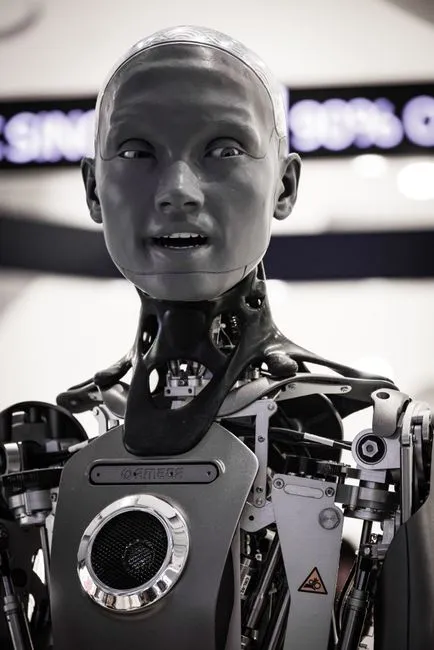
Imagine walking into your office and being greeted not by a fresh-faced college student, but by a humanoid robot that can fetch coffee, deliver packages, and even organize your desk. It sounds like a scene from a sci-fi movie, but Flexion Robotics, a startup founded by former Nvidia engineers, is making it a reality. Their approach to training robots for useful work is as clever as it is practical, and it might just change the way we think about office interns—both human and mechanical.
From Silicon Valley to the Office Floor
Flexion Robotics isn’t just another robotics company trying to build a humanoid for the sake of it. The team, seasoned by years at Nvidia, understands that the real challenge isn’t just making a robot that can walk or talk—it’s making one that can actually do something useful. Their secret sauce? A unique training methodology that leverages simulation and real-world data to teach robots complex tasks without the need for expensive, time-consuming manual programming.
Think of it like this: instead of writing thousands of lines of code to tell a robot how to pick up a cup, Flexion’s system lets the robot learn by watching and doing. This is a massive leap forward from the rigid, pre-programmed robots we’ve seen in factories for decades. The goal is to create a general-purpose assistant that can adapt to the chaotic, unpredictable environment of a modern office.
The “Terrifyingly Competent” Intern
The headline from Wired calls this robot a “terrifyingly competent office intern,” and for good reason. While it may lack the small talk and social graces of a human intern, its ability to perform repetitive, menial tasks with consistent accuracy is impressive. We’re talking about tasks that many office workers dread: sorting mail, restocking supplies, and navigating crowded hallways to deliver documents. The robot is designed to handle the boring, mundane work that eats up hours of human productivity.
This isn’t about replacing people entirely. Instead, Flexion Robotics is targeting the “last mile” of office automation. It’s the gap where digital tools end and physical action begins. A software bot can schedule a meeting, but a humanoid robot can bring the coffee and the handouts to the conference room. That’s the niche Flexion is aiming to fill.
A Clever Training Method
The core innovation at Flexion is how they train their robots. Traditional robotics training often involves teleoperation (a human controlling the robot remotely) or extensive reinforcement learning in a virtual environment. Flexion combines the best of both worlds. They use a massive amount of simulated data to teach the robot the general mechanics of a task—like how to open a door—and then fine-tune that knowledge with real-world demonstrations.
This hybrid approach dramatically reduces the time it takes to train a robot for a new task. It also makes the robot more robust. If you’ve ever seen a robot fail because a chair was moved six inches to the left, you understand the fragility of traditional programming. Flexion’s robots are built to handle that kind of variation, making them far more practical for a dynamic office setting.
For businesses looking to stay ahead of the curve, understanding these advancements in AI and automation is crucial. Whether you’re exploring new AI tools for your workflow or considering the future of your physical office space, the technology is moving fast.
What This Means for the Future of Work
The arrival of humanoid robots in the office raises some big questions. Will they make jobs more interesting by taking over the drudgery? Or will they simply displace entry-level workers who often use internships to learn the ropes? The answer is likely a bit of both. However, Flexion’s philosophy suggests a future where humans and robots collaborate. The robot handles the physical grunt work, while the human intern focuses on high-value tasks like strategy, creativity, and client interaction.
This is a significant shift from the “robot overlord” narrative. Instead, it paints a picture of robots as essential tools, much like a computer or a smartphone. The challenge for companies will be integrating this technology smoothly and ethically. They will need to consider how to retrain their workforce and how to ensure that these powerful tools are used to augment human potential, not diminish it.
Looking Ahead
Flexion Robotics is still a startup, and their humanoid intern is likely a few years away from widespread adoption. But the path they are forging is clear. By focusing on practical, useful tasks and a clever training methodology, they are solving the hardest problems in robotics: adaptability and cost-effectiveness.
The next time you complain about a tedious office chore, remember that a solution might already be in development. The future of work is not just about software running in the cloud; it’s about hardware that can walk through your door, grab a package, and hand it to you with a polite (if slightly unsettling) nod. The competent intern has arrived, and it runs on batteries.
