


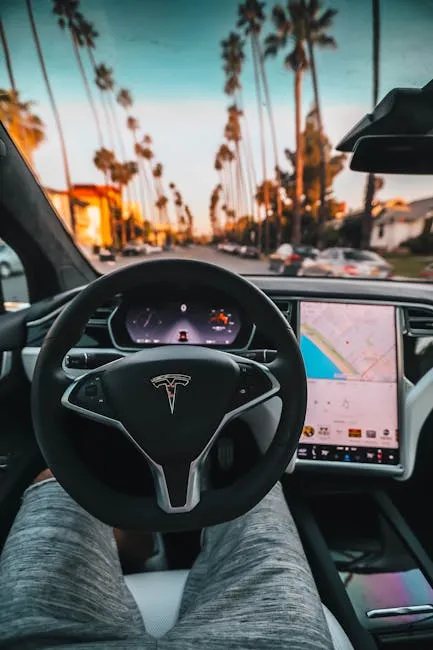
Tesla has officially expanded its robotaxi service beyond its initial launch location, bringing the autonomous ride-hailing experience to two more major metropolitan areas in Texas: Dallas and Houston. This development marks a significant milestone for the company, as it joins Austin, where the service first began operations last year. The expansion solidifies Texas as the primary testing ground for Tesla’s vision of a fully driverless future, with the company now operating in three distinct cities within the same state.
The Expansion to Dallas and Houston
Following the successful deployment in Austin, Tesla has chosen to introduce its service to Dallas and Houston. These cities were selected not only for their large population bases but also for their existing infrastructure, which is conducive to autonomous vehicle testing and operation. The move indicates a strategic focus on the southern United States, leveraging the state’s favorable regulatory environment and high concentration of tech-savvy consumers.
For users in these new markets, the experience is expected to remain consistent with what was offered in Austin. Passengers can now summon a Tesla Cybercab or a Model Y equipped with the Full Self-Driving (FSD) hardware to pick them up at their location. The service aims to provide a convenient, contactless, and cost-effective alternative to traditional ride-sharing apps like Uber or Lyft.
A Driverless Milestone
A critical aspect of this expansion is the operational status of the vehicles. As of January 2026, Tesla began offering rides in these cities without safety drivers in the backseat. This transition represents a pivotal moment in the history of autonomous driving technology. The removal of human safety drivers signifies that the software has reached a level of reliability and safety that the company deems sufficient for unsupervised operation in public spaces.
This shift changes the nature of the service from a test program to a consumer-facing product. Users are now entering a new era where the vehicle is entirely responsible for navigating traffic, making decisions at intersections, and handling complex road scenarios. While safety remains the top priority for the engineering team, the confidence to operate without a backup driver on every ride demonstrates the maturity of the neural network driving the system.
Why Focus on Texas?
The decision to concentrate these three major cities in Texas is likely a strategic move. Texas has established itself as a leader in autonomous vehicle research and development. The state has implemented laws that encourage innovation in this sector, allowing companies to test advanced features more freely than other jurisdictions.
Furthermore, the climate and geography of Texas present unique challenges for autonomous systems, from extreme heat to heavy rain. By mastering these conditions in Texas, Tesla can better prepare its technology for deployment nationwide. The high density of traffic in Dallas and Houston also provides the algorithm with the vast amount of data needed to learn and improve, helping to refine the vehicle’s ability to handle congested urban environments.
What This Means for the Future
The arrival of Tesla’s robotaxi service in Dallas and Houston is more than just a business expansion; it is a step toward redefining urban mobility. If successful, this model could disrupt the gig economy and reshape how people commute daily. The implications extend beyond convenience, potentially lowering transportation costs for the average consumer and reducing the carbon footprint associated with private vehicle ownership.
As the technology matures, the next logical step for Tesla would be to expand into other states, provided the regulatory frameworks evolve to support broader deployment. The success in Austin, Dallas, and Houston will serve as a blueprint for the rest of the country. The company faces ongoing challenges, including regulatory scrutiny and public trust, but the momentum suggests that driverless taxis are moving from concept to reality.
In conclusion, Tesla’s entry into the Dallas and Houston markets confirms that the robotaxi dream is becoming a tangible reality. With the removal of safety drivers, the focus is now entirely on scaling the service and proving its economic viability. For residents of these cities, the era of summoning a car with a simple request is officially here, marking a transformative chapter in personal transportation.
