


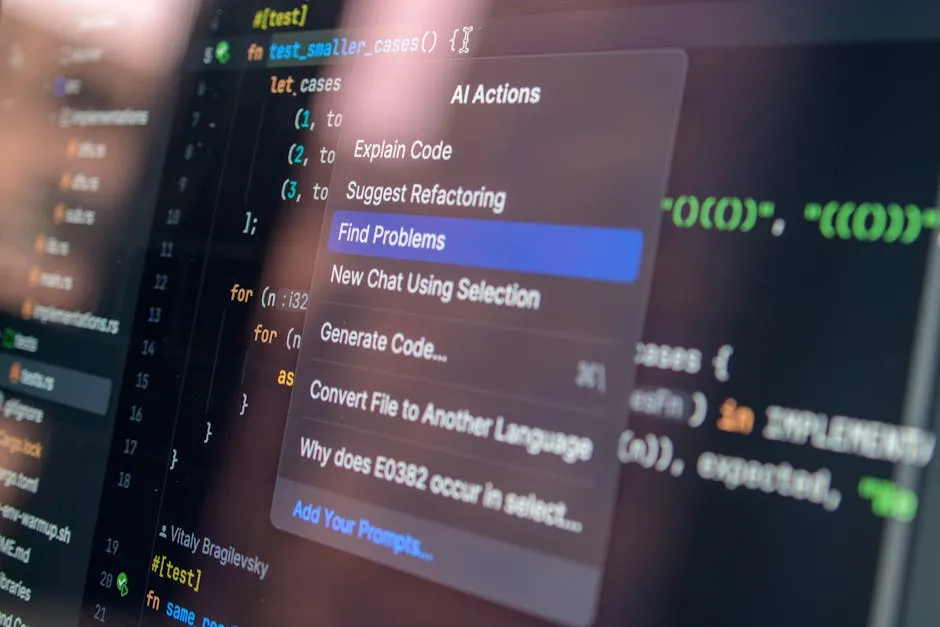
As artificial intelligence continues to flood the software development landscape with lines of code, a critical question is emerging among developers and investors alike: Is the code actually working?
This is where Qodo enters the conversation with a significant stride. The startup has just secured a massive $70 million funding round, but the money isn’t just for growth—it is a strategic bet on one of the most pressing challenges in AI engineering right now: code verification.
In an era where AI coding assistants can generate entire functions in seconds, the focus is shifting from speed to safety. Qodo is betting that while AI scales rapidly, the real challenge lies in making sure that generated code is secure, bug-free, and performant. Here is a deep dive into why this funding news matters for the future of software development.
The Shift from Generation to Verification
For years, the promise of AI in software development was centered on generation. Tools could write boilerplate, suggest refactors, or even build entire applications from simple prompts. That is still happening, but the industry is now realizing that “write code” is only half the battle. The other half is “verify code.”
AI models are probabilistic; they predict the next token based on patterns, not always on logic or security best practices. This leads to hallucinations, subtle bugs, and potential vulnerabilities that can slip through automated pipelines. Qodo’s approach addresses this by focusing on the verification layer. They are essentially acting as a rigorous safety net for the rapid expansion of AI-assisted coding.
This represents a maturing of the industry. Investors and businesses are realizing that the value of AI isn’t in writing more code, but in writing code that doesn’t break production systems. With this $70 million infusion, Qodo aims to scale their verification tools to meet the demands of enterprises that cannot afford a single security breach caused by an AI error.
Why Code Verification is the Next Frontier
Software development is undergoing a transformation. The traditional workflow of writing, testing, and deploying is being disrupted by AI, but the testing phase remains the bottleneck. If an AI writes code that compiles but contains a logic error or a security flaw, the AI has failed its most basic purpose.
Qodo’s strategy highlights a key industry insight: The cost of fixing bugs in production is exponential compared to catching them early. By prioritizing verification, Qodo is helping developers catch issues before they reach the end-user. This is crucial for several reasons:
- Security: AI-generated code can inadvertently introduce vulnerabilities if not checked against known threat patterns.
- Maintainability: Code that isn’t verified well is often harder to maintain, leading to technical debt that slows down future development.
- Reliability: Enterprises need to trust that the code running their infrastructure is robust. Verification provides that assurance.
This funding round validates the idea that verification is not an afterthought but a fundamental requirement for scalable AI adoption.
What This Funding Means for the Ecosystem
Securing $70 million is a significant milestone, placing Qodo in a position to expand its engineering team, improve its algorithms, and potentially integrate with other major developer tools. It signals to the market that the “AI hype cycle” is settling into a more practical phase.
Previously, funding rounds often went to companies promising the next big generation model or the fastest coding assistant. Now, capital is flowing to infrastructure that ensures those models are safe to use. This is a positive trend for the broader tech ecosystem. It suggests that the industry is moving past the initial excitement of “can AI write code?” to the more important question of “can we trust the code AI writes?”
For early-stage developers, this is empowering. They can leverage AI to accelerate their workflow without fearing that the resulting product will be riddled with errors. For CTOs and engineering leaders, it offers a path to integrate AI safely into legacy codebases without compromising security protocols.
The Future of AI-Assisted Development
Looking ahead, the integration of verification tools like Qodo’s will likely become standard practice. We may see a future where AI coding agents are inherently equipped with verification checks as part of their core functionality. The tools will not just suggest code; they will certify its integrity.
As AI coding scales, the risk of failure increases. However, with a dedicated focus on verification, the industry is building a safety layer that allows for faster innovation without sacrificing stability. Qodo’s success in raising this round demonstrates that investors see the potential for high returns in reliability and security.
In conclusion, while the ability of AI to generate code is impressive, the ability to validate that code is what will define the next decade of software development. Qodo is positioning itself at the forefront of this necessary evolution, ensuring that as AI becomes a co-pilot for every developer, the journey remains safe and secure.
