


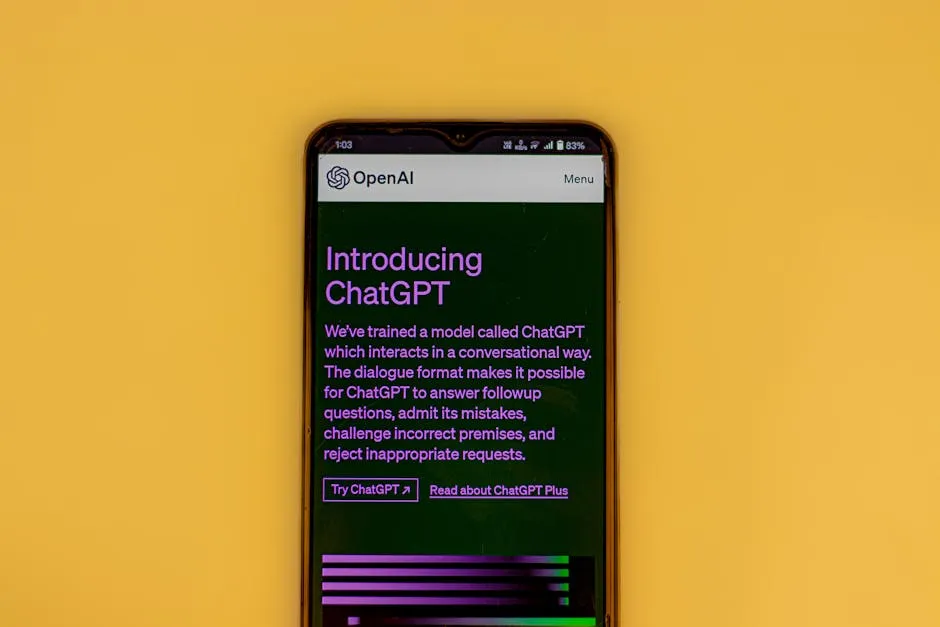
OpenAI Unveils Advanced Security for ChatGPT: Why the Yubico Partnership Matters
In the rapidly evolving landscape of artificial intelligence, user safety and data protection have become critical priorities. Recently, OpenAI has taken a significant step toward bolstering the security of its most popular platform, ChatGPT. The company announced a new initiative involving advanced security protections for ChatGPT accounts, centered around a strategic partnership with Yubico. This move signals a shift in how AI platforms approach account management and defense against digital threats.
A Leap Forward in Digital Safety
For users who rely on AI assistants for daily tasks, from drafting emails to coding assistance, the security of their accounts is paramount. The new security initiative introduces opt-in protections that leverage hardware-based authentication. By partnering with Yubico, a leading provider of security keys, OpenAI is offering its users a way to secure their accounts beyond standard password or SMS verification methods.
This partnership introduces the use of security keys, which are essentially USB devices or smartphone apps that generate cryptographic signatures to verify a user’s identity. Unlike traditional two-factor authentication that often relies on text messages or emails—which can be intercepted through phishing attacks—security keys provide a much higher level of assurance. When a user attempts to log in, the key must be physically present and verified, making it nearly impossible for attackers to bypass the security measures.
Why Physical Keys Matter
Phishing is one of the most common vectors for account takeovers. In a typical phishing attack, a thief creates a fake login page that looks identical to the real one. If a user enters their password and a verification code sent to their phone, the attacker gains access. Security keys, however, are resistant to this type of attack. Because the key validates the user’s presence locally without transmitting sensitive data in a way that can be intercepted, it provides a robust defense against credential harvesting.
This level of security is particularly important as AI systems become more integrated into sensitive workflows. As AI models begin to handle more personal data and financial information, the risk profile for account breaches increases. OpenAI’s decision to offer these advanced protections acknowledges the growing threat landscape facing AI users.
The Opt-In Approach to Privacy
One of the most notable aspects of this new security feature is that it is opt-in. This means that users have the choice to enable or disable these advanced protections based on their personal preferences and risk tolerance. This approach respects user autonomy and allows individuals to weigh the benefits of enhanced security against the convenience of existing methods.
For users who work in high-risk environments or handle sensitive information, enabling the Yubico security key integration is a logical choice. For casual users who may not face significant threats, the standard security measures might suffice. This flexibility ensures that the platform does not impose unnecessary complexity on users who do not require it, while still providing a safety net for those who do.
What This Means for ChatGPT Users
The partnership with Yubico is more than just a technical upgrade; it represents a commitment to trust. When users entrust an AI platform with their data, they expect that platform to take responsibility for protecting that data. By integrating Yubico’s technology, OpenAI is aligning its security standards with enterprise-grade protocols. This is a significant benchmark for the rest of the AI industry.
Furthermore, this initiative sets a precedent for future AI development. As AI models become more sophisticated and capable of autonomous actions, the security of the human interface becomes even more critical. The integration of hardware security keys ensures that the human element in the AI loop remains secure and verified.
Users can expect to see these options appear within their account settings soon. The interface will guide them through the process of registering a compatible security key, ensuring a smooth transition without disrupting their existing workflow. This seamless integration is key to user adoption, as security measures that are too cumbersome often get abandoned.
Conclusion
OpenAI’s announcement of advanced security for ChatGPT accounts marks a pivotal moment for AI safety. By partnering with Yubico to implement hardware-based security keys, the company is addressing a fundamental need in the digital age: protecting user identity from sophisticated cyber threats. While the feature is currently opt-in, its existence highlights the industry’s recognition that security cannot be an afterthought. As AI continues to grow, such measures will likely become standard rather than optional, ensuring that the future of AI remains safe, secure, and reliable for everyone.
