


The debate over open-source versus closed-source artificial intelligence has never been more heated. This week on Uncanny Valley, we dive deep into the latest power move from Nvidia, the shifting landscape of White House AI policy, and a practical privacy headache that might be affecting you right now.
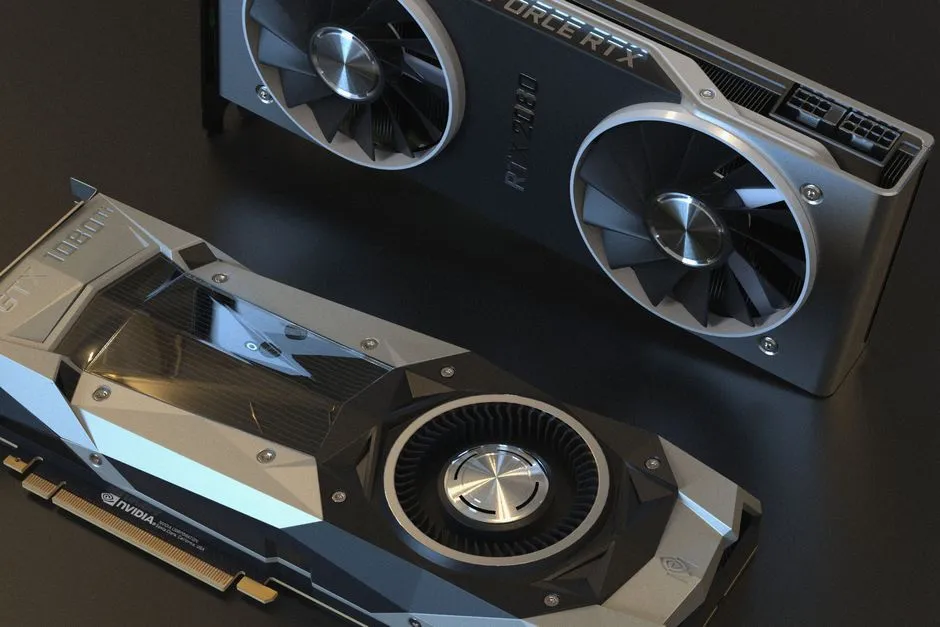
If you have been following the AI space closely, you know that Nvidia has been positioning itself not just as the hardware backbone of the industry, but as a key player in the software and ecosystem wars. Their recent announcement of an open-source alliance is a significant step, but the guest list is raising more than a few eyebrows. Notably absent from this coalition are two of the biggest names in the game: OpenAI and Anthropic.
The Open vs. Closed Source Divide
To understand why this omission is such a big deal, we need to look at the broader philosophical war happening in Silicon Valley. On one side, you have the “open-source” camp, championed by companies like Meta with its Llama models and Mistral AI. They argue that transparency is the only way to ensure safety, democratize access, and accelerate innovation. They believe that a global community of developers should be able to inspect, modify, and improve the underlying code.
On the other side, you have the “closed-source” camp, led by industry giants like OpenAI and Anthropic. Their argument is centered on safety and control. They contend that by keeping their models proprietary, they can maintain strict guardrails, prevent misuse, and ensure that the technology is aligned with human values before it is unleashed on the world. They point to the risks of bioweapons, misinformation, and cyberattacks as reasons why “open weights” are dangerous.
Nvidia’s new alliance is a clear signal that they are siding with the open-source movement, at least for now. By rallying a coalition of startups, researchers, and enterprises, they are trying to create a counterweight to the dominance of the closed labs. But without OpenAI and Anthropic—the two companies with arguably the most advanced and widely used models—the alliance lacks the firepower to truly dictate the industry standard.
Why the Absence Matters
The absence of OpenAI and Anthropic is not just a symbolic snub; it has practical implications. These two companies control a massive share of the enterprise AI market. Their models, GPT-5 and Claude, are the default choices for millions of developers building applications on top of APIs. If Nvidia’s alliance wants to create a viable open-source alternative that enterprises actually adopt, they need to offer something that rivals the performance of these closed models.
Furthermore, the absence highlights a growing rift in the industry regarding regulation. OpenAI and Anthropic have been vocal in their support for government oversight. They have spent significant time lobbying in Washington, D.C., pushing for legislation that would require safety testing and licensing for frontier AI models. An open-source model, by its very nature, is almost impossible to regulate in the same way. You cannot put a license agreement on a model that anyone can download and run on their own hardware.
This is where the conversation turns to the White House. The current administration is trying to thread a very narrow needle. They want to foster innovation and keep the US ahead of China, but they also face pressure from safety advocates to impose strict rules. The key players in this policy debate are trying to figure out how to balance these competing interests without stifling the industry or creating a “brain drain” where top researchers move to more permissive jurisdictions.
The fear is that heavy-handed regulation of closed models will simply push development into the open-source ecosystem, where oversight is impossible. Conversely, if they ignore the risks of open-source, they might be creating a future where dangerous AI capabilities are freely available to anyone with a decent GPU.
Protecting Your Data in the Age of AI
While the titans of tech battle over ideology and policy, there is a more immediate problem facing everyday users and businesses: data privacy. The Uncanny Valley team touched on a crucial issue this week regarding chatbot logs and search engine visibility. It is a stark reminder that the AI tools we are integrating into our workflows are not as private as we might assume.
When you use a chatbot to draft an email, summarize a confidential document, or even just brainstorm ideas, that data is often stored on the provider’s servers. In many cases, these logs can be indexed by search engines if the proper security measures aren’t in place. Imagine typing a sensitive business strategy into a chatbot, only to have that prompt appear in a Google search result a week later. It is a nightmare scenario for any professional.
This serves as a critical reminder that we must treat AI interfaces with the same caution we would treat any other third-party vendor. Before you paste proprietary code or personal health information into a prompt, you need to check the privacy policy. Are they training on your data? Do they have zero-retention policies? Are your conversations encrypted?
For businesses, this is not just a technical issue; it is a compliance issue. As AI adoption accelerates, the lines between “user error” and “vendor negligence” are becoming blurred. Companies need to invest in secure AI gateways and educate their employees on what is safe to share. The convenience of these tools is undeniable, but the cost of a data leak can be catastrophic.
The Road Ahead
As we look to the future, it is clear that the open vs. closed debate is not going to be resolved anytime soon. Nvidia’s alliance is a bold move, but it is just one battle in a much larger war. The industry is still trying to figure out what “safe AI” actually looks like, and whether that safety comes from transparency or control.
What is certain is that the decisions being made in boardrooms and government offices right now will shape the technological landscape for decades. We are at a crossroads where we have to decide if we want an AI ecosystem that is a walled garden or a public square. Each option has its merits, but the window to choose is closing fast.
We will be keeping a close eye on how this alliance develops and whether the missing players eventually join the table. In the meantime, be careful what you type into those chat windows—you never know who might be reading.
