


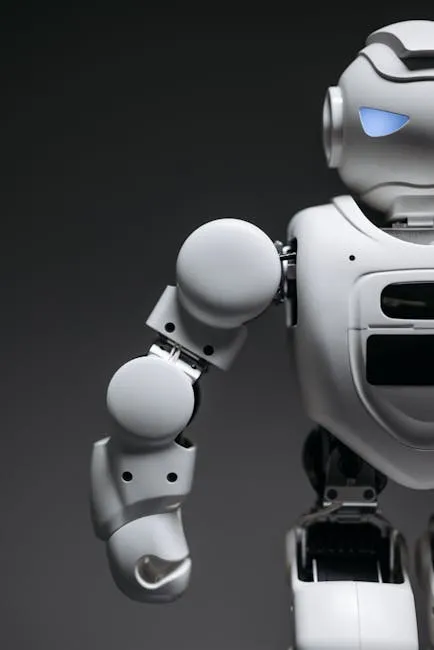
Meta Acquires Assured Robot Intelligence to Accelerate Humanoid AI Goals
In a significant move that signals a major shift in the artificial intelligence landscape, Meta has officially acquired Assured Robot Intelligence. This acquisition marks a strategic pivot for the tech giant, transitioning its focus from purely digital AI models to the realm of physical robotics. By bringing Assured Robot Intelligence into its fold, Meta aims to significantly beef up its AI models specifically designed for robots. This isn’t just about buying another company; it is about integrating advanced software intelligence with physical hardware to create the next generation of embodied AI.
Understanding the Strategic Shift
For years, the tech industry has focused heavily on Large Language Models (LLMs) that power chatbots, search engines, and content generation. However, the next frontier lies in machines that can interact with the physical world. Meta’s decision to acquire Assured Robot Intelligence highlights a clear intent to master this domain. The acquisition allows Meta to bypass the long and difficult traditional robotics development cycle. By integrating existing humanoid capabilities with its proprietary AI stack, Meta hopes to accelerate the deployment of humanoid robots capable of complex tasks.
This move competes with other major players like Tesla and various hardware startups. The goal is to ensure that when we talk about “AI,” we aren’t just talking about text on a screen, but about AI that can pick up objects, navigate rooms, and assist in manufacturing or daily chores.
The Role of AI Models in Robotics
One of the primary reasons for this acquisition is the need to tailor Meta’s AI models for robotic control. Standard AI models, like those used for translation or text summarization, do not inherently understand physics. They do not know how much weight an object has or how to avoid knocking things over. Assured Robot Intelligence likely possesses specialized training data and architectures that bridge this gap.
By “beefing up its AI models for robots,” Meta is essentially creating a neural network that understands the laws of physics. This involves embodied AI, where the intelligence is tied to the body of the robot. The integration of this technology will allow robots to learn through simulation and real-world feedback, making them safer and more efficient. For developers and engineers, this could mean pre-built models that understand spatial reasoning and tool use out of the box.
Why Physical AI Matters Now
The convergence of software and hardware is becoming critical. As automation becomes more necessary in various industries, from logistics to elderly care, humans need reliable partners that can understand commands in natural language. If a robot can understand a request like “pick up the heavy box,” it requires sophisticated processing power that Meta is now investing in through this acquisition.
- Industry Efficiency: Automation in manufacturing and construction can be enhanced by robots that understand complex instructions.
- Consumer Applications: Eventually, this technology could lead to household robots that help with cleaning or organizing.
- Research Advancement: The acquisition provides Meta with a wealth of data to train their models, creating a feedback loop that improves both software and hardware performance.
Implications for the Tech Ecosystem
This acquisition sends a strong signal to the rest of the market. It suggests that the era of “AI-only” companies is evolving into an era of “AI-plus” companies. Meta is leveraging its massive computing resources and data capabilities to solve the hardware problem. However, hardware remains a challenge. Building robots that are durable, safe, and cost-effective is a massive undertaking.
Assured Robot Intelligence brings specialized expertise that Meta likely lacked in-house. This combination of Meta’s model training capabilities and Assured’s hardware knowledge creates a formidable competitor in the robotics space. It also opens up new possibilities for enterprise solutions, where businesses can deploy robots that interface directly with Meta’s cloud infrastructure.
Looking Ahead: The Future of Embodied Intelligence
As Meta integrates Assured Robot Intelligence, we can expect to see more announcements regarding their humanoid platforms. The company is well-positioned to leverage its Reality Labs experience, where they have invested heavily in VR and AR, to now transition into physical interaction. The roadmap involves making these robots accessible to businesses and eventually consumers.
The acquisition underscores a broader trend: AI is no longer just a software upgrade; it is a hardware imperative. As these humanoid robots become more capable, the implications for the workforce and the economy will be profound. Meta’s move is a clear declaration that they are betting their future on the physical world, not just the digital one. This is a bold step that could define the next decade of technological innovation.
In conclusion, Meta’s purchase of Assured Robot Intelligence is a pivotal moment for the AI industry. It bridges the gap between digital intelligence and physical action, promising a future where AI is not only smart but also capable of moving and working alongside us in the real world. As we watch the integration progress, the potential for this technology to change daily life becomes increasingly tangible.
