


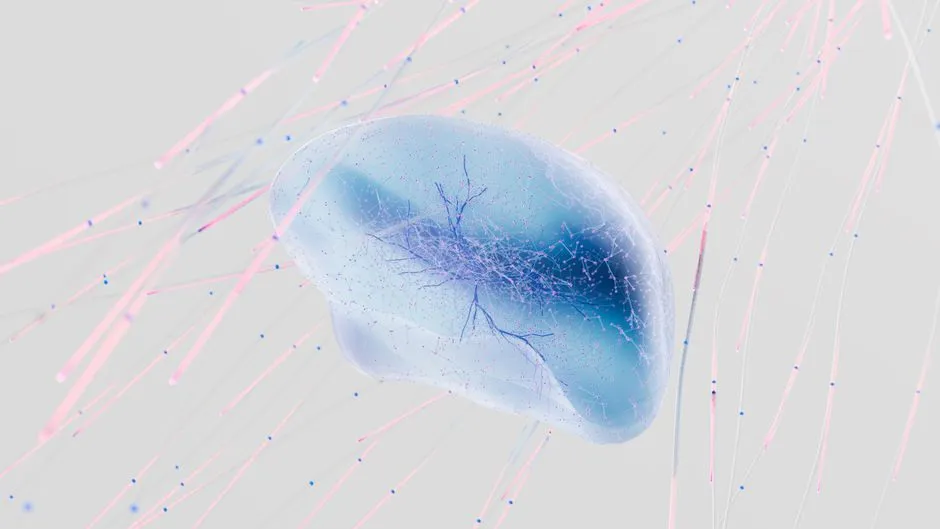
What if the key to building smarter AI wasn’t a faster chip or a bigger data center, but a microscope? A startup called Flourish is betting on exactly that. They quietly raised $500 million and now sit at a reported $2.5 billion valuation. Jeff Bezos is backing them. Instead of trying to simulate intelligence with code, they want to reverse engineer the real thing by studying biological neurons in our brains.
The Bet on Biological Intelligence
For years, the AI playbook has been simple: scale up. More data, more parameters, more compute. Deep learning gave us chatbots that write poetry and image generators that make photorealistic art. But many researchers, including those at Flourish, think this path has limits. They argue current AI systems are just sophisticated pattern matchers. They lack the genuine understanding and adaptability of even a simple animal brain.
Flourish’s idea is straightforward. The best neural network ever created sits inside your skull. If we can figure out its core algorithm, we can replicate it in silicon. They are not building a new language model or a bigger GPU cluster. Instead, they are building a platform to watch real, living neurons in a dish, recording how they fire and communicate.
Putting Neurons Under the Microscope
The “wild hunt” label fits. Flourish is trying to do for neuroscience what the Human Genome Project did for genetics. Their goal is a high resolution, real time map of how biological neural networks process information. They grow networks of neurons in a lab and use advanced imaging to watch them work.
The thinking goes like this: by observing the physical and electrical properties of these biological networks, they can extract the mathematical principles that govern learning and computation in nature. It is a monumental task. The human brain has roughly 86 billion neurons, each with thousands of connections. By starting with smaller networks, Flourish hopes to find the fundamental building blocks of biological intelligence.
Why This Matters for the Future of AI
If they succeed, the implications would be big. Current AI systems guzzle energy. The brain runs on the power of a light bulb and learns from a handful of examples. A neuromorphic AI built on these principles could be vastly more efficient and adaptable than anything we have today.
This is not just about building a better chatbot. It could lead to AI that truly understands context, reasons about the world, and does not need millions of examples to learn a new task. It could unlock breakthroughs in robotics, medicine, and scientific discovery by creating machines that think more like us.
The Bezos Factor and the Bigger Picture
Jeff Bezos backing this is a major signal. Through his venture capital firm and personal investments, he has a history of backing ambitious, long term bets. From Blue Origin to the early days of AWS, he is comfortable with high risk, high reward ventures. His backing suggests he sees a real path to a new AI paradigm, one that could challenge the current dominance of companies like OpenAI and Google.
Flourish is not alone. A growing field of wetware AI and neuromorphic computing is attracting investment and talent. IBM and Intel have been working on brain inspired chips for years. But Flourish’s approach of directly interrogating biological tissue is arguably the most direct and ambitious attempt yet to crack the code of natural intelligence.
The Long and Uncertain Road Ahead
This is a moonshot. The $500 million funding shows the potential reward, but it also highlights the immense challenge. Reverse engineering the brain is one of the hardest problems in all of science. There is a real chance Flourish’s efforts will not produce a clear, transferable algorithm in the near term, or perhaps ever.
There are also ethical questions. As we get closer to understanding and replicating the brain’s core algorithms, we have to grapple with what that means for consciousness, identity, and the nature of intelligence itself. Will a machine running a biological algorithm be considered alive? These are questions scientists and society will need to address.
A New Chapter in the AI Story
For all the hype around large language models, the story of AI is far from over. Flourish represents a bold divergence from the mainstream path, a reminder that the greatest source of intelligence we know of is still the one between our ears. Jeff Bezos’s wild hunt is a high stakes gamble that the future of AI does not lie in a data center, but in a Petri dish. Whether it succeeds or fails, it is a fascinating bet on the power of understanding nature’s original code.
