


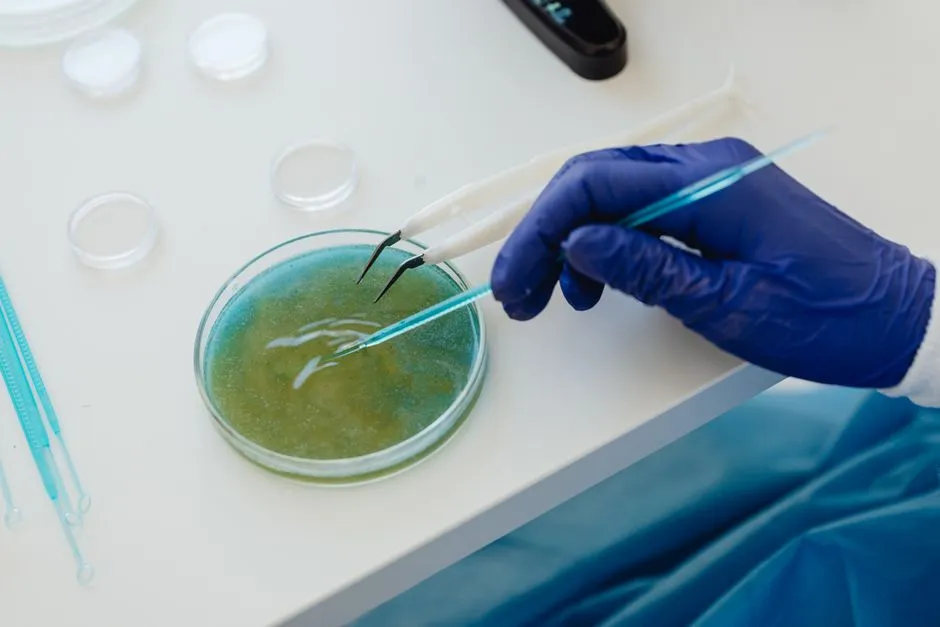
Pollution is one of the most stubborn environmental problems of our time. Industrial runoff, agricultural chemicals, microplastics, and persistent organic pollutants can linger in water systems, soil, and even industrial infrastructure. Traditional cleanup methods often rely on expensive chemical treatments, physical filtration, or biological systems that are slow to adapt. That is where the idea of symbiotic biofilm engineering becomes so interesting: instead of forcing a single organism to handle a complex pollutant, scientists can design communities of microorganisms that work together, much like a specialized cleanup crew.
Now, generative AI is entering that conversation in a meaningful way. By helping researchers design, optimize, and predict the behavior of microbial communities, AI is making it possible to engineer biofilms that can target specific pollutants more efficiently. The result is not just a cleaner environment, but a more intelligent approach to bioremediation.
What Is Symbiotic Biofilm Engineering?
A biofilm is a structured community of microorganisms attached to a surface, often enclosed in a slimy extracellular matrix. These communities are everywhere: on pipes, in rivers, in the human body, and in soil. What makes them powerful is that the microbes inside do not work alone. They exchange nutrients, protect one another, and divide metabolic tasks in ways that improve survival and function.
Symbiotic biofilm engineering takes that natural logic and applies it deliberately. Rather than relying on a single bacterial strain to break down a contaminant, engineers design a consortium of microbes where each member plays a distinct role. One organism may convert a toxic compound into a less harmful intermediate. Another may consume that intermediate. A third may help stabilize the community under changing pH, temperature, or nutrient conditions.
The goal is to create a living system that is more resilient, more efficient, and more targeted than any single organism could be on its own.
Why Targeted Pollutant Breakdown Matters
Not all pollutants behave the same way. Some are hydrophobic, some are highly reactive, some require multiple enzymatic steps to mineralize, and others need very specific environmental conditions to degrade. A one-size-fits-all cleanup approach rarely works well. If the pollutant is too complex, the microbial community can stall. If the conditions fluctuate, the biofilm may lose its structure or productivity.
This is where targeted breakdown becomes essential. Instead of aiming for broad, generalized degradation, researchers want to design biofilms that respond to a particular contaminant profile: its chemical structure, concentration, co-contaminants, and environmental context. That level of specificity is difficult to achieve through trial and error alone, especially when the number of possible microbial combinations is enormous.
Where Generative AI Fits In
Generative AI is useful here because it can work with large, complex datasets and generate novel designs that would be difficult to imagine manually. In the context of biofilm engineering, that means it can help in several ways:
- Designing microbial consortia: AI can suggest combinations of organisms based on known metabolic capabilities, environmental tolerances, and interaction patterns.
- Predicting community behavior: It can estimate how a designed biofilm might perform under different pollutant concentrations, nutrient levels, or stress conditions.
- Optimizing metabolic pathways: AI can identify which species are likely to support the degradation of specific intermediates, reducing dead ends in the breakdown process.
- Reducing experimental trial and error: Instead of testing hundreds of random combinations in the lab, researchers can prioritize a smaller set of high-potential candidates.
In short, generative AI acts as a design assistant for the living system. It does not replace biological reality, but it helps narrow the search space and accelerate discovery.
From Random Assemblies to Intelligent Design
Traditionally, building a functional microbial community has often involved a lot of iteration: mix, test, observe, adjust. That process can be slow, costly, and sometimes unpredictable. Generative AI changes that dynamic by introducing a more rational layer of design. It can infer relationships from genomic data, metabolic models, transcriptomic profiles, and prior bioremediation studies, then propose consortia that are more likely to succeed.
For example, if a pollutant requires stepwise transformation, the AI may identify one organism that initiates the reaction, another that removes inhibitory byproducts, and a third that helps maintain a stable local environment. It can also suggest which species are likely to cooperate rather than compete, reducing the risk of community collapse.
Targeting Complex Real-World Pollution
Real environments are messy. A contaminated site may contain multiple pollutants, variable organic matter, fluctuating oxygen levels, and competing native microbial populations. A biofilm engineered for one clean laboratory condition may fail in a river, wastewater channel, or industrial membrane system. This is one of the biggest challenges in bioremediation, and it is also one of the areas where AI-assisted design can add real value.
Generative AI can model environmental variability and suggest biofilm compositions that are robust rather than brittle. It can help researchers create communities that maintain function even when conditions change, or that can be reconfigured for different pollutant profiles. In practical terms, that could mean biofilm-based systems for wastewater treatment, oil spill response, heavy metal sequestration, or degradation of persistent organic chemicals.
Why This Approach Is More Than a Lab Curiosity
The appeal of symbiotic biofilm engineering powered by generative AI is not just scientific. It is also practical. Living systems can be self-maintaining, lower-energy, and more adaptable than many conventional treatment methods. A well-designed biofilm can attach to surfaces, remain in place, and continue working over time. That makes it especially attractive for applications where continuous treatment is needed, such as water infrastructure, bioreactors, or bioremediation sites.
There is also an efficiency advantage. If the microbial community is engineered for a specific pollutant, it is less likely to waste metabolic effort on unrelated processes. That can improve degradation rates and reduce the likelihood of incomplete breakdown, which is a common problem when pollutants are only partially converted.
Challenges That Still Need to Be Solved
Despite the promise, this field is still maturing. Microbial communities are dynamic, and their behavior can be hard to predict with full accuracy. Even the best AI model is only as good as the data it uses. Gaps in genomic annotation, incomplete metabolic reconstructions, and missing information about species interactions can all affect performance.
There are also safety and ecological considerations. If an engineered biofilm is introduced into the environment, researchers need to be confident that it will remain contained, function as intended, and not disrupt native ecosystems. That means careful containment strategies, monitoring protocols, and a strong emphasis on ecological risk assessment.
Another challenge is scale-up. A biofilm that works beautifully in a lab bioreactor may behave differently on a large membrane, in a flowing water system, or under seasonal temperature changes. Generative AI can help with design, but validation at scale remains essential.
What This Could Mean for the Future
If these approaches continue to mature, we may see a shift from generic cleanup technologies to more tailored, data-driven biological systems. Instead of asking, “What organism can degrade this compound?” researchers may ask, “What living community can be designed to degrade it under these specific conditions?” That is a fundamentally different question, and generative AI is helping make it more answerable.
The most exciting possibility is that biofilm-based remediation becomes easier to design, test, and deploy. Over time, this could lead to smarter environmental engineering tools that are not only more effective, but also more sustainable and adaptable than conventional methods.
Final Thought
Generative AI is not going to solve pollution by itself. But when paired with symbiotic biofilm engineering, it offers a compelling path toward more precise, resilient, and efficient pollutant breakdown. The future of environmental cleanup may not come from a single miracle organism, but from a designed community of microbes working together, guided by intelligent computational tools. If that vision continues to progress, the intersection of AI and bioengineering could become one of the most practical frontiers in sustainable technology.
Related read: How Generative AI Is Redesigning Symbiotic Biofilms for Targeted Pollutant Breakdown
