


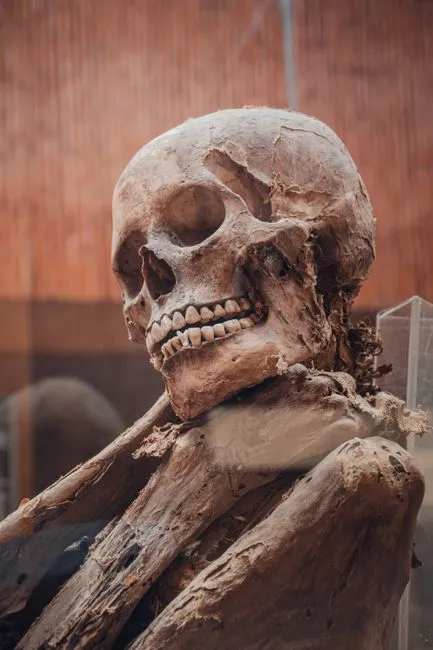
Identifying human remains is one of the most difficult tasks in forensic science. In many cases, investigators are working with fragments rather than complete skeletons. Bones may be broken, partially buried, degraded by time, or mixed with other remains. Matching those incomplete remains to a missing person is slow, labor-intensive, and often uncertain. For years, forensic anthropologists relied heavily on manual measurement, visual analysis, and experience. But over the last few years, artificial intelligence has begun to change that process in meaningful ways.
AI-augmented forensic anthropology is not about replacing human experts. It is about giving them better tools. Machine learning models, computer vision, and advanced data analysis can help researchers sort through complex physical evidence more quickly and with greater consistency. In cases where remains are fragmented or identification is otherwise difficult, these technologies can narrow down possibilities, highlight likely matches, and reduce the time needed to bring answers to families.
Why Forensic Identification Is So Difficult
Forensic anthropology becomes especially challenging when remains are incomplete. A single bone fragment may provide useful information, but it rarely tells the whole story. Investigators must consider factors such as bone size, shape, wear patterns, fracture lines, and biological markers. Environmental conditions, decomposition, scavenging, trauma, and the passage of time can all alter the evidence.
In mass disaster scenarios, the difficulty increases dramatically. When multiple individuals are involved, remains may be commingled, making it hard to determine which fragment belongs to which person. Even in single-victim cases, missing persons records may be incomplete. A relative may not remember a unique identifying detail, dental records may be unavailable, and DNA samples may be too degraded for reliable comparison.
This is where traditional methods alone often fall short. Human analysts are skilled, but they are also limited by time, workload, and the sheer volume of possibilities. A missing persons database may contain thousands of records, and manually comparing skeletal data against antemortem information can be exhausting and slow.
How AI Augments Forensic Anthropology
Artificial intelligence helps by introducing pattern recognition at scale. Algorithms can compare skeletal measurements against large reference datasets, identify subtle anatomical features, and estimate biological characteristics such as age, sex, stature, and ancestry. While these estimates are not absolute, they can create a probabilistic profile that helps investigators focus their search.
From Skeleton Fragments to Probabilistic Profiles
One of the most useful applications of AI in this field is the analysis of skeletal remains. Machine learning models can be trained on large collections of labeled skeletal data. When presented with new measurements or images, they can generate estimates that may not be possible to derive quickly through manual methods alone.
For example, a fragment of a long bone may not be enough to identify a person, but it can help narrow the range of possible individuals. AI systems can also detect unusual patterns, such as pathology, healed fractures, or surgical modifications, that may match a specific missing person’s medical history. These details can be decisive in cold cases where other leads have disappeared.
Facial Reconstruction and Digital Simulation
Another area where AI is making an impact is facial approximation. Forensic facial reconstruction has long been used to create a visual representation of a person’s face from skeletal remains. Traditionally, this was done by artists working from physical skulls or 3D scans. Today, AI can assist by generating digital facial simulations based on cranial geometry and tissue depth data.
These simulations are not photographs. They are interpretations. However, when combined with other evidence, they can help investigators compare a reconstructed face against missing persons records, family descriptions, or antemortem images. In some cases, even a rough approximation can jog a relative’s memory or lead to a breakthrough that would otherwise have taken years.
Matching Incomplete Remains to Missing Persons
The real power of AI in forensic anthropology comes from integration. No single data point is usually enough to make an identification. Instead, investigators need to combine skeletal analysis, dental records, DNA results, clothing, personal effects, and contextual information. AI can help prioritize likely candidates by weighing multiple variables at once.
Imagine a case where a skeleton is only partially recovered. DNA is weak but usable. Dental records are missing. The missing persons database contains hundreds of possible matches. An AI-assisted system can rank those matches based on biological estimates, geographic likelihood, age range, and other relevant factors. That ranking does not replace human judgment, but it helps forensic teams work more efficiently.
Practical Benefits for Investigations
The benefits of AI-augmented forensic anthropology are practical and significant. First, speed improves. In urgent investigations, every day counts. Faster analysis can mean quicker closure for families waiting for answers.
Second, consistency improves. Human analysts can vary in interpretation, especially when working under pressure. AI systems can apply the same analytical framework across cases, reducing variability and helping standardize results. This is especially important when multiple labs or teams are involved.
Third, resource allocation improves. In mass fatality incidents, forensic teams often face overwhelming workloads. AI can help sort the most promising leads first, allowing specialists to focus their time on the most likely matches rather than reviewing every possibility manually.
For cold cases, the impact may be even greater. Old investigations often stalled because the available tools were not enough. New AI methods can reopen those cases by reanalyzing existing data in ways that were previously impossible.
Limitations and Ethical Considerations
Despite the promise, there are important limitations. AI models are only as good as the data used to train them. If a model is trained on a narrow population sample, its estimates may not generalize well to other groups. This raises serious concerns about bias, accuracy, and fairness. A wrong estimate, even if probabilistic, can send an investigation in the wrong direction or cause emotional harm to families.
Privacy is another major issue. Forensic identification often involves sensitive personal data, including genetic information, medical history, and biometric details. Any system that processes this data must be secure, transparent, and governed by strong ethical standards. Families and legal systems need confidence that the technology is being used responsibly.
Finally, AI should never be the final authority. In forensic science, identification must meet legal and scientific standards. Human oversight is essential. Experts must review model outputs, understand their limitations, and explain how conclusions were reached. The goal is not to automate identification, but to support informed human decision-making.
The Future of AI-Augmented Forensic Anthropology
The future of this field is likely to become more multimodal. Instead of relying on a single type of evidence, investigators may combine AI-driven skeletal analysis, facial simulation, DNA interpretation, dental modeling, and contextual data into a unified analytical platform. As computing power grows and datasets improve, these systems may become more accurate, more explainable, and more accessible to forensic teams around the world.
There is also growing interest in making these tools more portable and field-ready. In disaster zones or remote areas, rapid scanning and on-site analysis could help investigators begin the identification process faster than before. That could be a major advantage in humanitarian crises, conflict zones, and emergency response situations.
Still, the most important development may be cultural. Forensic anthropology is a deeply human field. Its purpose is not just to solve cases, but to restore identity, dignity, and closure. AI can help make that process faster and more reliable, but the ultimate goal remains the same: to answer the question families ask with the most weight, “Who was this person?”
As the technology matures, AI-augmented forensic anthropology has the potential to become one of the most meaningful applications of artificial intelligence in public service. It is not about making identification easy. It is about making a difficult, painful, and complex process a little more possible, a little more precise, and a little more humane.
Related read: AI in Supply Chain Optimization: How Smart Systems Are Making Supply Chains More Resilient
