


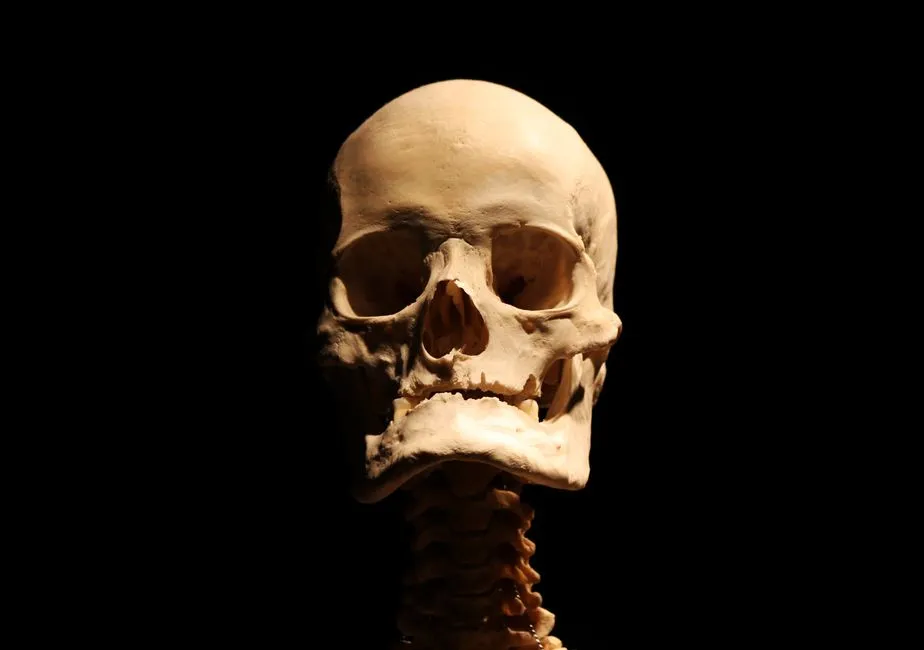
For forensic anthropologists, unidentified remains are more than data points in a case file. They represent people whose lives were interrupted and whose families may still be waiting for answers. For decades, the work of identifying unknown skeletons and skeletal fragments has relied heavily on careful measurement, visual comparison, and a deep understanding of human anatomy. It is meticulous, expert-driven work, but it is also slow. When remains are incomplete, damaged, or scattered across multiple locations, the process can take months or even years.
In recent years, artificial intelligence has begun to change that landscape. AI is not replacing forensic anthropologists, but it is giving them new tools to work faster, compare more evidence, and reduce the burden of manual analysis. In the field of forensic anthropology, these tools are proving especially useful when the goal is to reconstruct unidentified remains and match them to missing persons.
Why Unidentified Remains Are So Difficult to Identify
Identifying human remains is challenging even when the skeleton is complete. When only fragments are available, the difficulty increases dramatically. A single femur, a partial skull, or a collection of scattered bones may provide limited information. Environmental damage, animal activity, fire, water exposure, and time can all alter the evidence. In some cases, the remains may be so incomplete that traditional methods alone cannot provide a confident identification.
Forensic anthropologists traditionally use a combination of biological profile estimation, skeletal measurements, taphonomic analysis, and comparison with reference collections. They may estimate age, sex, stature, and ancestry, though those traits are not always definitive. They may also look for trauma, pathology, surgical modifications, or other identifying marks. When possible, DNA analysis and dental records are used to confirm identity. But every step depends on the quality and quantity of evidence available.
The real bottleneck often comes in the comparison phase. Investigators may need to compare unknown remains against missing persons reports, medical records, dental charts, photographs, and existing skeletal databases. That kind of cross-referencing can be overwhelming, especially when multiple cases are open at the same time.
How AI Is Entering the Forensic Lab
Artificial intelligence is becoming useful in forensic anthropology because it can process large amounts of visual and numerical data quickly. Machine learning models can be trained to recognize patterns in skeletal structures, compare fragment shapes, and flag potential matches that might otherwise be missed. In simple terms, AI helps researchers ask better questions and test more possibilities in less time.
One important advantage is that AI can work alongside human expertise rather than replacing it. A forensic anthropologist still interprets the context, evaluates the evidence, and makes the final professional judgment. But AI can highlight anomalies, suggest probable matches, and reduce the number of cases that need to be examined manually. That is particularly valuable in mass disaster investigations, cold cases, and regions with high volumes of unidentified remains.
Matching Fragments and Incomplete Skeletons
One of the most promising applications of AI in this field is fragment matching. When human remains are fragmented, each bone piece may have a unique shape, edge contour, or surface texture. AI models can compare these fragments against other fragments from the same case or against skeletal reference data. Computer vision algorithms can identify geometric similarities that are difficult for the human eye to detect at a glance.
This does not mean the system automatically “solves” the case. Instead, it can rank possible matches and show investigators which fragments are most likely to belong together. That can save significant time, especially when there are many unknown remains and many missing persons to consider.
Estimating Age, Sex, and Biographical Traits
AI is also being used to assist with biological profile estimation. Forensic anthropologists have long used skeletal features to estimate age at death and sex, but those estimates can vary depending on the population and the condition of the remains. Machine learning models trained on large skeletal datasets may help refine those estimates by recognizing subtle patterns across multiple bones.
These estimates are still probabilistic, not absolute. A model may suggest that a skeleton is more likely to belong to a male or female, or that the age range is between 25 and 40 years. That information is valuable because it narrows the pool of potential matches. When combined with other evidence, it can help investigators focus on the most likely missing persons cases.
Reconstructing Faces and Dental Profiles
Facial reconstruction is another area where AI is making an impact. Traditional forensic facial approximation often uses clay, foam, or manual 3D modeling based on skull measurements. AI-assisted methods can analyze cranial structure and generate digital facial approximations more quickly. In some systems, the model can also produce multiple likely facial variations, which may help investigators compare the result against photographs or witness descriptions.
Dental records are one of the most reliable forms of identification when available. AI can support dental comparison by aligning digital scans, highlighting differences in tooth shape, alignment, and restorative work, and flagging potential matches. This is especially useful when the remains are partial and only dental structures are preserved.
The Role of 3D Technology and Computer Vision
AI in forensic anthropology is closely connected to 3D scanning, photogrammetry, and digital reconstruction. When remains are scanned in three dimensions, researchers can analyze them from multiple angles without handling the physical evidence repeatedly. That is important for preserving integrity and reducing contamination risk.
Computer vision can then compare 3D models against reference skeletons, missing persons data, and previously scanned remains. It can detect subtle differences in bone shape, joint structure, and surface detail. In practical terms, this makes it easier to build a digital case file that can be searched, compared, and updated over time.
For cold cases, this is especially valuable. Older cases may have been documented using less precise methods, but new scanning technology and AI analysis can make previously unusable evidence more informative. A fragment that once seemed too damaged to be useful may become part of a larger pattern when analyzed digitally.
Connecting Case Files and Records
Another major challenge in forensic identification is that information is often scattered. Missing persons reports may be written in different languages, stored in different agencies, or recorded with inconsistent detail. Medical records, dental charts, photographs, and family descriptions may not be easily searchable.
AI can help with this problem by using natural language processing to extract relevant details from unstructured text. It can identify names, dates, locations, physical descriptions, medical conditions, and other key facts. It can also help investigators link records that appear unrelated on the surface but may point to the same individual. In a large database, that kind of automated cross-referencing can be a game changer.
Ethical and Practical Considerations
As powerful as these tools may be, they also raise important ethical questions. Forensic identification involves deeply personal information, and the stakes are high. An incorrect match could lead to wrongful identification, false closure for a family, or misallocation of investigative resources. For that reason, AI should be treated as a support tool, not a final authority.
Transparency is also essential. If an AI system is used in an investigation, it should be clear how the model was trained, what data it was tested on, and what its limitations are. Bias is a serious concern, because many forensic datasets have historically been limited by geography, ancestry, and historical collection practices. If a model is trained on a narrow population, it may perform poorly on others. Human oversight is needed to ensure that the results are interpreted fairly and responsibly.
There are also questions around privacy and data security. Skeletal data, facial approximations, dental records, and genetic information are highly sensitive. Any system used for identification must protect that data and ensure it is accessed only by authorized professionals.
What the Future Looks Like
The future of forensic anthropology is likely to be a blend of traditional expertise and advanced digital tools. AI will not remove the need for skilled anthropologists, but it will change how they work. Instead of spending endless hours on manual comparisons, researchers may be able to focus on interpretation, context, and communication with families and investigators.
As datasets grow and models improve, these systems may become more accurate and more widely adopted. We may see tighter integration between forensic labs, law enforcement agencies, and missing persons databases. We may also see better international cooperation, where AI-assisted tools help match remains across borders and case files.
Most importantly, the goal is not just to make the process faster. It is to bring closure to families and to restore identity to those who have been forgotten. In that sense, AI-augmented forensic anthropology is not just a technological development. It is a humanitarian one.
Related read: How AI Is Powering Autonomous Transportation: From Driverless Cars to Smart Delivery Robots
