


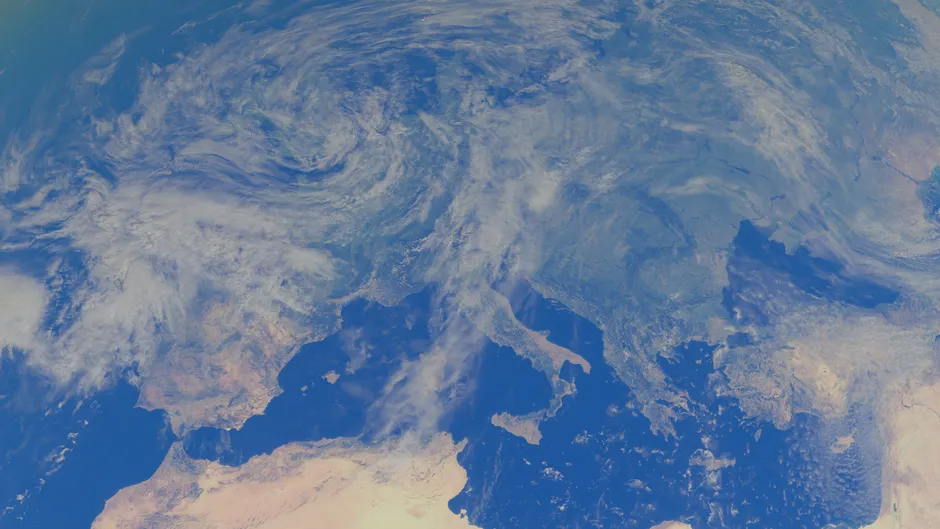
For decades, predicting the exact path and fury of a hurricane has been one of the most challenging puzzles in meteorology. Lives depend on getting those forecasts right, and even a few extra hours of warning can make a monumental difference for coastal communities. While traditional forecasting has come a long way, a new player has entered the field with a bold claim: it can predict these catastrophic storms earlier and with remarkable accuracy. That player is DeepMind, and its model is called WeatherNext.
The announcement is a significant moment for both the tech and climate sectors. DeepMind, the AI research lab known for its breakthroughs in everything from protein folding to game-playing algorithms, is now turning its formidable computational power toward the volatile atmosphere. What makes this development particularly intriguing isn’t just the accuracy—it’s the method, the data required, and the fact that the technology will be open-sourced for the wider scientific community.
How WeatherNext Works: A Different Approach to Forecasting
Traditional weather prediction relies on Numerical Weather Prediction (NWP). This involves creating complex mathematical models that simulate the physics of the atmosphere. These models require massive amounts of high-resolution data and some of the most powerful supercomputers on Earth to solve millions of equations. They are the gold standard, but they are also incredibly resource-intensive.
WeatherNext flips this script. Instead of relying solely on physics-based simulation, it uses a machine learning model trained on historical weather data. It learns the patterns and dynamics of the atmosphere by observing decades of past weather events, including how storms form, intensify, and move. This allows it to forecast a storm’s track and intensity using significantly lower-resolution data than its traditional counterparts.
This is a major departure from the status quo. The fact that it can produce accurate predictions with less detailed input data is a testament to the power of pattern recognition that deep learning models excel at. It suggests that the model isn’t just crunching numbers; it’s understanding the underlying relationships in the data that dictate storm behavior.
The “Black Box” Problem: We Don’t Know Why It Works
Perhaps the most fascinating—and for some, the most concerning—aspect of WeatherNext is the mystery surrounding its inner workings. DeepMind researchers have openly admitted that they don’t fully understand why the model makes the specific predictions it does. This is the classic “black box” problem in AI, where the decision-making process of a neural network is too complex for humans to easily trace.
While this might sound alarming, it’s not uncommon in the world of advanced AI. The model has developed its own internal logic, a sort of “intuition” about weather patterns, that differs from the physics equations humans have written. It has essentially discovered its own rules for how the atmosphere behaves.
This lack of interpretability presents a challenge for meteorologists who are used to understanding the “why” behind a forecast. However, DeepMind argues that the empirical evidence—the accuracy of the predictions—is strong enough to warrant serious consideration. The model isn’t meant to replace human meteorologists but to act as a powerful new tool in their arsenal, offering an alternative data point that can be cross-referenced with traditional models.
Open Source: A Win for Global Climate Science
One of the most commendable aspects of this project is DeepMind’s decision to open-source WeatherNext. This is a huge win for the global scientific community. By making the code and model weights publicly available, DeepMind is enabling researchers, universities, and meteorological agencies around the world to build upon their work.
This collaborative approach accelerates the pace of innovation. It allows smaller organizations with limited computing resources to access state-of-the-art forecasting technology. Instead of needing the massive supercomputers required for NWP, they might be able to run WeatherNext on more modest hardware, democratizing access to high-quality hurricane prediction. This could be a game-changer for developing nations that are often on the front lines of climate disasters but lack the infrastructure for traditional forecasting.
The Future of Weather Prediction
WeatherNext represents a paradigm shift. It shows that AI can not only match but potentially surpass traditional methods in specific domains, and it can do so with greater efficiency. The implications go far beyond just hurricanes. This same technology could potentially be applied to predicting other extreme weather events, such as tornadoes, heatwaves, and floods.
However, it’s important to temper the excitement with caution. The “black box” issue is a real hurdle. Before these models can be fully trusted for life-or-death decisions, researchers will need to develop better tools for interpreting their outputs. We need to understand the model’s limitations and when it might fail, not just when it succeeds.
The conversation around AI is often dominated by fears of job displacement or existential risk. But WeatherNext is a shining example of the profound positive impact AI can have on humanity. It’s a tool that could save thousands of lives by providing earlier warnings and more accurate evacuation orders.
As climate change continues to make storms more intense and unpredictable, the need for advanced forecasting has never been greater. DeepMind’s WeatherNext isn’t just a technological achievement; it’s a critical step toward building a more resilient future. While we may not fully understand the “why” just yet, the potential for “what” it can do is truly breathtaking.
