


Technology has a way of moving faster than our collective comfort level. One week we are marveling at a new AI capability, and the next we are questioning whether the price of progress—in terms of privacy, safety, or sheer consequence—is too high. Recently, a trio of stories has highlighted this tension perfectly. From the quiet expansion of federal DNA databases to a rocket’s unexpected finale on the lunar surface, and a growing chorus of criticism aimed at artificial intelligence, these events underscore a fundamental truth: innovation never happens in a vacuum.
The Quiet Expansion of DNA Collection
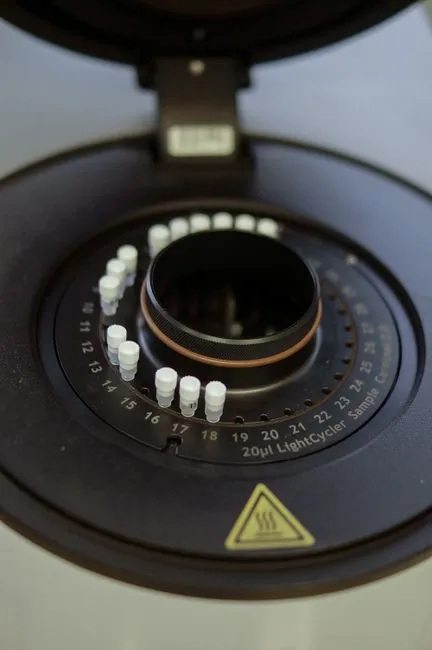
One of the most unsettling developments in recent weeks comes not from a flashy tech lab, but from federal law enforcement. Reports indicate that Immigration and Customs Enforcement (ICE) has been steadily increasing its collection of DNA samples from individuals who have never been convicted of a crime. This includes asylum seekers, undocumented immigrants, and in some cases, children.
The process is framed as a routine part of the booking or detention procedure. But the implications are far from routine. Once collected, these genetic profiles are uploaded into the Combined DNA Index System (CODIS), the FBI’s national database. There is no expiration date attached to these records. For the people affected, a single interaction with the immigration system can result in their most personal biological data being stored indefinitely, accessible to law enforcement agencies across the country for years to come.
Privacy advocates have long warned about the function creep of surveillance systems. What starts as a targeted tool for a specific population often expands into a broader mechanism of tracking. The concern here is not just about the individuals directly affected, but about the precedent it sets. If genetic material can be collected without a conviction, what other protections might be eroded next? The debate is no longer hypothetical; it’s happening in real-time, and the stakes are incredibly personal.
SpaceX’s Lunar Mishap
Meanwhile, in the realm of space exploration, a different kind of consequence played out. A SpaceX rocket stage, which had been drifting in space for years, finally met its end by crashing into the Moon. While the impact itself was not a surprise to astronomers tracking the object, it served as a stark reminder that our orbital debris has a shelf life, and sometimes, a destination.
The crash highlights a growing issue in the commercial space age: the lack of a robust framework for de-orbiting old equipment. We are launching more satellites and rockets than ever before, but the rules for cleaning up after ourselves are still catching up. The event wasn’t just about a piece of metal hitting the lunar surface; it was a symbol of the haphazard nature of our expansion into space. It forces us to ask who is responsible for the hardware we leave behind, and what happens when our “out of sight, out of mind” attitude toward space junk leads to physical collisions, even on a barren landscape.
The AI Backlash Intensifies
Back on Earth, the backlash against artificial intelligence is growing louder. It’s no longer just a niche concern among academics and sci-fi writers. Mainstream users, developers, and even the artists whose work feeds these models are starting to push back.
The criticism is multifaceted. For creators, it’s about consent and compensation, as their styles and works are used to train generative models without permission. For everyday users, it’s about the unsettling feeling of interacting with systems that are increasingly persuasive but not always accurate. There’s a growing sense of unease about the opacity of AI systems—we often don’t know why they make the decisions they do, or what data they are using to get there.
This isn’t a Luddite rejection of progress. It’s a demand for accountability. The conversation is shifting from “can we build it?” to “should we, and under what rules?” As AI becomes more integrated into our daily tools, from search engines to writing assistants, the pressure is mounting on tech companies to demonstrate that they are building these systems responsibly, with clear guidelines for privacy, bias, and user control.
Navigating the Uncanny Valley of Progress
These three stories—DNA collection, a crashed rocket, and AI skepticism—might seem unrelated at first glance. But they are all threads of the same narrative. They are examples of technology outrunning our ethical frameworks. We have the capability to collect genetic data, to launch massive objects into space, and to create machines that mimic human thought. But we are still struggling to define the boundaries of those capabilities.
The “Uncanny Valley” effect, typically used to describe robots that are almost human, applies here metaphorically. We are in a space where our tools are almost good enough, almost safe enough, and almost under control. But “almost” is not a standard we should be comfortable with. The challenge for the coming years will be to close the gap between what we can do and what we should do, ensuring that our innovations serve humanity rather than simply tracking it, littering our celestial neighborhood, or eroding our trust in the very tools we rely on.
The future isn’t written by the technology itself, but by the choices we make about how to use it. It’s a conversation that needs to include everyone—not just the engineers and the executives, but the citizens whose data is collected, the viewers who watch the sky, and the users who type a prompt into a chatbot. Their voices are the ones that will ultimately shape the rules of the road.
