


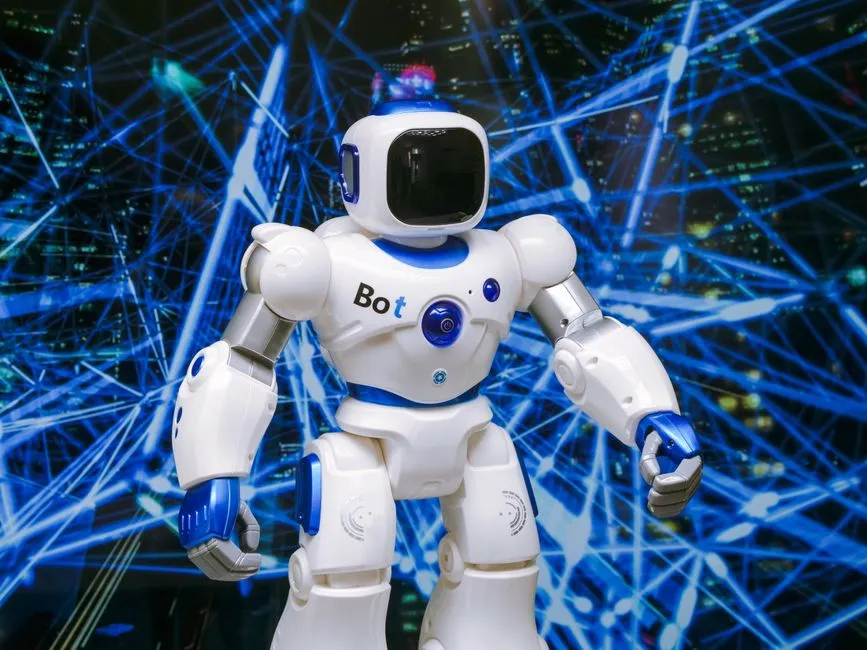
Artificial intelligence has spent the last decade living comfortably behind screens. It powers our search engines, writes our emails, generates stunning images, and even composes music. But for all its digital brilliance, traditional AI has largely remained confined to servers and software. That changes now. With the introduction of Gemini Robotics 2, Google DeepMind is taking a bold step toward what researchers are calling “physical AGI” – artificial general intelligence that can perceive, reason, and act in the tangible world around us.
The Leap Toward Physical AGI
For years, the tech industry has treated artificial intelligence and robotics as two separate lanes. One deals with data, algorithms, and virtual environments. The other deals with motors, sensors, and mechanical actuators. Gemini Robotics 2 attempts to merge them. By integrating advanced language and vision models directly into robotic hardware, this system doesn’t just process information; it understands context, navigates unpredictable spaces, and executes complex physical tasks with a level of autonomy we haven’t seen before.
What Does “Physical AI” Actually Mean?
At its core, physical AI refers to machine intelligence that operates in real-world environments. Unlike a chatbot that answers questions based on text prompts, a physically embodied AI must account for gravity, friction, lighting changes, moving objects, and human interaction. It needs to learn spatial reasoning, adapt to unexpected obstacles, and make split-second decisions without constant human oversight. Gemini Robotics 2 represents a major milestone in this space because it doesn’t just follow pre-programmed commands. It reasons through problems, adjusts its approach in real time, and continuously learns from physical feedback loops.
How Gemini Robotics 2 Changes the Game
The jump from theoretical AI to embodied AI isn’t just a technical upgrade; it’s a paradigm shift. Earlier robotic systems relied heavily on rigid programming and controlled environments. If a warehouse box was placed slightly off-center, older machines would often fail. Gemini Robotics 2, however, uses multimodal learning to interpret visual data, tactile feedback, and environmental cues simultaneously. This allows it to handle delicate objects, navigate cluttered rooms, and even collaborate alongside human workers without compromising safety or efficiency.
Real-World Applications and Capabilities
The implications of this technology stretch far beyond laboratory demonstrations. Imagine manufacturing floors where robots can adapt to new product lines without extensive reprogramming. Picture logistics centers where autonomous units can reorganize inventory on the fly when supply chain disruptions occur. Or consider healthcare settings where assistive robots could help patients with mobility challenges by understanding natural language commands and physical cues. The beauty of Gemini Robotics 2 lies in its versatility. Because it’s built on a foundation of general-purpose learning, it can transfer skills from one physical task to another much faster than traditional systems.
The Risks of Bringing AI Into Our Physical Spaces
Of course, taking artificial intelligence out of the cloud and into our living rooms, factories, and public spaces comes with a heavy dose of responsibility. When an AI makes a mistake in a spreadsheet, the consequences are usually contained. When an AI makes a mistake while holding a heavy tool or navigating a crowded hallway, the stakes are entirely different. Plopping advanced AI into the real world introduces risks that developers, regulators, and everyday users must carefully navigate.
Safety, Ethics, and Unintended Consequences
One of the biggest challenges is ensuring reliable safety protocols. Physical AI systems must be equipped with fail-safes that prevent hazardous behavior, especially when operating near humans. There’s also the issue of environmental unpredictability. Real-world conditions are messy. Weather, debris, sudden movements, and human error can all throw a wrench into even the most sophisticated algorithms. Beyond safety, there are ethical considerations around data privacy, workforce displacement, and accountability. If a robot causes damage or makes an autonomous decision that leads to harm, who is responsible? The manufacturer, the software developer, or the end user? These questions don’t have easy answers, and they require proactive governance rather than reactive regulation.
What Comes Next for Embodied AI?
Despite the challenges, the trajectory is clear. Physical AI is moving from experimental prototypes to practical tools. Over the next few years, we’ll likely see tighter integration between software intelligence and hardware engineering. Manufacturers will prioritize modular designs that allow for easier upgrades, while AI researchers will focus on improving reasoning under uncertainty. We’ll also see more collaboration between tech companies, policymakers, and safety organizations to establish industry standards for embodied AI deployment.
The introduction of Gemini Robotics 2 marks a pivotal moment in the evolution of artificial intelligence. It proves that machines can do more than process data; they can interact with our world in meaningful, adaptive ways. But with that capability comes a duty to build responsibly. As we welcome AI into our physical spaces, the focus must shift from pure capability to sustainable, safe, and ethically grounded integration. The future isn’t just about smarter machines. It’s about machines that understand the world well enough to share it with us safely.
