


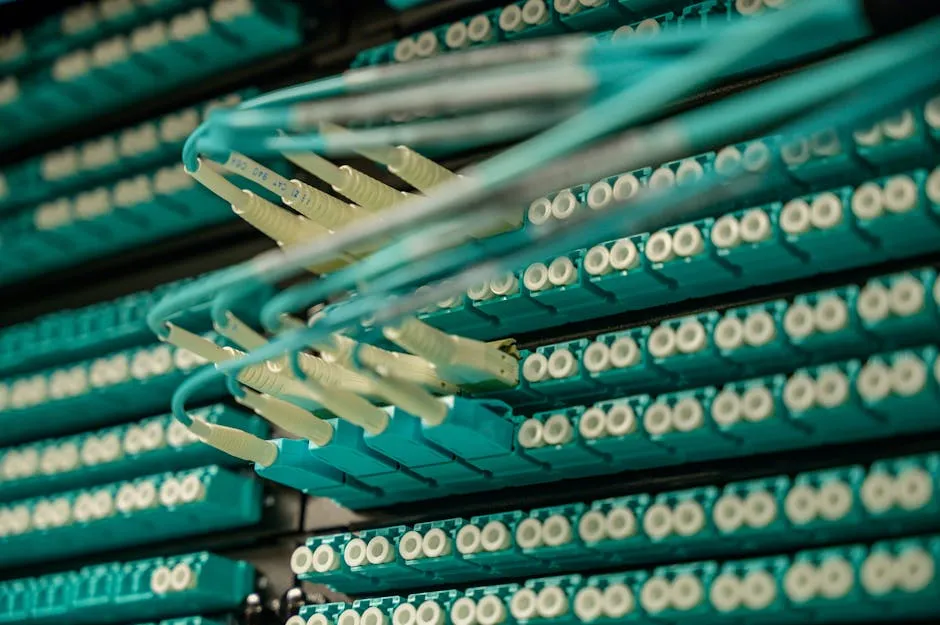
For years, the conversation around artificial intelligence and cloud computing has revolved around one thing: processing power. We hear about newer, faster chips, larger clusters, and ever-growing data centers. But behind the headlines, a quieter, more critical problem has been simmering. Amazon believes it has finally cracked the code, and the answer doesn’t lie in faster processors. It lies in how those processors talk to each other.
The tech giant recently highlighted a major breakthrough in data center networking, claiming it has dramatically accelerated the flow of information across its massive cloud infrastructure. This isn’t just a minor upgrade. It represents a fundamental shift in how hyperscalers approach the physical and logical architecture of modern computing.
The Hidden Bottleneck in Modern Data Centers
When you picture a data center, you probably imagine rows of sleek servers humming in climate-controlled rooms. But the real magic happens in the invisible web of cables, switches, and routers that connect them. As AI models have grown from simple algorithms to trillion-parameter behemoths, the demand for data has exploded. GPUs and custom AI chips can now process information at staggering speeds, but they are only as fast as the network feeding them data.
Why Networking Matters More Than Ever
In traditional data center designs, network switches and routing protocols were built for general-purpose workloads. They handled web traffic, database queries, and file storage just fine. But AI training is a different beast. It requires thousands of processors to work in perfect sync, exchanging massive amounts of data in real time. When the network can’t keep up, expensive hardware sits idle. This creates a costly bottleneck that limits scalability, inflates energy consumption, and slows down the entire development cycle for AI researchers and enterprises alike.
Amazon’s Breakthrough: Rewiring the Cloud
Amazon Web Services (AWS) has spent years engineering custom solutions to bypass these limitations. Instead of relying on off-the-shelf networking gear, the company has developed a proprietary networking fabric designed specifically for the demands of modern AI and high-performance computing. The breakthrough centers on a combination of custom silicon, advanced packet routing, and software-defined networking that eliminates traditional latency and congestion points.
How the New Architecture Works
Rather than forcing data through a maze of intermediate switches, the new architecture streamlines communication paths. By integrating networking logic directly into the server infrastructure and utilizing smarter traffic management algorithms
