


For decades, the race for artificial intelligence has been defined by silicon, code, and sprawling data centers. We have watched neural networks grow in complexity, fueled by massive datasets and increasingly powerful chips. Yet, a quiet revolution is brewing in laboratories around the globe, one that suggests the future of computing might not be digital at all—it might be biological. The provocative notion that “AI is dead” does not signal the end of intelligent machines; rather, it marks the beginning of a new era where living tissue could outperform the neural networks we know today.
What Are Organoids?
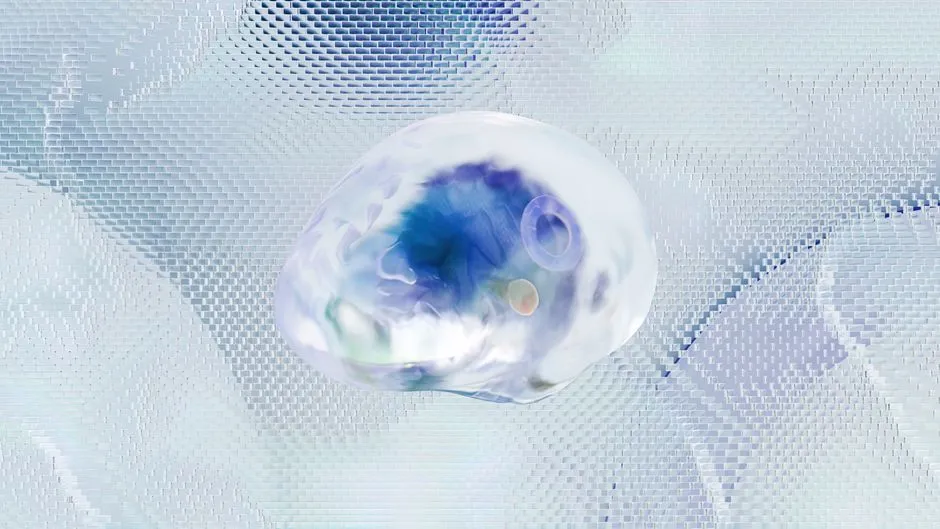
At the center of this shift are organoids. These are not fully formed brains, nor do they possess consciousness or personality. Instead, they are three-dimensional clusters of cells derived from stem cells that mimic the structure and function of human brain tissue. Scientists have been cultivating these “mini brains” for years, primarily to study neurological diseases and developmental biology. However, a growing subset of researchers is looking at organoids through a completely different lens: as potential processors for a new paradigm of computing.
These biological constructs can self-organize, form complex neural networks, and respond to electrical and chemical stimuli. In many ways, they represent the most sophisticated biological hardware we can create outside the human body. The question now on the minds of innovators is whether this biological hardware can be harnessed to solve computational problems that silicon struggles to address.
The Limits of Silicon and the Promise of Biology
Current artificial intelligence, particularly deep learning models, has achieved remarkable feats. From generating text to diagnosing medical conditions, these systems are undeniably powerful. However, they come with significant drawbacks. Silicon-based AI is incredibly energy-intensive. Training a large language model can consume as much electricity as a small town uses in a year. Furthermore, these models are often brittle; they lack the adaptability, generalization, and efficiency of biological intelligence.
The human brain operates on roughly 20 watts of power, yet it can process sensory information, learn from sparse data, and solve abstract problems with a level of flexibility that leaves even the most advanced AI models looking clumsy by comparison. Organoids offer a substrate that is inherently self-organizing, highly parallel, and incredibly energy-efficient. Researchers believe that by interfacing these living tissues with electronic devices, we could create biocomputers that learn and adapt in ways silicon simply cannot match.
Organoid Intelligence vs. Traditional Neural Networks
The concept of leveraging living tissue for computation is known as Organoid Intelligence (OI). The goal is not merely to simulate neural networks with code but to use actual neurons as the computing medium. Early experiments have already shown promising results. Scientists have demonstrated that organoid networks can be trained to perform simple computational tasks and exhibit learning behaviors when exposed to specific stimuli.
Unlike traditional neural networks, which require massive datasets and rigid architectures, organoid networks can potentially learn from experience in a more fluid manner. They possess the ability to rewire themselves, a property known as plasticity, which allows for continuous adaptation. This could lead to systems that are not only more efficient but also capable of solving complex, dynamic problems that currently elude artificial intelligence. The idea that mini brains could eventually “outthink” neural networks is no longer science fiction; it is an active area of research with tangible early milestones.
Ethical Frontiers and the Path Forward
As the potential of organoid intelligence becomes clearer, so do the ethical challenges. If we are growing brain tissue and connecting it to computers, where do we draw the line? Questions regarding sentience, consciousness, and the moral status of these biological entities are already sparking intense debate within the scientific community. While current organoids lack the complexity required for subjective experience, the trajectory of this technology demands careful consideration.
Regulatory frameworks are virtually non-existent, and the scientific community is working to establish guidelines to ensure responsible development. Issues of containment, data privacy, and the potential for misuse must be addressed before organoid intelligence moves from the lab to broader applications. However, the consensus is that the benefits could be transformative. Beyond computing, this technology could revolutionize our understanding of the brain, lead to new treatments for neurological disorders, and provide a sustainable alternative to the energy-heavy demands of current AI infrastructure.
A Hybrid Future
The narrative that “AI is dead” is best understood as a call to evolve. It is a reminder that the definition of intelligence is expanding beyond code and silicon. As we face the physical and environmental limits of Moore’s Law, organoid intelligence offers a glimpse of a different path. The future may not be a choice between biological and digital systems, but a hybrid approach where the strengths of both are combined. We may see biocomputers that use living tissue for specific, energy-efficient tasks while relying on silicon for storage and high-speed processing.
Mini brains grown in labs are more than a scientific curiosity; they are a potential key to unlocking the next generation of computing. As research progresses, we are moving closer to a world where intelligence is not just processed, but lived. The race is no longer just about faster chips; it is about harnessing the incredible power of biology to create a smarter, more sustainable future.
