


For a long time, the conversation around artificial intelligence felt almost like a parade of chatbots. New models, new benchmarks, new “smartest assistant” headlines. Every few weeks, another company would announce a breakthrough, and the internet would briefly hold its breath. It was exciting, but it also made the AI race seem like it lived mostly in the front end: the interfaces, the prompts, the responses, the user experience.
By July 2026, that picture has quietly changed. The spotlight may still be on chatbots, but the real battles are increasingly happening beneath the models. The companies that will define the next phase of AI are not just the ones with the flashiest demos. They are the ones solving harder, less glamorous questions: how to build the chips, how to power the data centers, how to keep systems secure at scale, and how to earn the trust of developers, enterprises, and the general public.
The Chatbot Era Is Not Over, But It Is No Longer the Whole Story
Chatbots are still important. In fact, they have become so common that they are now treated as a baseline capability rather than a novelty. Businesses use them for customer support, internal knowledge, drafting, coding assistance, and workflow automation. For many people, a chat interface is still the easiest way to interact with AI.
But the more interesting shift is what happens after the user types the prompt. A modern AI system is not just a model. It is a complex stack involving compute, memory, networking, energy, storage, observability, governance, and security. The model may be the brain, but the rest of the system is the body, the nervous system, and the immune system all at once.
That is why the AI race is no longer just about who can generate the most impressive paragraph. It is about who can deliver reliable, scalable, and trustworthy AI in the real world.
Chips Are Becoming the New Bottleneck
Compute Is the Lifeblood of AI
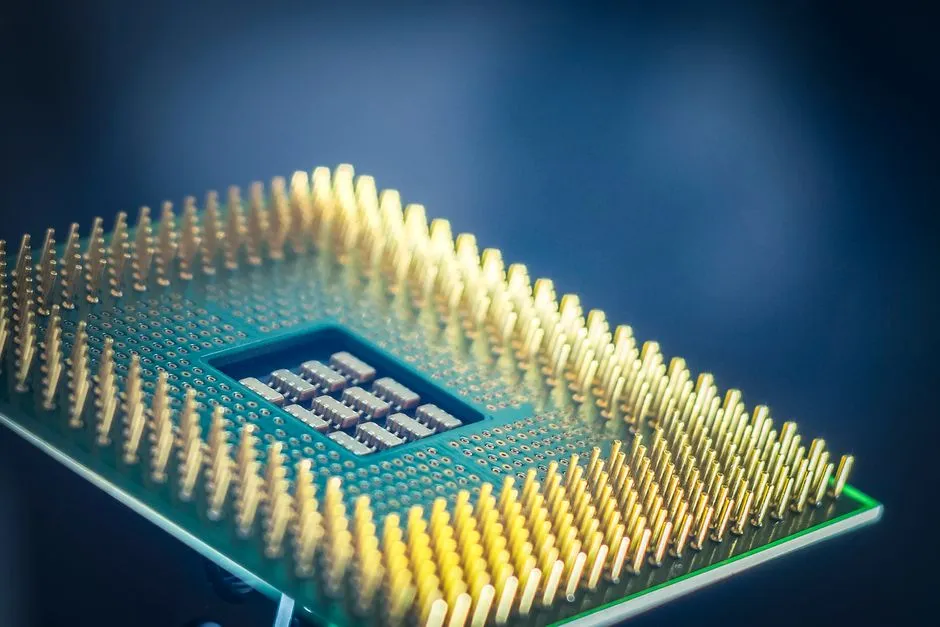
At the center of this shift is compute. Training and serving large AI models require enormous amounts of processing power, and that demand has made chips one of the most critical assets in the entire industry. Graphics processing units, tensor cores, custom accelerators, and high-bandwidth memory are no longer just technical details. They are strategic resources.
As models grow more complex and inference costs become a major concern, access to fast, efficient hardware can determine how quickly a company can ship, scale, and profit. A brilliant model is not enough if it cannot be run affordably at scale. This is why chip design, supply chains, and silicon partnerships have become part of the AI story.
In many ways, the next decade of AI will be shaped less by a single “magic algorithm” and more by who can build the best foundation for running AI workloads efficiently. That means faster inference, lower latency, better energy use, and more predictable performance across massive clusters.
Infrastructure Is Becoming a Strategic Asset
If chips are the engine, infrastructure is the highway. AI systems need not only powerful hardware, but also the networks, storage, cooling, power, and orchestration layers needed to keep everything running smoothly. Data centers are no longer just rooms full of servers. They are becoming some of the most complex industrial systems of the AI era.
For enterprises, this matters because AI is moving from experimentation into production. A demo that works in a lab is very different from a system that must run 24/7, handle spikes in traffic, meet compliance requirements, and remain secure under real-world pressure. The companies that understand infrastructure deeply will have a major advantage.
This is also where cost discipline becomes critical. AI is powerful, but it can be expensive. As more organizations adopt AI, the ability to optimize workloads, reduce waste, and balance performance with efficiency will be a key differentiator. Infrastructure is not just a back-office concern anymore. It is a core business capability.
Security and Trust Are No Longer Side Projects
One of the most important changes in the AI landscape is the rise of security and trust as first-class priorities. AI systems handle sensitive data, automate decisions, and increasingly connect to critical workflows. That means a security failure is not just an IT problem. It can become a legal, financial, and reputational crisis.
Security in AI is different from traditional software security. Models can be vulnerable to prompt injection, data poisoning, model theft, and misuse. AI agents can take actions on behalf of users, which raises new questions about permissions, oversight, and accountability. As AI becomes more autonomous, the need for guardrails becomes stronger, not weaker.
Trust is also a business requirement. Enterprises do not want to hand over confidential data to a system they do not understand. They want clarity around where data goes, how it is used, what controls exist, and how incidents are handled. In 2026, trust is not just an ethical ideal. It is a competitive advantage.
The Human Side of the AI Race
It is easy to focus on chips and data centers, but the human dimension remains essential. Developers, product teams, security teams, and business leaders all need to understand how AI systems behave, where they fail, and how to use them responsibly. The best AI deployments are not the ones with the most parameters. They are the ones that fit naturally into existing workflows and improve outcomes without creating new risks.
This is why the companies winning in the AI era are often the ones that combine technical excellence with operational maturity. They build strong products, yes, but they also invest in governance, monitoring, and user education. They understand that adoption comes from confidence, not just capability.
What This Means for the Future
The AI race is still fast, but it is becoming more grounded. The next wave of progress will not be defined by a single viral chatbot moment. It will be shaped by quieter, deeper investments: better silicon, smarter data centers, stronger security practices, and more reliable systems that people can actually depend on.
Chatbots will remain visible, but they are no longer the full picture. The real competition is happening underneath, in the infrastructure and trust layers that make AI work at scale. And that is where the future of the industry is being built.
Related read: AI Wonderland Weekly: A Calmer Way to Catch Up on AI Research
