


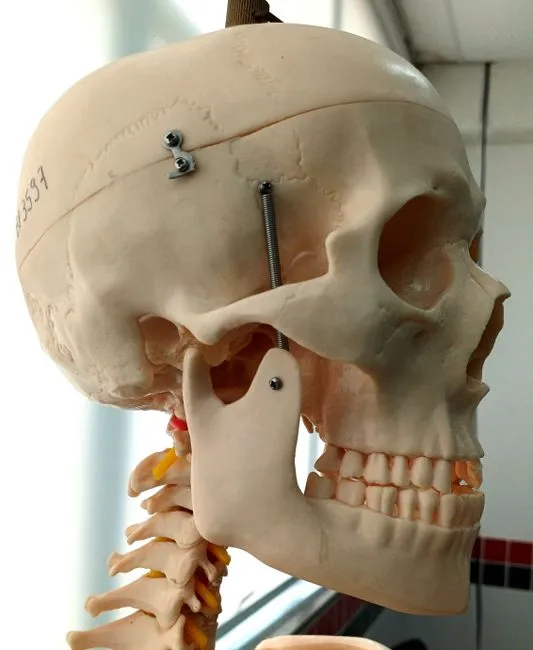
When a person disappears, the search that follows can be urgent, emotional, and deeply personal. Families often hold onto hope that their loved one will be found, but in some cases the reality is far more difficult. Remains may be discovered in a remote area, in a degraded state, or in fragments that make identification extremely challenging. For forensic anthropologists, the task of connecting those remains to a missing person is one of the most complex in all of forensic science.
For decades, this work has relied on careful physical examination, measurement, comparison, and experience. Skeletal remains are studied for age, sex, stature, ancestry, and distinctive traits. Dental records, personal effects, and DNA samples can also help. But when remains are incomplete, badly preserved, or found far from the last known location, the process becomes slow and painstaking. That is where artificial intelligence is beginning to make a meaningful difference.
Why identifying unidentified remains is so difficult
Unidentified remains are not always whole skeletons. In many cases, forensic teams may encounter only a single bone, a partial skull, a jaw, or scattered fragments that have been damaged by time, weather, animals, or human activity. Each of these situations creates a different set of problems.
Traditional forensic anthropology depends heavily on visual and metric analysis. A trained expert can often estimate age range, biological sex, and stature from skeletal features. But these estimates are probabilistic, not absolute. A person may have unique traits that are difficult to recognize without prior comparison. When remains are incomplete, the number of available clues drops sharply, making it harder to narrow the pool of possible matches.
Missing person databases also add to the complexity. A forensic team may need to compare skeletal features against dental charts, medical records, photographs, clothing, tattoos, and other identifying information. In some cases, the missing person may have been reported in only a general way, with little detailed information available. That makes manual comparison time-consuming and, at times, frustrating.
Where AI enters the forensic process
Artificial intelligence does not replace forensic anthropologists. Instead, it can act as a powerful assistant. AI systems can analyze large amounts of visual and numerical data quickly, helping experts focus on the most promising leads. In forensic anthropology, that can mean using machine learning to recognize skeletal patterns, estimate biological profiles, or match fragments to missing person records.
One of the most important areas where AI can help is in the analysis of skeletal remains. Computer vision models can be trained to examine images of bones and identify features that may be difficult for a human eye to quantify quickly. For example, an algorithm may help estimate age based on changes in specific bones, or assist in determining stature from skeletal measurements. These tools can also support the identification of unusual or distinctive traits, such as old fractures, surgical changes, or other anomalies.
Matching fragments and incomplete skeletons
Perhaps the most compelling application is the matching of fragmented remains. When only pieces of a skeleton are available, forensic experts may need to determine whether those pieces belong to the same individual or to different people. AI can help by analyzing shape, size, surface texture, and structural relationships between fragments. In some workflows, this can reduce the number of possible matches and help investigators prioritize which missing person records deserve closer review.
This is especially important in disaster response, mass fatality events, or cases where remains have been disturbed. In those situations, the amount of material that must be examined can be enormous. AI can help sort through that volume more efficiently, while still leaving final judgment to trained professionals.
Generating facial and demographic portraits
Another area where AI is making an impact is facial reconstruction. For decades, forensic artists have created facial approximations by hand, using a skull as a guide. Now, AI models can generate facial renderings from skeletal data, sometimes producing multiple possible appearances that investigators can compare with missing person photographs. These images are not definitive proof of identity, but they can help guide the search and may trigger recognition from the public or family members.
AI can also support demographic estimation. By combining skeletal data with other available information, models can assist in narrowing the age range, sex, and ancestry of an unknown individual. Again, these estimates are not certain, but they can help investigators create a more focused profile when searching through missing person databases.
How AI can speed up investigations
The biggest benefit of AI in forensic anthropology is not that it produces instant answers, but that it can reduce the time needed to explore possibilities. In a traditional workflow, an expert may spend hours or days comparing skeletal features with missing person records. AI can perform many of those comparisons in a fraction of the time, especially when the database is large.
This speed can be especially valuable in active investigations. If remains are found in a national park, a river, or a disaster zone, every day matters. Faster preliminary matching can help investigators contact families sooner, verify leads more quickly, and allocate resources more effectively. In some cases, a quicker identification can also bring closure to families who have been waiting for answers.
AI can also support consistency. Human experts are highly skilled, but they are not machines. Fatigue, workload, and subjective interpretation can all play a role. AI systems can provide a standardized layer of analysis, helping ensure that similar cases are evaluated with the same level of attention. This does not remove the need for expertise, but it can make the overall process more reliable and efficient.
Limitations and ethical responsibilities
Despite its promise, AI in forensic anthropology must be used carefully. The technology is still developing, and no model should be treated as a final authority on identity. Forensic science is built on evidence, and AI outputs must be validated, documented, and reviewed by qualified professionals. If an algorithm makes an error, the consequences can be serious, both legally and emotionally.
Bias is another important concern. If an AI system is trained on data that does not represent a full range of human variation, its estimates may be less accurate for certain populations. That means developers and users must pay close attention to the quality and diversity of the training data. Transparency is also essential. Investigators, courts, and families need to understand how a result was produced and what confidence level should be placed in it.
There are also privacy and ethical questions. Forensic work involves sensitive personal information, including DNA, medical history, and images of the deceased. Any AI system used in this field must handle that data securely and responsibly. Consent, data protection, and ethical oversight are not optional details; they are central to maintaining public trust in forensic science.
The future of AI-augmented forensic anthropology
The future of this field is likely to be collaborative. Human expertise and artificial intelligence will work together, not in competition. AI can handle repetitive, large-scale analysis, while forensic anthropologists can interpret the results, consider context, and make the final scientific judgment. As models improve, they may become better at integrating multiple types of evidence, from skeletal measurements to facial reconstruction to missing person records.
We may also see more specialized tools designed for particular forensic challenges, such as mass fatality events, degraded remains, or juvenile skeletal analysis. These tools could become part of standard forensic workflows, helping laboratories process cases more quickly while maintaining high standards of accuracy.
At the same time, the field will need clear guidelines for how AI is used in court and in public investigations. Standards, validation studies, and professional training will be essential to ensure that these tools are used ethically and effectively.
Ultimately, the goal of forensic anthropology is not just to solve a scientific puzzle. It is to help identify the unknown, support families, and bring clarity to some of the most painful situations people can face. AI may not provide answers on its own, but when used responsibly, it can make the path to those answers faster, more precise, and more humane. As the technology continues to evolve, its role in forensic anthropology is likely to grow, helping investigators turn fragments of evidence into meaningful identification and, in many cases, into long-awaited closure.
Related read: AI Wonderland Weekly: Why AI Safety Became the Center of the Conversation in July 2026
