


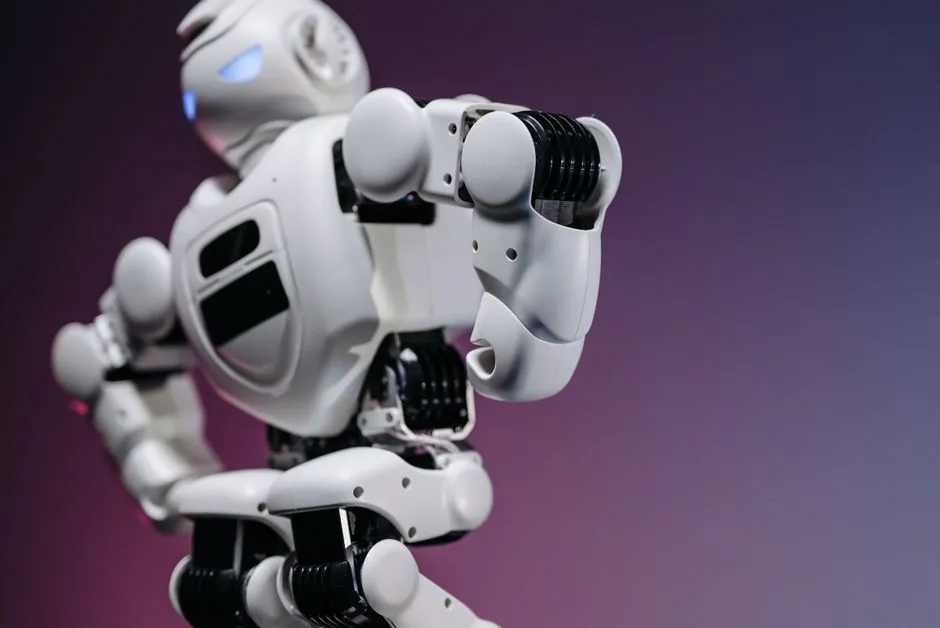
For most of the last decade, our relationship with artificial intelligence has been mostly digital. We type into a chat window, ask a search engine for an answer, or watch a model generate text, images, and short videos. But the next major shift may not happen on a screen at all. It may happen when AI steps out of the server rack and into the physical world, where it has to see, move, touch, and make decisions in real time. That is what we mean when we talk about embodied AI: intelligence that lives in a body, usually a robot, and interacts with the world through sensors, motors, and physical feedback.
Why Embodiment Changes Everything
A chatbot can give you a thoughtful answer, but it cannot open a door, hand you a glass of water, or judge how much force is needed to pick up a ripe peach without crushing it. Embodied AI is different because it has to deal with uncertainty in the real world. The world is messy. Objects move. Surfaces are slippery. People change their minds mid-sentence. A robot cannot simply “regenerate” a bad action the way a language model can regenerate a weak paragraph. It has to act, observe the result, and adjust.
That is why robots have become one of the most important testing grounds for modern AI. They force systems to combine perception, reasoning, planning, and physical control in ways that purely digital AI rarely has to manage. A robot in a warehouse, a factory, a hospital corridor, or a home is not just processing data. It is negotiating space, timing, safety, and intent. In many ways, embodiment is the next frontier for AI because it reveals what a system can and cannot actually do.
The Gap Between Language and Action
One of the most interesting parts of embodied AI is how language and action connect. A robot may understand the phrase “bring me a coffee cup,” but that simple request hides a complicated chain of physical tasks. It has to locate the cup, figure out which cup is the right one, approach it safely, grasp it without slipping, avoid knocking over other items, and deliver it to the right person. Each step requires a different kind of intelligence.
Language models are good at understanding goals and context. Vision systems are improving at recognizing objects. Control systems are getting better at movement. The hard part is making all of these pieces work together smoothly. This is where embodied AI becomes more than a robotics story. It becomes a story about how we define intelligence itself. If a system can only reason in words, but cannot reliably act in the world, then its intelligence is incomplete. Embodiment pushes AI toward a more complete form of understanding.
How Robots Are Reshaping What Intelligence Means
Traditional robotics often relied on precise programming. A machine would follow a fixed path, perform a fixed task, and operate in a controlled environment. Modern embodied AI changes that model. Instead of being narrowly scripted, robots are beginning to use general-purpose models that can interpret scenes, infer intent, and adapt to new situations. That does not mean they are ready to handle any environment with human-like ease, but it does mean the field is moving in a new direction.
This shift matters because it changes what we expect from machines. In the past, a robot was often a tool for repetition. In the future, a robot may become a collaborator. It might help in manufacturing, logistics, agriculture, healthcare, or domestic life. It might assist older adults, support warehouse workers, inspect dangerous sites, or simply help people get through a busy day. The more capable these systems become, the more we will think about them not just in terms of speed or precision, but in terms of judgment, reliability, and trust.
Perception, Planning, and Physical Feedback
Embodied AI is built on a continuous loop. A robot senses its environment, forms a plan, takes an action, and then uses the outcome of that action to update its understanding. This loop is what separates real-world intelligence from abstract problem solving. A self-driving car, a warehouse robot, and a humanoid assistant all rely on versions of this same process, even if their hardware and use cases are very different.
Perception is the starting point. Cameras, lidar, depth sensors, and touch sensors give the robot a picture of the world. Planning turns that picture into a sequence of possible actions. Physical execution puts those actions into motion. But the most important part may be feedback. If a robot drops a tool, it needs to recognize that failure, understand why it happened, and try again in a better way. That ability to learn from physical consequences is one of the most important challenges in embodied AI.
The Hard Parts: Reliability, Safety, and Cost
It is easy to get excited about embodied AI, but the real barriers are practical. Robots are expensive, complex, and difficult to maintain. They operate in environments that were not designed for them. A factory floor is one thing. A cluttered living room is another. A construction site, a hospital, or a crowded store is even harder. The more open and unpredictable the environment, the harder it becomes for a robot to act safely and consistently.
Safety is not a minor concern. A language model that gives a bad answer may be annoying or misleading, but a robot that makes a bad physical decision can cause injury, damage, or expensive downtime. That is why reliability is so important. For embodied AI to become widely useful, it must be predictable enough to be trusted, flexible enough to be useful, and safe enough to be allowed near people. This is not just a technical problem. It is also an ethical and regulatory one.
Why “Good Enough” Is Hard
In many digital applications, a system that works 90 percent of the time may still be valuable. In robotics, the remaining 10 percent can be the most important part. If a robot fails once in a way that injures someone or damages property, the consequences can be severe. That is why the bar for embodied AI is higher. It is not enough to be impressive in a demo. It has to be dependable over time, in many different conditions, with many different users.
This is also why progress in this area often feels slower than people expect. The breakthroughs are real, but the path from a striking prototype to a widely deployed product is long. Companies and researchers have to solve problems in materials, batteries, sensors, software, control, data, and human interaction all at once. That is harder than it looks from the outside.
What Embodied AI Means for Everyday Life
The most visible examples of embodied AI are often robots in warehouses or factories, but the longer-term impact may be much broader. In healthcare, robots could help with lifting, monitoring, or repetitive support tasks. In manufacturing, they could work alongside humans in more flexible roles. In homes, they could assist with chores, care, and daily routines. In agriculture, they could help with inspection, harvesting, and labor-intensive fieldwork. The applications are wide, but the common theme is the same: AI that can help in the physical world.
At the same time, these possibilities raise important questions. How do we design robots that respect human autonomy? How do we protect privacy when a machine is constantly sensing its surroundings? How do we make sure the benefits of embodied AI are shared fairly rather than concentrated in a few industries? These are not just technical questions. They are social, economic, and ethical ones. As AI becomes embodied, the conversation shifts from what a machine can say to what it can do, and who it should serve.
Work, Care, and Companionship
One of the most sensitive areas is care. Robots may eventually help with tasks that are physically demanding or emotionally difficult, especially in aging populations and labor-short environments. But care is not just a set of mechanical actions. It involves trust, empathy, timing, and respect. A machine that can lift a person safely is not the same as a machine that understands what that person needs. That distinction will matter as embodied AI becomes more common.
There is also the question of companionship. Robots may become more familiar in public spaces, workplaces, and homes. Some people may welcome that presence, while others may feel uneasy. The design choices we make now will shape whether embodied AI feels like a helpful extension of human life or an intrusive presence. In other words, the future of embodied AI will depend not only on better models and better hardware, but on better judgment about how and where these systems should be used.
The Bigger Picture
Embodied AI is important because it changes the scale of what intelligence can mean. It is no longer just about generating the next word in a sentence. It is about generating the next safe, useful, and context-aware action in a physical environment. That is a much harder problem, and a much more consequential one. It connects language, perception, control, ethics, and human experience in ways that purely digital AI rarely has to face.
The robots we see today are not the final version of this technology. They are early steps in a longer transition. Over time, we are likely to see systems that are more adaptive, more reliable, and more integrated into the places where we work and live. The key will be whether we build them with enough care, enough safety, and enough respect for the humans they will share space with. If we do, embodied AI could become one of the most meaningful developments in technology. If we do not, it could become another powerful tool that outpaces the wisdom needed to use it well.
In the end, the question is not just whether AI can become embodied. It is what kind of intelligence we want to put into a body. The answer will shape not only the future of robotics, but the future of how humans and machines live, work, and interact with one another.
Related read: When AI Becomes Embodied: What Robots Mean for the Future of Intelligence
