


The Dawn of the Robotic Intern
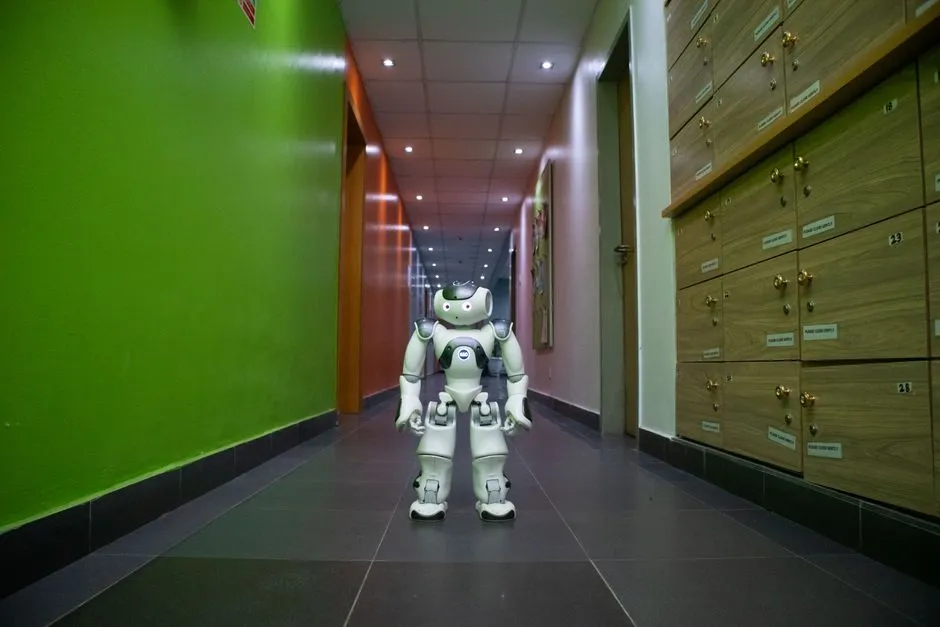
For decades, the image of a robot navigating a modern office space belonged firmly in the realm of science fiction. We imagined clunky machines fumbling with coffee mugs or getting hopelessly lost in cubicle labyrinths. But the landscape of workplace automation is shifting faster than most of us anticipated. Enter Flexion Robotics, a startup that has taken a fundamentally different approach to building humanoid machines. Instead of focusing on flashy demonstrations or rigid industrial assembly lines, this team has engineered a robot that operates with the quiet, unsettling competence of a highly capable office intern.
What makes this development particularly noteworthy is not just the hardware, but the methodology behind it. Flexion Robotics was founded by engineers who previously worked at Nvidia, bringing with them a deep understanding of computer vision, simulation environments, and neural network architecture. Rather than programming every single movement by hand, they have developed a training framework that allows the robot to learn through experience, much like a human would. This shift from rigid instruction to adaptive learning is what separates today’s robotics from the mechanical arms of yesterday.
How They Teach Machines to Learn
The core of Flexion’s approach lies in a clever, simulation-heavy training pipeline. Before the robot ever touches a physical keyboard or files a document, it spends thousands of hours in a highly detailed digital twin of the real world. In these virtual environments, the AI is exposed to millions of scenarios, learning how to manipulate objects, navigate around obstacles, and recover from mistakes. This process relies heavily on reinforcement learning, where the system is rewarded for successful actions and penalized for errors, gradually building a robust internal model of physical cause and effect.
Bridging the Gap Between Code and Physical Reality
The true magic happens when the robot transitions from simulation to reality. Historically, this “sim-to-real” gap has been the biggest hurdle in robotics. A model that performs flawlessly in a pristine digital environment often falls apart when faced with the messy unpredictability of the real world. Flexion has tackled this by training their systems to recognize and adapt to visual noise, varying lighting conditions, and unexpected object placements. The result is a machine that doesn’t just follow pre-written scripts; it observes, processes, and reacts in real time.
This capability transforms the robot from a simple tool into a collaborative workspace participant. It can learn to organize cluttered desks, sort through mail, retrieve supplies from storage rooms, and even assist with basic inventory tracking. The “intern” analogy is particularly fitting because these machines are designed to handle the repetitive, logistical tasks that often bog down human employees, freeing up teams to focus on higher-level strategy and creative problem solving.
What This Means for the Modern Workplace
As humanoid robotics mature, the conversation around workplace automation is inevitably shifting from theoretical to practical. Companies are beginning to realize that the future of work isn’t about replacing human workers entirely, but rather augmenting human capabilities with machines that can handle the tedious physical and organizational overhead. A robot that can reliably navigate an office, interact with everyday objects, and learn new tasks through observation represents a significant leap forward in operational efficiency.
Of course, this level of technological advancement naturally raises questions about job displacement and workplace dynamics. The reality, however, is more nuanced. Much like the introduction of spreadsheets or cloud computing, robotic assistants are likely to redefine job roles rather than erase them. The most successful organizations will be those that integrate these systems thoughtfully, using them to eliminate friction from daily workflows while preserving the human elements of creativity, empathy, and strategic oversight.
Looking Ahead
The development of competent, adaptable humanoid robots marks a turning point in how we think about physical AI. Flexion Robotics has demonstrated that the path forward isn’t about building machines that mimic human anatomy perfectly, but rather engineering systems that understand how to interact with human environments intelligently. As training simulations become more sophisticated and hardware continues to improve, we can expect to see these robots move from controlled testing environments to real-world offices, warehouses, and commercial spaces.
The robot intern of tomorrow won’t be a novelty act or a lab curiosity. It will be a practical, highly trained assistant that learns on the job, adapts to new challenges, and operates seamlessly alongside human teams. The technology is no longer waiting on the horizon. It is already in the building, learning the ropes, and quietly proving that the future of work is already here.
