


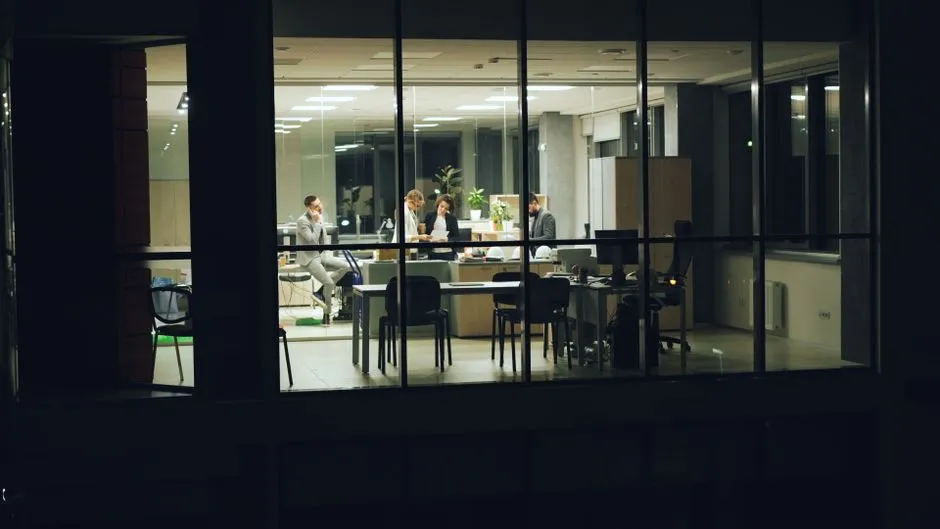
The traditional job interview is getting a serious time zone makeover. Gone are the days when you had to squeeze a phone screen between meetings or take a half-day off work just to speak with a recruiter. Instead, a growing number of candidates are logging on for first-round interviews at 10 PM, midnight, or even 1 AM—in their pajamas, with a cup of tea in hand.
This isn’t a sign of a chaotic work culture or a desperate job seeker. It’s the result of a quiet but significant shift in how companies are hiring. The first step of the hiring process is increasingly being handled not by a human recruiter, but by an AI interviewer. And since there’s no human on the other end waiting for a response, candidates are scheduling these conversations whenever it suits them best—even deep into the night.
The Rise of the On-Demand Interview
For decades, the interview process has been a synchronous dance. You wait for the recruiter to email you, you propose a time, they counter with another time, and you eventually find a slot that works for both of you. It’s a logistical nightmare, especially for people who are currently employed and don’t want their boss to see them stepping out for a “doctor’s appointment” every other day.
AI-driven interviews flip this model completely. Instead of a live conversation, candidates are often presented with a set of pre-recorded questions or a chatbot interface. They answer on their own time, and the AI analyzes their responses, tone, and even their facial expressions before passing the results along to a human hiring manager.
This shift to asynchronous interviewing has created a new phenomenon: the 1 AM interview. For a night owl, a parent with young kids, or a current employee who can’t take personal time during business hours, the ability to interview at 1 AM is a godsend. It removes the logistical friction that often prevents great candidates from even applying in the first place.
Why Candidates Are Embracing the Late Shift
Why would anyone want to interview at such an odd hour? The answer is simple: flexibility and control. When you’re interviewing with an AI, you have the power to choose the environment and the time. You can wait until the house is quiet, the kids are in bed, and you’ve had a chance to review your notes. You can take the interview when you are most alert—even if that happens to be in the dead of night.
For many, this reduces the anxiety associated with live interviews. There is no pressure to respond instantly. If you stumble over a question, you (in some cases) get a second take. You can pause, collect your thoughts, and deliver a better answer. This level of control is particularly appealing to introverted candidates or those who struggle with the high-stakes pressure of a live video call.
The Employer’s Perspective: Efficiency and Scale
From the company’s standpoint, the benefits are equally compelling. AI interviewers can screen hundreds of candidates simultaneously, without worrying about time zones or calendar conflicts. This allows recruiters to focus on the most promising candidates rather than spending 40 hours a week on introductory calls.
This automation also helps eliminate unconscious bias in the initial screening phase. An AI—if programmed correctly—doesn’t care about your name, your background, or what you look like. It evaluates your answers based on the criteria set by the hiring manager. While this isn’t a perfect system, it does level the playing field for candidates who might otherwise be filtered out by a human recruiter’s subconscious preferences.
Is This the Future of Hiring?
The rise of the AI interviewer signals a broader trend in the future of work: the decoupling of human interaction from administrative tasks. We are moving toward a world where AI handles the heavy lifting of data processing, scheduling, and initial vetting, allowing humans to focus on what they do best—building relationships and making nuanced decisions.
However, it’s important to remember that this technology is a tool, not a replacement for the human touch. While an AI might get you to the next round, the final decision will likely still involve a human conversation. The candidates who succeed will be those who treat the AI interview with the same professionalism as they would a live one.
As we look toward the future, it’s clear that the 1 AM interview is more than just a quirky trend. It’s a signal that the hiring process is becoming more candidate-centric, more flexible, and more accessible. It acknowledges that talent doesn’t clock in at 9 AM and clock out at 5 PM. Talent is available when it’s ready, and now, thanks to AI, the interview process is finally catching up.
So, if you’re asked to interview at an unusual hour, don’t be alarmed. Brew your coffee, log on, and give it your best shot. The future of hiring is here, and it’s working on your schedule.
