


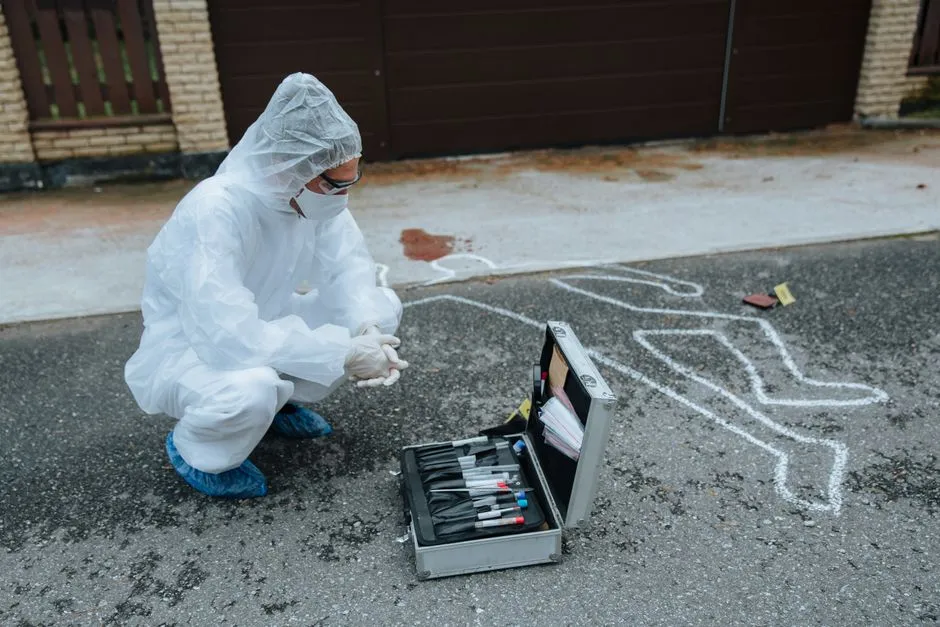
When unidentified human remains are discovered, every fragment can hold important information. A partial skull, a damaged tooth, or a handful of bones may help investigators determine who a person was and what happened to them. Yet matching incomplete remains to missing-person records is often slow, technically demanding, and emotionally difficult for everyone involved.
Forensic anthropologists have traditionally relied on detailed measurements, visual comparisons, medical records, DNA testing, and years of professional experience. Today, artificial intelligence is beginning to support that work. AI does not replace forensic specialists, but it can help them organize evidence, identify patterns, and prioritize the most promising investigative leads.
Why Identifying Incomplete Remains Is So Challenging
Human remains are frequently recovered in less-than-ideal conditions. Bones may have been damaged by accidents, natural decomposition, fire, weather, animals, or long-term burial. In some cases, investigators find only a few fragments rather than a complete skeleton. This makes conventional identification methods far more difficult.
Forensic anthropologists may need to estimate several biological characteristics, including:
- Age at the time of death
- Biological sex
- Height or overall stature
- Ancestry-related skeletal traits
- Evidence of injury, disease, or medical treatment
- Unique dental or skeletal features
These findings can then be compared with missing-person databases, hospital records, dental files, and information provided by families. The process requires careful judgment because a mistaken estimate can send an investigation in the wrong direction.
How AI Supports Forensic Anthropology
AI systems are particularly useful when they are trained to recognize patterns across large collections of images, measurements, and case records. A machine-learning model can compare a newly recovered bone or facial structure with thousands of previously documented examples much faster than a human could review them manually.
Analyzing Bone Images and Measurements
Computer vision tools can examine radiographs, three-dimensional scans, and photographs of skeletal remains. These systems may identify anatomical landmarks, measure proportions, and detect damage or unusual features. For fragmented remains, AI can also help estimate whether separate pieces may have belonged to the same individual.
Three-dimensional scanning is especially valuable. A digital model can be rotated, enlarged, measured, and compared with other records without repeatedly handling fragile physical evidence. AI-assisted software may highlight similarities between fragments or suggest how damaged sections could fit together.
Estimating Biological Profiles
Machine-learning models can assist with estimating age, sex, and stature from skeletal characteristics. Instead of relying on a single visible feature, an AI system may evaluate numerous measurements at the same time. This can produce a more consistent starting point for an expert’s review.
However, these estimates should be treated as ranges rather than absolute answers. Human bodies vary considerably, and datasets may not represent every population equally. A model trained primarily on one geographic or demographic group may perform less accurately when applied to another.
Facial Approximation and Reconstruction
When investigators recover a skull but cannot identify the person through existing records, forensic facial approximation may help generate public leads. AI can assist by analyzing the structure of the skull, estimating soft-tissue depth, and producing a digitally reconstructed face.
The result is not a photograph of the deceased. It is an informed approximation based on anatomy, statistical patterns, and artistic or computational interpretation. Its greatest value may be investigative: someone who recognizes the general appearance could provide information that leads to a formal identification.
Matching Remains to Missing-Person Cases
One of the most promising uses of AI is large-scale comparison. Investigators may have hundreds or thousands of missing-person records, each containing different types of information. AI can help connect skeletal findings with records involving age, height, dental work, previous injuries, medical implants, or geographic location.
A system might rank possible matches based on multiple signals rather than searching for one exact feature. For example, a partial skeleton with a healed fracture, a specific dental restoration, and an estimated age range could be compared with missing-person cases that contain similar details. Investigators can then focus their time on the strongest candidates and confirm or reject them through DNA, dental examination, or other established methods.
The Importance of Human Expertise
AI-generated results are not final identifications. They are tools that help specialists work more efficiently. A forensic anthropologist must still evaluate the quality of the evidence, understand the limitations of the algorithm, and decide whether a suggested match is scientifically credible.
This human oversight is essential because forensic cases often involve incomplete, contaminated, or ambiguous data. AI may also produce a confident-looking result even when the underlying evidence is weak. Investigators must therefore distinguish between a useful lead and a verified conclusion.
Ethical and Legal Considerations
The use of AI in forensic science raises serious questions about privacy, bias, transparency, and accountability. Human remains are connected to families, legal investigations, and sensitive medical information. Data must be stored securely, and access should be limited to authorized professionals.
Bias is another important concern. If training data does not adequately reflect different populations, an algorithm may deliver less accurate results for certain groups. Developers and forensic institutions should test systems across diverse datasets and publish clear information about performance, error rates, and limitations.
There is also a need for explainability. Families and courts may reasonably ask why a particular match was suggested. A system that cannot provide meaningful insight into its reasoning should not be treated as a stand-alone authority in a case involving a person’s identity.
What the Future May Hold
As imaging technology improves, forensic teams may increasingly combine AI with high-resolution CT scans, 3D printing, DNA analysis, dental databases, and geospatial information. Future systems could help reconstruct damaged remains, identify connections between cases, and surface overlooked evidence in long-running investigations.
The most effective approach will likely be collaborative rather than fully automated. AI can process information quickly and identify patterns at a scale that is difficult for individuals, while forensic experts provide context, judgment, and accountability.
Ultimately, AI-augmented forensic anthropology is not about replacing human investigators. It is about giving them better tools to recover identities, support families, and advance difficult investigations. Used carefully, transparently, and alongside established scientific methods, AI could make the search for unidentified remains faster, more systematic, and more hopeful.
Related read: AI Wonderland Weekly: Why AI Safety Became the Center of the Conversation in July 2026
