


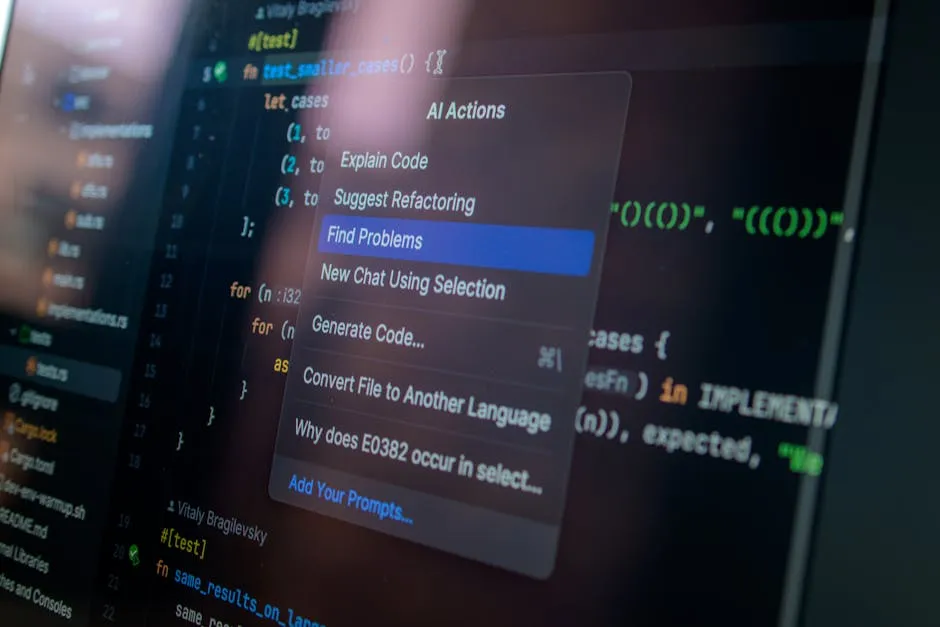
At its annual developer conference, Google made a clear statement about the direction of artificial intelligence. The company launched Gemini 3.5 Flash, its most powerful coding and agentic AI model to date. While the tech world has been captivated by conversational chatbots, Google is placing a very different bet: one that prioritizes autonomous action over simple conversation.
The core thesis of this new release is straightforward. Chatbots are great for answering questions, summarizing text, or generating creative content. But they are passive. They wait for a prompt. An AI agent, however, is designed to act. It can plan, execute multi-step tasks, interact with external tools, and make decisions without constant human supervision. With Gemini 3.5 Flash, Google is signaling that the next wave of AI value will come not from what AI can tell us, but from what AI can do for us.
What Makes Gemini 3.5 Flash Different?
The most headline-grabbing capability of Gemini 3.5 Flash is its ability to build software from scratch. This is not about generating snippets of code or fixing a bug. It is about understanding a high-level objective, writing the necessary code, testing it, debugging it, and deploying it. This represents a significant leap from previous coding assistants, which often required a human developer to guide them step-by-step.
This shift from “copilot” to “autonomous engineer” is enabled by several key architectural improvements in the model. Google has focused heavily on improving the model’s ability to handle long, complex contexts. In software development, a single project can involve thousands of files, complex dependencies, and specific architectural patterns. Gemini 3.5 Flash is designed to keep this entire context in mind, allowing it to make coherent decisions across the entire codebase.
The Power of Agentic Execution
The term “agentic” is crucial here. It refers to the model’s ability to break down a complex request into a series of smaller, manageable tasks. For example, if you ask it to “build a to-do list app with a login system,” it won’t just write one giant block of code. Instead, it will:
- Plan the architecture: Decide on the frontend framework, backend language, and database.
- Set up the project: Initialize the project structure and install dependencies.
- Write the authentication module: Create the login, registration, and session management logic.
- Build the UI: Design the interface for adding, viewing, and deleting tasks.
- Connect the pieces: Integrate the frontend with the backend API.
- Run tests: Execute the code to find and fix errors.
This autonomous execution is what separates an agent from a simple chatbot. It mimics the workflow of a human developer, but at a speed and scale that is difficult to match.
Why Agents, Not Chatbots?
Google’s strategic focus on agents is a direct response to the limitations of the current chatbot paradigm. While models like ChatGPT and Google’s own Gemini (in its chat form) are incredibly useful, they are often a dead end for complex tasks. You can ask a chatbot to write a script, but you then have to copy that script, open your terminal, run it, and debug it yourself.
An agent eliminates this friction. It closes the loop between instruction and execution. This has profound implications for productivity. Instead of spending hours writing code, a developer can describe the desired outcome and let the agent handle the implementation. This frees up human talent for higher-level tasks like system design, architecture, and creative problem-solving.
Beyond Code: The Future of Task Automation
While coding is the flagship use case, the agentic framework has far-reaching applications. Google envisions a future where Gemini 3.5 Flash can act as an agent for a wide variety of digital tasks. Imagine an AI that can:
- Manage your email: Not just writing drafts, but unsubscribing from lists, organizing folders, and flagging important messages based on your priorities.
- Handle travel booking: Researching flights, comparing prices, checking your calendar for availability, and booking the best option.
- Automate data entry: Extracting information from PDFs or emails and inputting it into a CRM or spreadsheet.
In this vision, the AI becomes a true digital assistant—a proactive partner that can take over routine digital chores, allowing humans to focus on what matters most.
The Competitive Landscape
Google is not the only company chasing the agentic AI dream. OpenAI has been developing its own agent tools, and Anthropic’s Claude has shown impressive capabilities in computer-use tasks. However, Google’s advantage lies in its deep integration with its existing ecosystem. Gemini 3.5 Flash is designed to work seamlessly with Google Cloud, Workspace, and other Google services.
This integration is a powerful moat. A developer building an application on Google Cloud can deploy Gemini agents that natively interact with BigQuery, Cloud Storage, and other services. A user in Google Workspace can have an agent that drafts emails in Gmail, schedules meetings in Calendar, and summarizes documents in Docs. This level of integration is hard for competitors to replicate without a similarly broad ecosystem.
Implications for Developers and Businesses
The arrival of a model like Gemini 3.5 Flash is a double-edged sword. For developers, it raises the obvious question of job security. However, history suggests that automation tools tend to change the nature of work rather than eliminate it. The developer of the future will likely spend less time writing boilerplate code and more time acting as a “manager” of AI agents, guiding them, reviewing their work, and solving complex, novel problems that the AI cannot handle.
For businesses, the implications are more straightforward. The cost of software development is set to drop dramatically. Tasks that previously required a team of engineers can now be accomplished by a single person with the right AI tools. This will accelerate innovation, lower the barrier to entry for startups, and allow companies to build and iterate on software much faster than ever before.
Looking Ahead
With Gemini 3.5 Flash, Google has laid down a marker. The age of the passive chatbot is giving way to the age of the active agent. The model is not just a better chatbot; it is a fundamentally different kind of tool—one that can act on our behalf, automate complex workflows, and build the software that powers our world.
The transition will not be seamless. Questions of safety, reliability, and control remain paramount. How do we ensure an autonomous AI agent does not make a costly mistake? How do we maintain human oversight without sacrificing speed? These are the challenges that Google, and the entire industry, will need to solve.
But the direction is clear. The future of AI is not just about conversation; it is about action. And with Gemini 3.5 Flash, Google is betting that the most valuable AI will be the one that doesn’t just talk back, but gets to work.
