


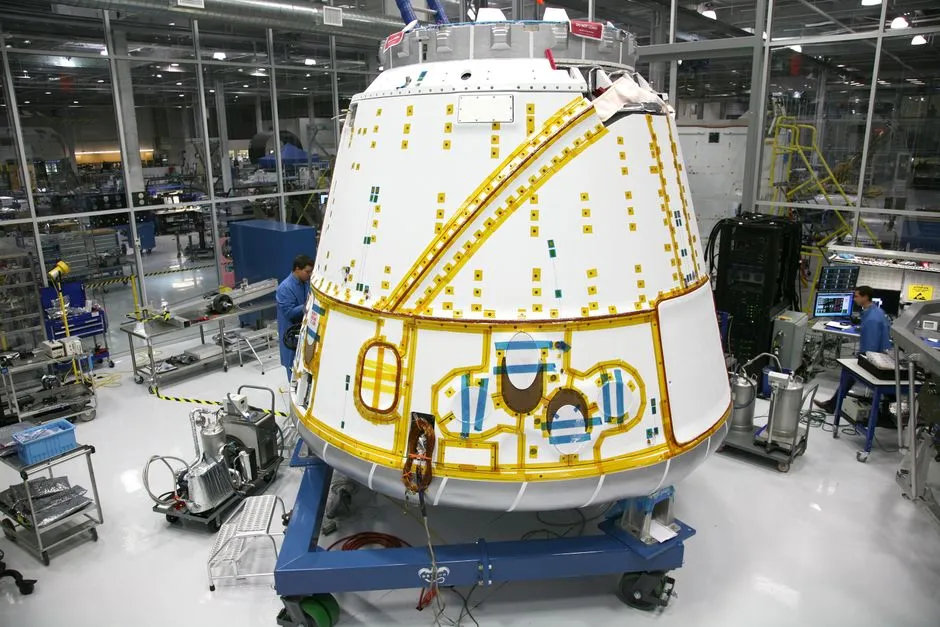
For decades, the final frontier has been reserved for satellites, telescopes, and human exploration. But a new British space startup is pointing its rockets toward a different kind of discovery: the human body. In a groundbreaking move that merges aerospace engineering with cutting-edge biotechnology, the company has successfully launched a specialized longevity laboratory into low Earth orbit. This isn’t just about collecting data for the sake of it. The orbital facility is designed to beam back highly precise biological information that will directly train artificial intelligence models, with the ultimate goal of decoding the complex proteins responsible for aging and age-related diseases.
The Microgravity Advantage
Why send a biology lab to space? The answer lies in the unique environment of microgravity. On Earth, gravity constantly interferes with delicate biological processes. It causes convection currents in fluids, disrupts cellular alignment, and makes it notoriously difficult to grow pure, high-quality protein crystals. In the weightless environment of orbit, those limitations vanish. Proteins can fold and crystallize in ways that are simply impossible to replicate in a ground-based laboratory.
Why Space Changes Everything for Biology
When scientists study how proteins interact, they are essentially trying to read the instruction manual of life. Misfolded proteins are at the root of countless conditions, from neurodegenerative disorders to various forms of cancer. By observing these molecular structures in microgravity, researchers can capture a clearer, more accurate picture of their natural behavior. The startup’s orbital lab is equipped with advanced sensors and imaging systems designed to monitor these interactions in real time, capturing data that is both deeper and more reliable than traditional terrestrial experiments.
AI Meets Astrobiology
The true innovation here isn’t just the hardware floating above us; it’s what happens with the data once it comes down. The laboratory is built as a continuous data pipeline. As the onboard instruments record protein behavior, structural changes, and environmental responses, that information is transmitted back to Earth. There, it feeds directly into machine learning algorithms designed to recognize patterns, predict structural shifts, and simulate how these proteins might react under different therapeutic interventions.
Training Algorithms on Orbital Data
Artificial intelligence has already made massive strides in drug discovery and structural biology, but it is only as good as the data it is trained on. Ground-based datasets often contain noise or inconsistencies caused by gravitational interference. By providing AI models with pristine, microgravity-optimized data, the startup is essentially giving these algorithms a higher-resolution lens. The result is a more accurate predictive engine capable of identifying potential drug targets and understanding disease mechanisms at a molecular level far faster than conventional methods allow.
Targeting Age-Related Diseases
The primary focus of this orbital research initiative is longevity. Specifically, the team is zeroing in on the biological markers of aging and the proteins that drive degenerative conditions. When AI models analyze the orbital data, they can simulate thousands of potential drug candidates in silico before a single vial is mixed in a physical lab. This dramatically cuts down the time and cost of early-stage research. The startup has identified several key areas where this approach could make the biggest impact:
- Alzheimer’s Disease: Focused on tracking amyloid-beta and tau protein accumulation to understand neurodegeneration at a molecular level.
- Cancer Progression: Analyzing how oncogenic proteins signal and mutate to evade cellular defenses.
- Cellular Senescence: Observing how aging cells communicate and trigger inflammation in surrounding healthy tissue.
Alzheimer’s, Cancer, and the Protein Puzzle
By understanding exactly how these proteins fold, interact, and malfunction in a controlled microgravity environment, researchers hope to pinpoint the exact molecular triggers that lead to disease. More importantly, it opens the door to personalized medicine. If we can predict how an individual’s specific protein variants behave, treatments can be tailored to the patient’s unique biology rather than relying on a one-size-fits-all approach.
What This Means for the Future of Medicine
This launch represents a paradigm shift in how we approach medical research. We are moving past the era of isolated disciplines where aerospace, computer science, and biotechnology operate in separate silos. Instead, we are witnessing a convergence. Space provides the pristine testing ground, AI provides the computational power to make sense of the complexity, and biotechnology provides the roadmap for human health. If the data streams back successfully and the AI models perform as expected, we could see a significant acceleration in the development of therapies that don’t just treat symptoms, but actually address the underlying molecular causes of aging.
The road to true longevity is long, and sending a lab into orbit is just one step along a much larger journey. Yet, it is a powerful reminder that some of the most profound answers to our earthly problems might require us to look upward. By combining the quiet precision of space with the relentless processing power of artificial intelligence, this British startup is not just launching hardware. They are launching a new era of biological discovery, one that could fundamentally change how we understand, treat, and ultimately outlive the diseases that have defined human aging for centuries.
