


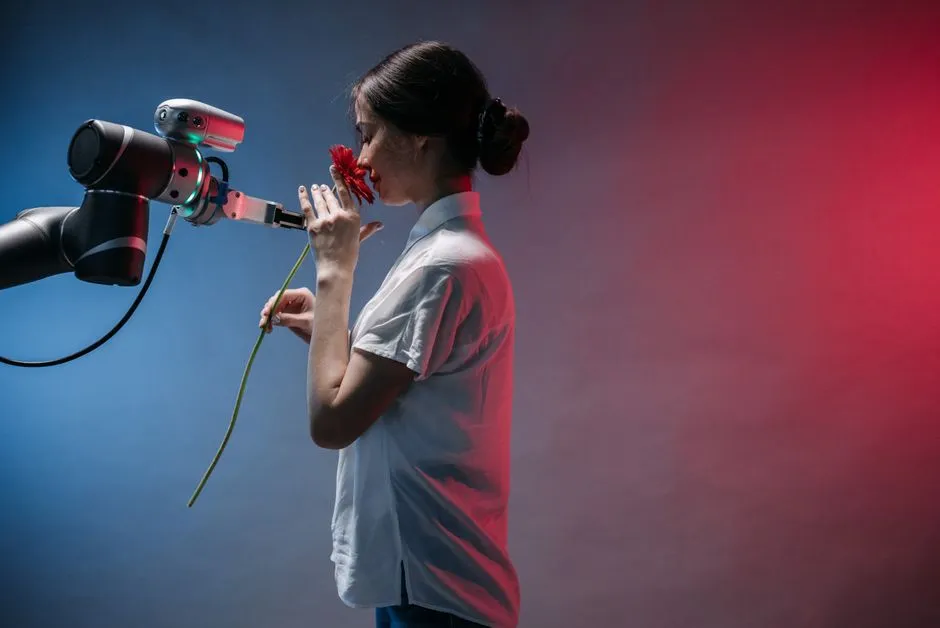
Working with artificial intelligence is no longer a speculative idea. It is already part of how many people write, plan, research, code, design, teach, sell, and lead. Yet the more comfortable we become with AI, the more important it becomes to ask a simple but serious question: how do we remain fully human while entering a relationship with another form of intelligence?
The answer is not to reject AI. Nor is it to hand over every thought, decision, and creative impulse to a machine. The healthiest approach is one of partnership. AI can extend our abilities, but it should not replace the parts of us that make our work meaningful.
What It Really Means to Work with AI
When people hear “working with AI,” they often imagine automation. And yes, AI can automate tasks. It can summarize documents, draft emails, generate code, analyze data, suggest content ideas, and even help us brainstorm at speed. But calling it only a productivity tool misses something important.
AI is also a collaborator. It can challenge assumptions, reveal blind spots, and offer alternatives we might never have considered. In that sense, it functions like a research assistant, a sounding board, a critic, and sometimes a creative partner. The difference is that it does not have lived experience, personal values, emotional stakes, or moral responsibility. Those remain human.
The Risk of Thinking on Autopilot
One of the biggest risks in working with AI is cognitive outsourcing. This happens when we begin to stop forming our own opinions because a model can generate a reasonable-sounding answer so quickly. If you ask AI to write a strategy, explain a concept, or solve a problem, and then accept the output without reflection, you may end up with efficiency without understanding.
Staying human means keeping the thinking part of the process alive. It means asking why something works, testing the logic, and deciding what actually matters. AI can help you think faster, but it cannot replace the discipline of thinking clearly.
Where Humans Still Lead
There are several areas where human judgment remains essential, even when AI is involved in the workflow:
- Judgment: AI can present options, but humans must decide what is wise, ethical, and appropriate for the situation.
- Context: Machines process information, but people understand nuance, culture, timing, and unspoken social dynamics.
- Accountability: If a decision affects real people, the responsibility still belongs to the human being making it.
- Creativity with intent: AI can generate ideas, but humans choose what to pursue, refine, and give purpose to.
- Relationships: Trust, empathy, and influence are deeply human capacities that cannot be fully delegated to software.
How to Build a Healthy Relationship with AI
A productive relationship with AI is not about blind trust. It is about calibrated trust. That means knowing what the technology is good at, where it can fail, and when human review is non-negotiable.
1. Set clear boundaries
Decide which tasks you are willing to delegate to AI and which ones you want to keep under direct control. For example, you might use AI to outline an article, but you may still want to write the final version yourself. You might use it to brainstorm names for a product, but you may still make the final choice based on brand values and market fit.
2. Stay curious, not passive
When AI gives you an answer, treat it as a starting point rather than a final verdict. Ask follow-up questions. Compare multiple responses. Test the reasoning. The more you engage with the tool, the better you become at using it wisely.
3. Protect your originality
AI can help you find patterns, but originality often comes from your own perspective, experiences, and voice. If everyone uses the same tools in the same way, the results can start to sound the same. The human element is what separates generic output from work that feels authentic and valuable.
4. Keep ethics in view
As AI becomes more integrated into daily work, ethical questions become more practical, not abstract. How do you handle privacy? How do you avoid bias? How do you ensure transparency? How do you avoid making decisions that look efficient but are unfair or harmful? These are human responsibilities.
AI as a Mirror, Not a Replacement
In many ways, AI can act as a mirror. It reflects what we ask, what we value, and how we structure our thinking. If our prompts are vague, the output is vague. If our goals are unclear, the results are often generic. If we bring depth, specificity, and intention, the collaboration becomes much more useful.
This is why working with AI is also a form of self-awareness. It forces us to articulate what we want, how we want to think, and what we are willing to delegate. In that sense, the relationship with AI can make us more human, not less, because it highlights where human judgment is still needed.
The Future of Human-AI Collaboration
The future of work will not be about humans versus machines. It will be about humans who work well with machines versus those who do not. The professionals, creators, leaders, and teams that thrive will be the ones who use AI with intelligence, restraint, and purpose.
That requires a balance. We must be open to new tools without surrendering our critical thinking. We must embrace speed without losing wisdom. We must use machines to amplify our strengths without outsourcing the parts of our work that require conscience, care, and personal responsibility.
In the end, the goal of working with AI is not to become less human. It is to become more effective while staying grounded in what makes human work meaningful: judgment, empathy, creativity, and accountability. If we enter this new relationship with clarity and self-awareness, AI can become not a replacement for human intelligence, but a powerful companion to it.
Related read: Humans Working with AI: How to Stay Fully Human in a Relationship With Machine Intelligence
