


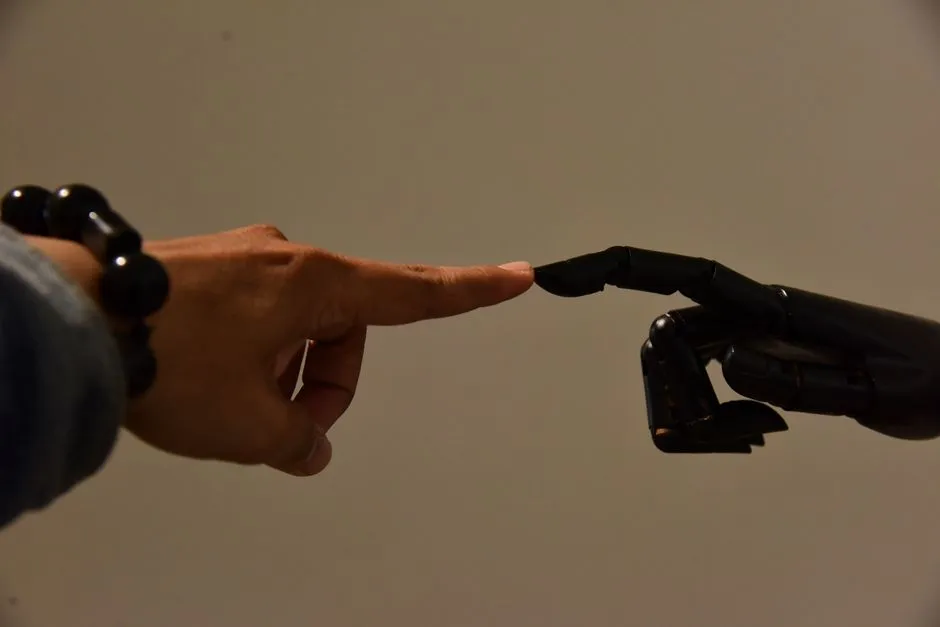
Working with AI is no longer a futuristic idea. It is already part of how many people write, plan, research, code, market, teach, and solve problems. But the more we lean on intelligent systems, the more important it becomes to ask a simple question: how do we remain fully human in a relationship with another form of intelligence?
That question matters because AI is not just a tool in the traditional sense. It does not merely lift heavier objects or calculate faster. It helps us shape thoughts, organize ideas, and even reflect back versions of ourselves that we might not have noticed before. In that way, working with AI can feel less like using a calculator and more like engaging in a dialogue. The challenge is to use that dialogue without losing our own voice, judgment, or humanity.
Why the Human Side Matters More Than Ever
One of the risks of working closely with AI is that it can become too convenient. When a system can draft a response, summarize a document, generate an outline, or suggest a next step, it is tempting to let it do the thinking for us. But thinking is not just about producing output. It is about context, intention, values, and meaning.
Humans bring things to the table that AI does not naturally possess, at least in the way we experience intelligence. We care about tone. We notice when something feels cold, misleading, or out of touch. We understand that a sentence can be technically correct and still fail to connect with a person. We bring lived experience, cultural context, emotional nuance, and a sense of responsibility for outcomes.
When we work with AI, those human qualities become even more valuable, not less. The better the machine gets at pattern recognition and language generation, the more we need to be intentional about what we choose to keep human.
What It Means to Treat AI as a Partner, Not a Replacement
A healthier way to work with AI is to think of it as a partner in cognition rather than a replacement for it. A partner helps you move faster, but you still steer. It can offer options, but you still decide what matters. It can surface possibilities, but you still bring the judgment that makes those possibilities meaningful.
This distinction is important because it changes how we use the technology. Instead of asking, “What should I write?” we might ask, “What are the strongest angles here, and which one fits my purpose?” Instead of asking, “Give me the final answer,” we might ask, “Help me understand the trade-offs so I can make a better decision.”
That shift keeps the human in the loop. It treats AI as a thinking companion, not a black box that removes our responsibility.
Practical Ways to Stay Human While Working with AI
Staying human does not mean resisting AI. It means using it with awareness. There are several practical habits that can help.
- Start with your own thinking first. Before asking AI for help, take a moment to clarify what you already know, what you want to achieve, and what kind of result you are looking for. This prevents the system from pulling you into a direction you never intended.
- Use AI to expand, not to decide. Let it generate alternatives, test assumptions, or identify gaps. Then apply your own judgment to choose what is right for the situation.
- Protect your voice. If you are writing, make sure the final version sounds like you, not like every AI output that came before it. Add perspective, personality, and specific detail.
- Check for bias and blind spots. AI can sound confident while still missing the point. A human reviewer is essential for accuracy, ethics, and sensitivity.
- Remember the person on the other side. Whether you are creating content, making a recommendation, or solving a problem, the end goal is usually to help a human being. That human-centered focus should always remain central.
The Ethical Dimension of Human-AI Collaboration
Working with AI also carries an ethical dimension. The more we rely on these systems, the more we need to be careful about how we use them. That includes being honest about what AI can and cannot do, avoiding overconfidence in its outputs, and respecting privacy, accuracy, and fairness.
AI can be a powerful amplifier. It can amplify creativity, productivity, and insight. But it can also amplify errors, assumptions, or even harmful shortcuts if we are not careful. The responsibility for that amplification still rests with us.
This is where human maturity matters. We need to ask not only “Can AI help me do this?” but also “Should I?” and “What am I willing to take responsibility for?” Those are deeply human questions, and they are exactly the ones that keep the relationship healthy.
Building a Relationship, Not Just a Workflow
The phrase “relationship with intelligence” may sound dramatic, but it is not meant to be. It simply captures the fact that we are not just inputting prompts and collecting outputs. We are engaging in a form of collaboration. And like any collaboration, it benefits from trust, boundaries, and mutual respect.
Trust means understanding what the system is good at and where it falls short. Boundaries mean knowing when to rely on it and when to step back. Mutual respect means using the system well while also preserving the qualities that make human work valuable: empathy, originality, accountability, and care.
Final Thought: Intelligence Is Not the Same as Humanity
AI is changing how we work, and that change is not going to reverse. But the goal should not be to become more machine-like. The goal should be to become more human in a world where machines can handle a lot of the mechanical work.
If we work with AI wisely, we can use it to reduce busywork, sharpen our thinking, and open new possibilities. But if we want to remain fully human, we must keep the parts of ourselves that machines cannot fully imitate: our conscience, our creativity, our relationships, and our commitment to doing what is right. In the end, the best future of working with AI is not one where humans disappear into automation, but one where humans use intelligence more thoughtfully than ever before.
Related read: The Computer Is Changing Shape: 4 Rabbit Holes Worth Exploring
