


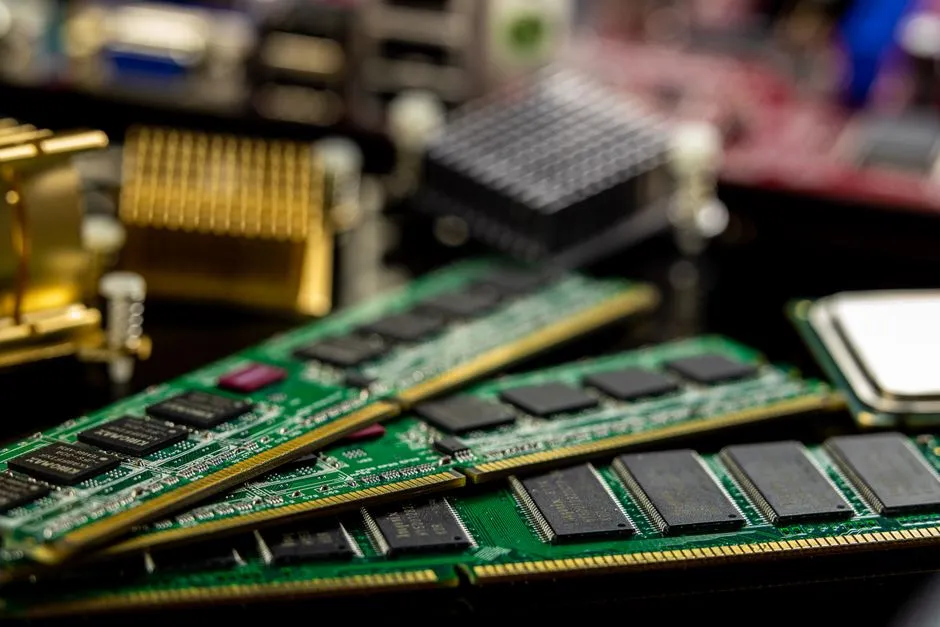
Every week, AI news seems to orbit the same familiar center: a new chatbot, a sharper model, a demo that makes people ask what happens next. But as we look at the week of 24 July 2026, a quieter story is becoming harder to ignore. The AI race is no longer being decided only by who can make the most impressive language model. It is increasingly being shaped beneath the surface, in data centers, chip supply chains, security teams, and the trust frameworks that will determine whether enterprises and consumers actually rely on these systems.
The Visible Layer: Models and Chatbots
For the past few years, the public conversation around AI has been dominated by models. We compared benchmark scores, watched assistants write code, summarize documents, answer questions, and even plan tasks. That visibility made sense. Language models were the most direct way for people to experience AI, and chat interfaces gave the technology a face.
But models are only one part of the stack. A model may be intelligent on paper, yet it still needs hardware to run, infrastructure to scale, security controls to protect it, and trust signals to make users comfortable with it. In many ways, the next phase of AI competition is less about who wins a single benchmark and more about who can deliver AI reliably, safely, and at scale.
Chips and Compute: The Hidden Bottleneck
At the foundation of everything is compute. AI systems are hungry for processing power, memory, and energy. Training large models is expensive, but inference is where the real long-term cost shows up. Every chat, image, video, recommendation, and automated agent requires compute resources to run. That means chips are not just a technical detail; they are a strategic asset.
This is why the chip race matters so much. Companies that can design efficient accelerators, secure long-term supply, and optimize software around specialized hardware gain a significant advantage. It is not enough to build a great model. You also need to run it efficiently enough to make the business model work. If inference costs stay too high, even the best AI product can struggle to scale.
There is also a growing recognition that not all AI workloads are the same. Some tasks need massive parallel processing, while others benefit from lower latency, on-device execution, or specialized inference chips. The companies that understand these differences will be better positioned to serve a wider range of customers, from startups to large enterprises.
Why Efficiency Matters More Than Raw Power
Raw compute is important, but efficiency is becoming the real differentiator. A system that achieves similar performance while using less energy, memory, or cost per request has a major advantage. This is especially true for AI deployments that need to run continuously, such as customer support agents, recommendation engines, fraud detection, or enterprise search.
Efficiency also affects sustainability. AI data centers consume enormous amounts of power, and public and private organizations are paying closer attention to environmental impact. The next generation of AI infrastructure will likely be judged not only on speed, but also on how responsibly it uses energy, water, and compute resources.
Infrastructure: From Benchmark Wins to Reliable Operations
As AI moves from experiments into production, infrastructure becomes the make-or-break factor. A demo that works in a lab is not the same as an AI system that must operate 24/7 with high availability, low latency, and minimal downtime. Enterprises do not want to gamble on AI systems that are impressive but unstable.
Modern AI infrastructure now includes far more than servers. It includes data center design, cooling systems, networking, storage, orchestration layers, model serving platforms, and monitoring tools. It also includes the ability to deploy models across public clouds, private clouds, hybrid environments, and sometimes edge devices.
One of the biggest shifts is the move from “build one model” to “operate many models.” Organizations may use frontier models for complex reasoning, smaller models for fast classification, local models for privacy-sensitive tasks, and specialized models for specific industries. Managing that complexity requires strong infrastructure, governance, and operational discipline.
Scalability, Cost, and Resilience
AI infrastructure also has to handle unpredictable demand. A product launch, a viral feature, or a sudden enterprise rollout can spike usage dramatically. If the underlying infrastructure cannot scale quickly, the experience degrades. Latency increases, errors rise, and customers notice.
Resilience matters just as much. AI systems need redundancy, failover plans, and the ability to keep working even when parts of the stack experience problems. In critical industries such as finance, healthcare, logistics, and public safety, downtime is not just an inconvenience; it can be costly or dangerous.
Security: The New Front Line
If chips and infrastructure determine whether AI can work at scale, security determines whether it can be trusted. As AI systems gain access to data, tools, and workflows, they also become a larger target. Attackers are not only trying to steal data; they are trying to manipulate models, inject malicious instructions, disrupt operations, or exploit vulnerabilities in the AI supply chain.
Security for AI is different from traditional software security. A malicious user may not need to break into a server to cause damage. They may simply craft a prompt that tricks an AI assistant into leaking information, bypassing controls, or performing an unintended action. This is why prompt injection, data poisoning, model theft, and agentic misuse have become serious concerns.
Organizations also need to think about the security of AI agents. When an AI can read emails, update calendars, access databases, or execute tasks, the blast radius of a mistake becomes much larger. Permissions, logging, human review, and audit trails are no longer optional. They are core parts of responsible AI deployment.
From Perimeter Defense to Continuous Trust
The old security model was often about protecting the perimeter: firewalls, access controls, and network monitoring. AI security is more continuous. It requires ongoing evaluation, red-teaming, behavior monitoring, and the ability to detect anomalies in real time. It also requires clear policies about what AI systems can and cannot do.
Security is no longer just an IT problem. It is a product problem, a legal problem, and a trust problem. If users believe an AI system is unsafe, they will not use it. If regulators believe it is unsafe, they may restrict it. If enterprises believe it is unsafe, they will not deploy it at scale.
Trust: The Factor That Turns Capability Into Adoption
Trust is the quiet multiplier in the AI race. A model that is accurate but opaque may be hard to adopt. A product that is fast but unreliable may lose users. A system that is powerful but poorly governed may create legal and reputational risk. In other words, technical capability is necessary, but it is not sufficient.
Trust comes from transparency, consistency, and accountability. Users need to understand what an AI can do, where it may fail, and how its outputs are generated. Enterprises need evidence that the system has been tested, that data is protected, and that there are clear processes for handling mistakes. Regulators need assurance that the technology is being used in a way that reduces harm rather than increasing it.
This is where evaluation, auditing, and governance become strategic advantages. Companies that can show measurable safety, fairness, reliability, and compliance will be better positioned to win long-term contracts and consumer confidence. Trust is not a one-time marketing claim; it is built through repeated, verifiable behavior over time.
Why Trust Is Especially Important for Enterprises
Enterprise adoption of AI is often slower than consumer adoption, and that is not just caution. Companies operate in regulated environments, handle sensitive data, and face real consequences when systems fail. A customer-facing AI that gives bad advice, a financial AI that misinterprets risk, or a healthcare AI that overlooks critical information can create serious problems.
That is why enterprises are asking more than “Is this model smart?” They want to know: “Can we trust it in our environment? Can we monitor it? Can we control it? Can we explain it? Can we prove it is safe?” These questions are shaping the market as much as model quality is.
What This Means for Founders, Enterprises, and Users
For AI founders, the lesson is clear: winning a demo is not the same as building a durable business. The next wave of successful companies will likely be those that pair strong models with reliable infrastructure, cost-efficient deployment, and serious security practices. The bar is rising, and the gap between “impressive prototype” and “production-ready system” is widening.
For enterprises, the opportunity is to stop treating AI as a single tool and start treating it as a strategic system. That means investing in governance, data quality, security, and operational readiness. It also means choosing partners who can demonstrate not just capability, but reliability and accountability.
For users, the shift is more subtle but equally important. As AI becomes embedded in work, education, healthcare, and daily life, the quality of the experience will depend on factors that are not always visible: how the system is built, how it is protected, and how much trust has been invested behind the scenes.
The Bigger Picture
The AI race is not disappearing from the models; it is simply spreading across a wider set of disciplines. Chips, infrastructure, security, and trust are becoming the new battlegrounds. These areas may be less glamorous than a new chatbot launch, but they determine whether AI can move from hype to lasting impact.
In the end, the next major AI breakthroughs may not be announced in a single product reveal. They may be built quietly, layer by layer, in the systems that make AI faster, safer, cheaper, and more dependable. And that is exactly why the week of 24 July 2026 feels like a turning point. The spotlight is still on the models, but the future is being decided beneath them.
Related read: AI in Supply Chain Optimization: How Smarter Data Drives Resilient Operations
