


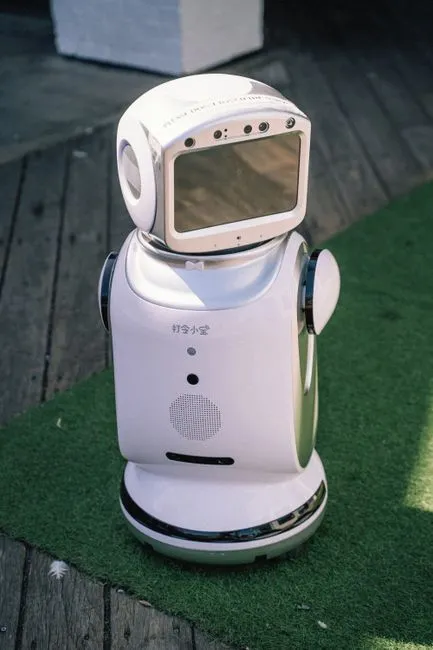
Do you remember Jibo? It was that adorable, wide-eyed tabletop robot that promised to be the heart of your smart home. It was going to read your kids stories, take family photos, and be a genuine companion. The hype was real, but the execution fell short. Jibo became a cautionary tale—a beloved piece of tech that was ahead of its time and ultimately left its early adopters heartbroken when the servers were shut down.
Well, the spirit of Jibo is getting a second chance, but it looks nothing like its predecessor. Instead of a cute, stationary robot, the successor is a wearable or desk-mounted device called iKairos. And its mission is a radical departure: it wants to turn your everyday life into an endless stream of AI-generated images and video.
From Robot Companion to AI Journal
With what is described as “blessings” from the original Jibo founders, iKairos is being positioned as an “AI journal.” But don’t think of a leather-bound book or a digital diary. Think of it as a passive, always-on camera that captures snippets of your family life and then uses generative AI to transform those moments into stylized, often surreal, pictures and short clips.
The device itself is small and unassuming. You can wear it around your neck like a pendant, clip it to your clothing, or set it on a desk. It’s designed to be unobtrusive, a silent observer of your daily routine. The core idea is to preserve memories not as raw, sometimes messy photos, but as polished, idealized, and frankly, artificial representations of your life.
How iKairos Works: Your Life, Reimagined
The process is deceptively simple. The iKairos device constantly records short video clips and audio snippets throughout your day. It’s not storing everything, but rather looking for “key moments”—a child’s laugh, a family dinner, a quiet moment on the porch. Once it identifies these moments, it sends them to the cloud where an AI model gets to work.
This is where the “AI slop” aspect comes in. The AI doesn’t just enhance the photo. It completely reimagines it. A messy living room floor might become a clean, sun-drenched playroom. A rainy afternoon walk could be turned into a scene from a Studio Ghibli film. A simple birthday party might be rendered in the style of a classic Disney movie. The output is often visually stunning, but it’s a fiction. It’s a curated, AI-filtered version of your reality.
The Appeal of a Perfect Memory
On the surface, the appeal is obvious. Who wouldn’t want their family memories to look like a beautifully shot movie? The promise of iKairos is to help you remember the feeling of a moment, not just the messy facts. It’s about capturing the emotional truth, even if the visual truth is bent. For parents who are too busy living life to curate a perfect photo album, it offers a shortcut to a beautiful, shareable history.
The Dark Side of a Filtered Life
But this is where the technology gets deeply unsettling. By outsourcing our memory to an AI that actively distorts reality, we risk losing touch with authenticity. The device is a constant, passive observer, raising serious privacy concerns for everyone in its vicinity, not just the wearer. What happens to all that raw data? Who controls the narrative of your family’s history?
Furthermore, the concept of an “AI journal” that produces idealized content feels less like a diary and more like a PR machine for your own life. It encourages us to live for the highlight reel, the polished Instagram story, rather than for the messy, beautiful, and sometimes boring reality. The device doesn’t just record your life; it edits it, filters it, and packages it for consumption, potentially robbing you of the authentic, unvarnished experience of being present.
A Familiar Feeling
For those who followed the original Jibo story, this new venture feels both hopeful and heartbreaking. Jibo’s failure was a tragedy of a good idea that couldn’t find a sustainable business model. iKairos, with its “blessings” from the original team, feels like an attempt to learn from that failure. Instead of a complex, expensive robot, it offers a simpler, cheaper wearable. Instead of a general-purpose companion, it offers a single, compelling use case: memory preservation.
But it also seems to have missed the point of what made Jibo so beloved. Jibo wasn’t loved for its camera or its ability to create content. It was loved for its personality, its ability to make eye contact, and the feeling that it was a living thing in your home. iKairos, in contrast, is a tool for content creation. It’s a passive observer, not an active participant. It’s a device that takes your life and turns it into a product, rather than a companion that shares your life with you.
The Verdict: A Tool for the AI Age
iKairos is a fascinating, deeply weird, and somewhat terrifying glimpse into the future of personal technology. It perfectly encapsulates the promises and perils of the current AI boom. It offers a magical shortcut to beautiful memories, but at the cost of privacy, authenticity, and the very act of remembering itself.
Whether it will succeed where Jibo failed remains to be seen. The market for AI gadgets is already crowded and skeptical. But one thing is clear: the idea of a passive, always-on, reality-filtering device is no longer science fiction. It’s a product you can buy. The question isn’t just whether iKairos will work, but whether we, as a society, want it to.
Ultimately, iKairos asks us a profound question: If an AI can make your life look perfect, will you still be able to appreciate the imperfect reality? The answer will determine not just the fate of this device, but the future of how we remember and share our lives.
