


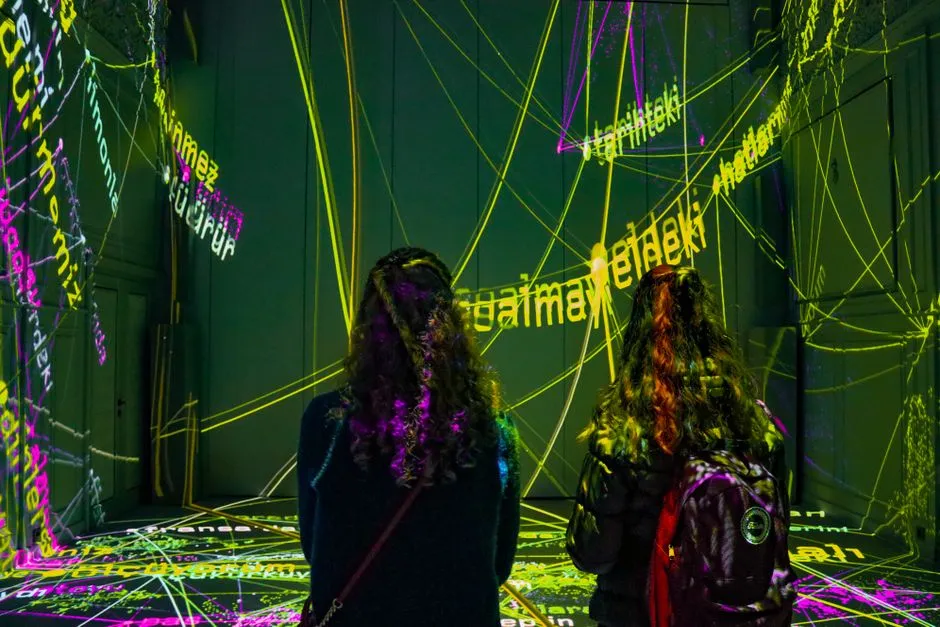
Artificial intelligence has undeniably transformed how we create and consume visual media. Yet, for many, the term “AI art” still carries a heavy baggage of skepticism. Critics often dismiss it as soulless, algorithmic output lacking human intent or emotional depth. But what happens when the technology stops sitting behind a screen and steps into a physical space? Enter Dataland, a groundbreaking experiential gallery that has recently captured attention by positioning itself as the world’s first museum dedicated to AI arts. Rather than relying on static digital displays, this immersive environment uses a fascinating blend of wearable technology, biometric feedback, and ecological data to create an experience that feels less like a tech demo and more like a living ecosystem.
Beyond the Screen: Reimagining the Gallery Experience
Traditional museums operate on a simple premise: you stand, you look, you interpret. Dataland flips that model entirely. The space is designed to be interactive from the moment you step through the doors. Instead of passively observing generated images on a monitor, visitors become active participants in the creative process. The gallery leverages advanced wearable devices that track physiological responses, movement patterns, and environmental interactions. These sensors feed real-time data into generative AI systems, which then translate that information into dynamic visual and auditory landscapes. The result is an ever-evolving installation that reacts to the people inside it, making every visit fundamentally unique.
The Human Element: Biometrics as a Creative Tool
One of the most compelling aspects of Dataland is its heavy reliance on biometric data. By integrating wearable tech that monitors heart rate, body temperature, and even subtle shifts in physical presence, the AI doesn’t just generate random visuals. It responds to the emotional and physical state of the audience. If a group moves through the space quickly, the projections might shift to sharper, more energetic patterns. A slower, more contemplative pace could coax the system into rendering softer, flowing compositions. This approach bridges a common gap in AI-generated media: the lack of emotional resonance. By tethering the algorithm to human biology, the gallery ensures that the technology remains deeply connected to the people experiencing it.
Nature, Data, and the Amazon Connection
What truly sets this installation apart is its thematic focus on the natural world, specifically drawing inspiration from the Amazon rainforest. The development team has incorporated extensive datasets and visual material sourced from the region, using AI to interpret and recontextualize that ecological information. Think of it as a digital ecosystem where algorithms act as a lens, translating complex environmental data into something visually tangible. Visitors aren’t just looking at pictures of trees or rivers; they are interacting with a synthesized representation of biodiversity, climate patterns, and natural rhythms. This fusion of environmental science and artificial intelligence adds a layer of depth that moves the conversation beyond simple aesthetic generation.
Why This Shift Matters for AI Art
The broader tech and creative industries have spent years debating the legitimacy of AI in the arts. Dataland offers a compelling counterargument to the notion that algorithmic creation is inherently hollow. By embedding the technology into a physical, participatory environment and grounding it in real-world data and human biology, the gallery demonstrates that AI can be more than a content factory. It can be a collaborative partner in storytelling. The wearables and biometric feedback loops ensure that human intent and physical presence remain central to the experience. This doesn’t replace traditional art; it expands the definition of what an immersive, technology-driven exhibition can achieve.
Looking Ahead
As artificial intelligence continues to permeate every corner of our digital lives, spaces like Dataland prove that the technology doesn’t have to feel cold or detached. By merging wearable innovation, biometric responsiveness, and ecological storytelling, the gallery transforms skepticism into curiosity. It invites us to stop viewing AI art as a replacement for human creativity and start seeing it as a new medium for connection. Whether you are a longtime tech enthusiast or someone who has been skeptical of algorithmic design, stepping into this kind of environment might just shift your perspective on what’s possible when data, nature, and human experience intersect.
