


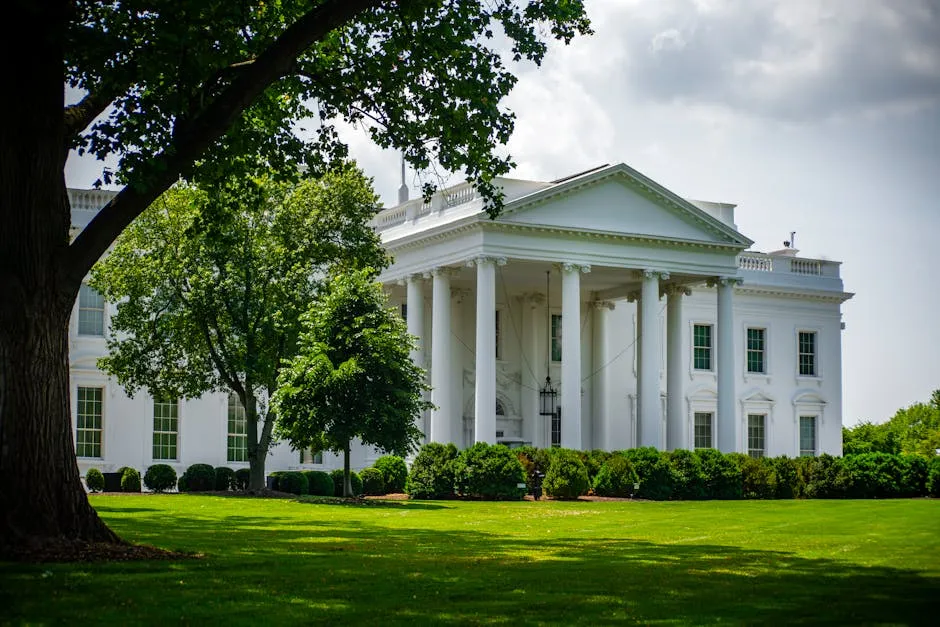
The rapid advancement of artificial intelligence has created a complex and often contradictory policy landscape in Washington D.C. Nowhere is this more evident than within the current administration, where a significant internal conflict is brewing over how—or even if—to regulate the technology. The core of the dispute stems from a single, decisive action: the revocation of a previous executive order designed to create a framework for AI oversight. This move has left officials, industry leaders, and policymakers scrambling to determine the path forward.
The Executive Order That Wasn’t
The previous administration had put in place an executive order that aimed to establish guardrails for AI development. It was a proactive step, attempting to address concerns about bias, safety, national security, and the potential displacement of jobs before the technology became too entrenched to manage. It called for new standards, testing requirements, and a coordinated federal approach. For many, it was a necessary first step in a long journey toward responsible AI governance.
However, the current administration took a different view. The order was seen by some as overly burdensome, potentially stifling innovation and ceding a competitive advantage to global rivals like China. The argument was that the private sector, not the government, should lead the charge in AI development, and that heavy-handed regulation would slow down the very breakthroughs that could drive economic growth and national security.
A House Divided: The Internal Conflict
The decision to kill the executive order has not, however, led to a clear or unified strategy. Instead, it has exposed a deep rift within the White House itself. On one side, you have a faction that champions a purely laissez-faire approach. Their belief is that the market will naturally correct for any risks, and that the best thing the government can do is get out of the way. They argue that the U.S. has a lead in AI precisely because of its lighter regulatory touch, and that any new rules would be a mistake.
On the other side, there is a growing concern that a complete lack of oversight is reckless. Several administration officials, as well as key AI executives, are privately worried about the potential for catastrophic outcomes. They see the need for some form of baseline regulation—not to stop innovation, but to ensure it happens safely. Issues like deepfakes, autonomous weapons, systemic bias in hiring algorithms, and the security of critical infrastructure are not problems that will solve themselves. This group is now asking a critical question: with the old order gone, is there anything left to piece back together?
The Industry’s Perspective: A Mixed Bag
The reaction from the tech industry has been far from uniform. Some executives have applauded the move, viewing it as a green light for rapid development. They see the revocation as a victory for innovation and a signal that the U.S. is open for business. For these companies, the biggest threat is not a rogue AI, but being outpaced by foreign competitors.
Others, however, are more cautious. Many leaders understand that public trust is essential for the long-term success of AI. A major accident or a widely publicized case of algorithmic harm could trigger a massive public backlash, leading to far more draconian regulations down the line. They would prefer a stable, predictable regulatory environment that allows them to plan for the future, rather than the current state of uncertainty. The question they are grappling with is how to engage with a government that appears to be speaking with multiple, conflicting voices.
What Could a Patchwork Future Look Like?
With the federal government in a state of paralysis, the focus is shifting. Without a clear national strategy, we are likely to see a patchwork of state-level regulations emerge. California, New York, and other tech-heavy states are already exploring their own AI laws, covering everything from deepfake disclosure to algorithmic accountability. This creates a compliance nightmare for companies that operate nationally, as they would have to navigate a maze of different—and sometimes contradictory—rules.
Furthermore, the role of the courts is likely to grow. Lawsuits over copyright infringement, privacy violations, and liability for AI-generated content will begin to shape the legal landscape. In the absence of legislation, judges and juries will become the de facto regulators of AI, a role they are not necessarily equipped to play.
The Global Stakes
This internal conflict is not happening in a vacuum. The European Union has already passed its AI Act, a comprehensive regulatory framework that classifies AI systems based on risk. While criticized by some as too rigid, it provides a clear set of rules for companies operating in Europe. Meanwhile, China is aggressively pursuing its own AI ambitions, with a strong state-driven strategy that prioritizes national goals over individual rights.
The U.S. now risks falling into a dangerous middle ground. It lacks the clear, innovation-friendly rules that some businesses crave, and it also lacks the robust safety and consumer protections that the public is beginning to demand. This uncertainty could drive investment away, as companies prefer to operate in jurisdictions with predictable rules.
Conclusion: The Search for a Middle Ground
The war within the administration over AI regulation is far from over. The revocation of the executive order was a clear signal, but it was not a final answer. The question of how to balance the immense promise of AI with its very real risks is one of the defining challenges of our time. The path forward will require difficult compromises. It will involve accepting some level of regulation to build public trust, while also ensuring that those rules are smart enough not to stifle the very innovation that makes AI so powerful.
The world is watching to see if the U.S. can find this middle ground. The alternative is a future where the most powerful technology ever created is left to evolve without a compass, guided only by the conflicting interests of a divided government and a nervous public. The clock is ticking, and the decisions made in the coming months will have consequences for decades to come.
