


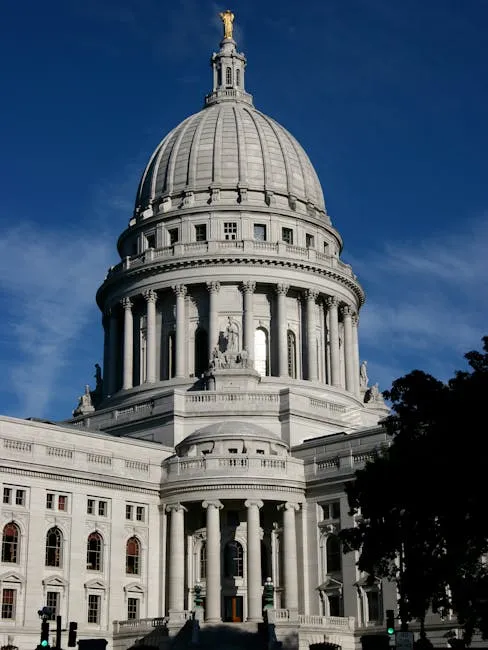
For years, the rapid advancement of artificial intelligence has outpaced the regulatory frameworks meant to keep it in check. While federal lawmakers have debated and delayed, states have begun stepping into the void. Now, Illinois has taken a decisive step forward by passing what many are calling the strongest AI safety bill in the country. Governor JB Pritzker has already signaled his intent to sign the legislation into law, marking a pivotal moment in how the United States will govern one of the most transformative technologies of our time.
What the New Legislation Actually Requires
At its core, the Illinois bill introduces a straightforward but powerful concept: independent verification. Rather than allowing tech companies to police themselves, the law mandates that developers and deployers of high-risk AI systems must have their safety protocols confirmed by qualified third-party auditors. This means companies like OpenAI, Anthropic, and Google will no longer be able to simply claim their models are safe. They will need to submit to rigorous, external evaluations that verify compliance with established safety standards before their systems can be deployed at scale.
The legislation specifically targets foundational models and high-impact applications where errors could lead to significant harm. By shifting the burden of proof from internal assurances to external validation, Illinois is essentially treating AI development with the same level of scrutiny we apply to pharmaceuticals, aviation, and financial services.
Why Independent Verification Matters More Than Ever
The push for third-party audits comes at a critical juncture. Throughout the early years of the generative AI boom, the industry operated largely on a voluntary basis. Companies published safety research and released model cards, but there was no consistent mechanism to verify whether those claims held up in the real world. Independent auditing changes that dynamic entirely.
When an outside expert organization evaluates an AI system, it removes the inherent conflict of interest that comes with self-regulation. These auditors can stress-test models for bias, hallucination, data privacy vulnerabilities, and potential misuse. More importantly, they create a standardized benchmark that regulators, consumers, and other businesses can actually trust. Without this layer of accountability, the gap between what companies promise and what their technology delivers will only continue to widen.
The Domino Effect on State and Federal Policy
Illinois is not acting in a vacuum. State-level legislation has increasingly become the testing ground for broader national policy, and this bill is likely to influence how other states approach AI governance. If Illinois successfully implements a third-party audit framework without stifling innovation, neighboring states and tech hubs like California and New York will likely look to replicate or adapt its structure.
On a federal level, this move could pressure Washington to finally pass comprehensive AI legislation. When multiple states establish clear safety baselines, it becomes much harder for the federal government to ignore the issue. In fact, state laws often serve as the blueprint for national standards, especially when they demonstrate that responsible oversight and economic growth can coexist.
Striking the Balance Between Innovation and Responsibility
Whenever new regulations enter the tech space, concerns about stifling innovation inevitably surface. Critics often argue that compliance costs could slow down development or push startups out of the market. However, the reality is slightly different. Clear, predictable rules actually reduce long-term risk for investors and developers. When companies know exactly what safety standards they need to meet, they can build their architecture around those requirements from day one, rather than retrofitting compliance later or facing unexpected lawsuits.
Moreover, public trust is becoming a competitive advantage. Companies that proactively adopt rigorous safety practices will likely see stronger enterprise adoption and consumer loyalty. In an era where misinformation, data breaches, and algorithmic bias make headlines regularly, demonstrating a commitment to responsible AI is no longer just a legal checkbox. It is a core component of brand integrity.
What Comes Next for Developers and Deployers
With Governor Pritzker’s endorsement, the legislation is poised to become law. The immediate next steps will involve defining the exact qualifications for third-party auditors, establishing the technical metrics for safety compliance, and setting a realistic timeline for enforcement. Tech companies operating in Illinois will need to begin mapping their development pipelines against these new requirements, identifying which models fall under the high-risk category, and preparing for external review.
For the broader tech ecosystem, this moment represents a shift from the wild west of early AI experimentation to a more mature, accountable phase. It acknowledges that while artificial intelligence holds incredible promise, that promise can only be realized if the technology is built and deployed responsibly. Illinois has drawn a line in the sand, and the rest of the industry will now have to decide how quickly they adapt to the new standard.
